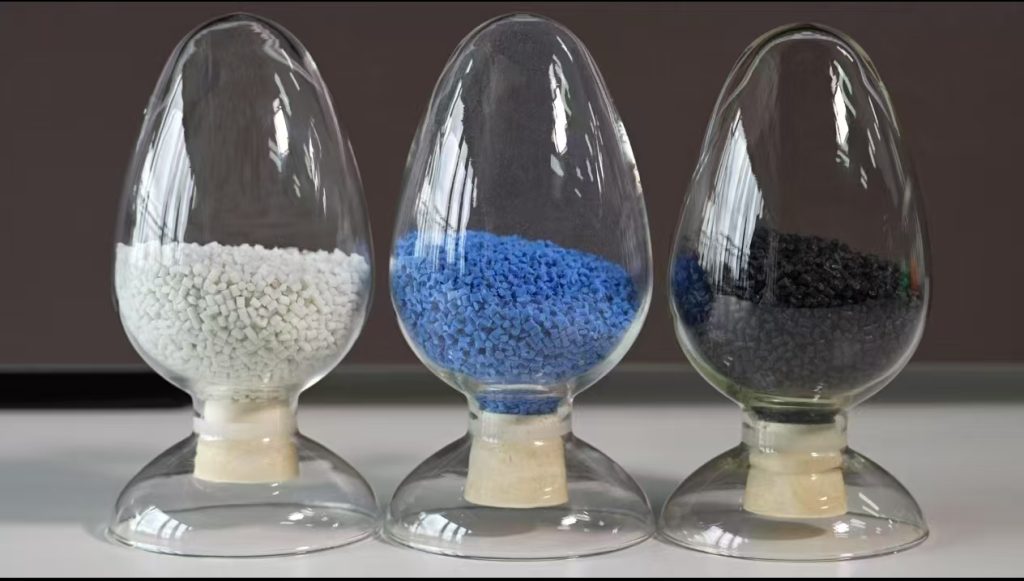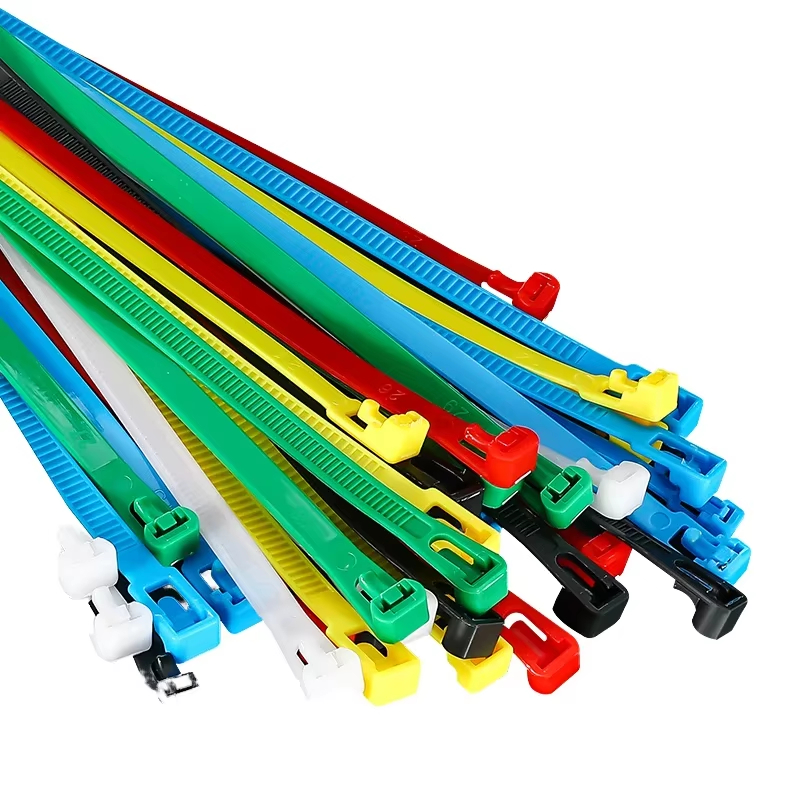
유리 이는 여러 대안을 비교하고, 한계를 확인하며, 위험이 적은 공정을 선택해야 할 때 유용한 공학적 주제입니다.
유리 섬유 및 탄소 섬유로 보강된 나일론은 모두 보강되지 않은 나일론에 비해 물성이 크게 향상됩니다. 이러한 장단점을 이해하면 특정 용도에 맞는 적절한 소재를 선택하는 데 도움이 됩니다.
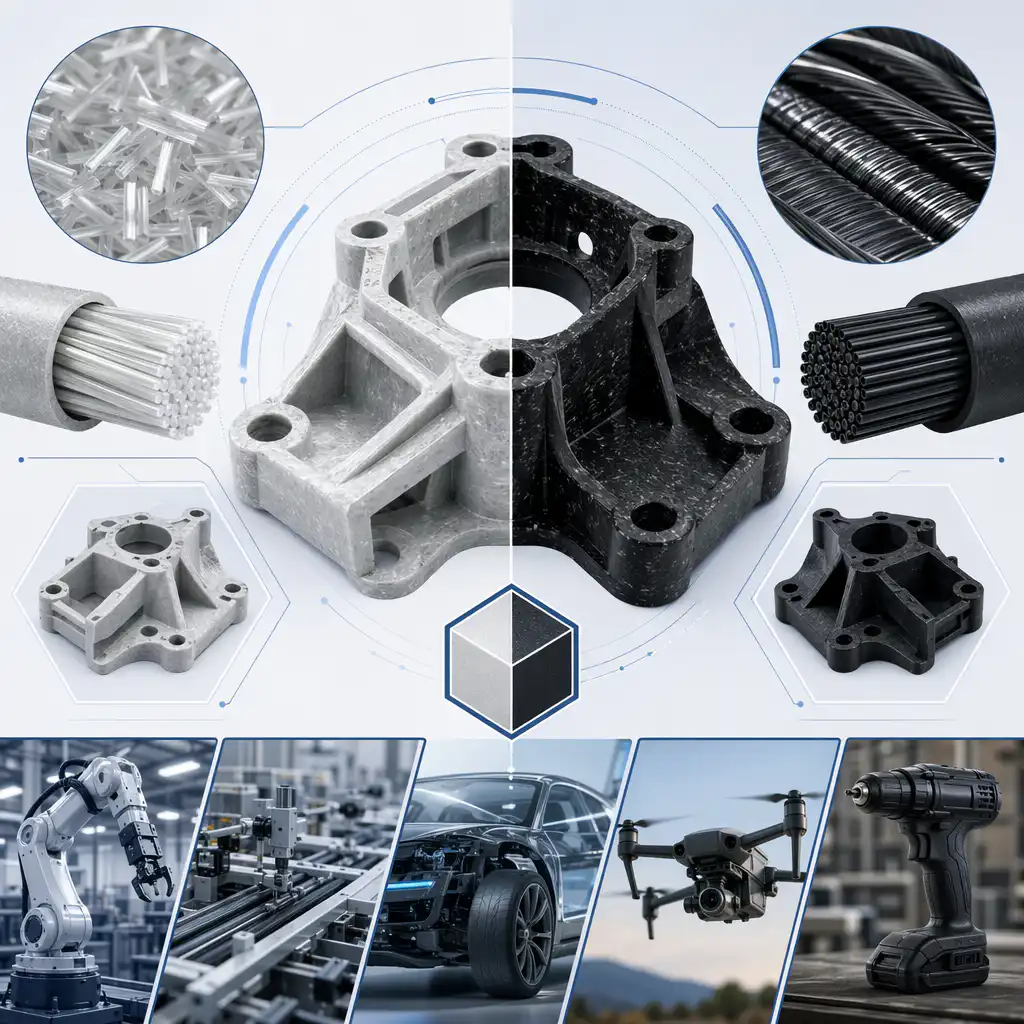
엔지니어링 및 조달 팀을 위해
Choosing Reinforcement for a Nylon Production Part?
This reinforced nylon comparison is for procurement and early DFM decisions: glass fiber usually offers the lower-cost structural route, while carbon fiber may justify its premium when stiffness-to-weight dominates.
- Choose glass fiber for cost-effective strength and broad molding use
- Choose carbon fiber when stiffness-to-weight is the primary requirement
- Review conductivity, surface finish, fiber direction and tooling wear before release
Request a reinforced nylon sourcing review → 나일론 사출 성형 서비스 보기
부동산 비교
인장 강도: 탄소섬유 강화 나일론은 70~90 MPa의 인장 강도를 나타내는 반면, 유리섬유 강화 나일론은 40~60 MPa에 그칩니다. 이러한 차이는 구조용 응용 분야에서 매우 중요합니다.
강성: 탄소 섬유는 동일한 충전 비율에서 유리 섬유에 비해 2~3배 더 높은 강성을 제공합니다. 20% 탄소 섬유 강화 나일론은 30% 유리 섬유 강화 나일론에 버금가는 강성을 보입니다.
무게: 탄소 섬유는 유리 섬유보다 약 70% 가볍습니다. 탄소 섬유로 보강된 부품은 유리 섬유로 만든 부품보다 현저히 가벼우며, 이는 항공우주 및 자동차 분야의 경량화에 있어 매우 중요한 요소입니다.
열적 특성: 탄소 섬유는 열팽창을 50-70% 정도 줄여주는데, 이는 유리 섬유가 30-50% 정도 줄여주는 것에 비해 더 큰 감소폭입니다. 탄소 섬유로 보강된 부품은 열 사이클 조건에서도 치수 안정성이 더 우수합니다.
비용 비교
바로 이 지점에서 비용과 성능 간의 절충이 뚜렷하게 드러납니다. 탄소섬유 강화 나일론은 동급의 유리섬유 강화 나일론보다 가격이 3~5배 더 비쌉니다. 많은 용도의 경우, 탄소섬유로 인한 추가 비용을 성능상의 이점으로 상쇄하기 어렵습니다. 30% 충전 비율을 적용한 유리섬유 강화 나일론은 대부분의 엔지니어링 용도에서 뛰어난 가성비를 제공합니다.
제조 시 고려 사항
두 소재 모두 마모성이 강하여 경화 처리된 공구를 사용해야 합니다. 유리 섬유 강화 소재는 가공이 더 쉬우며 금형 마모도 적습니다. 탄소 섬유의 열팽창 계수가 낮다는 점은 일부 제조 공정을 단순화할 수 있지만, 마모성이 강하기 때문에 장비 마모를 가속화합니다.
용도별 권장 사항
- 다음과 같은 경우에는 유리섬유 강화 나일론을 선택하십시오: 비용이 주요 제약 요인이며, 부품 형상이 복잡하고, 표준 구조 강도로 충분하며, 대량 생산이 이루어집니다.
- 다음과 같은 경우에는 탄소섬유 강화 나일론을 선택하십시오: 경량화가 매우 중요하며, 최고의 비강성이 요구되고, 열적 안정성이 가장 중요하며, 소형 고성능 응용 분야에 적합합니다.
혼합 접근법
일부 응용 분야에서는 유리 섬유와 탄소 섬유를 결합하여 비용 대비 성능의 균형을 최적화하는 하이브리드 보강 방식이 효과적입니다. 이러한 방식은 스포츠 용품 및 고급 자동차 부품 분야에서 흔히 사용됩니다.
습기 민감성
유리섬유와 탄소섬유 보강재 모두 보강되지 않은 나일론에 비해 수분 흡수율을 낮춥니다. 탄소섬유로 보강된 나일론은 일반적으로 습한 환경에서 더 우수한 치수 안정성을 보입니다.
표면 마감
유리섬유 강화 나일론은 사출 성형을 통해 매끄러운 표면 마감을 얻을 수 있습니다. 탄소섬유 강화의 경우, 표면에 탄소섬유가 드러나기 때문에 더 어두운 무광택 외관을 띱니다. 외관용 부품의 경우 후가공이 필요할 수 있습니다.
결론
대부분의 엔지니어링 용도에서 유리섬유 강화 나일론은 최고의 가성비를 제공합니다. 탄소섬유는 경량화와 최대 강성이 높은 비용을 정당화할 수 있는 용도에 한정되어 사용됩니다. Nylonplastic에서는 두 가지 소재를 다양한 등급으로 공급하며, 귀사의 용도에 적합한 보강 전략을 평가할 수 있도록 도와드립니다.
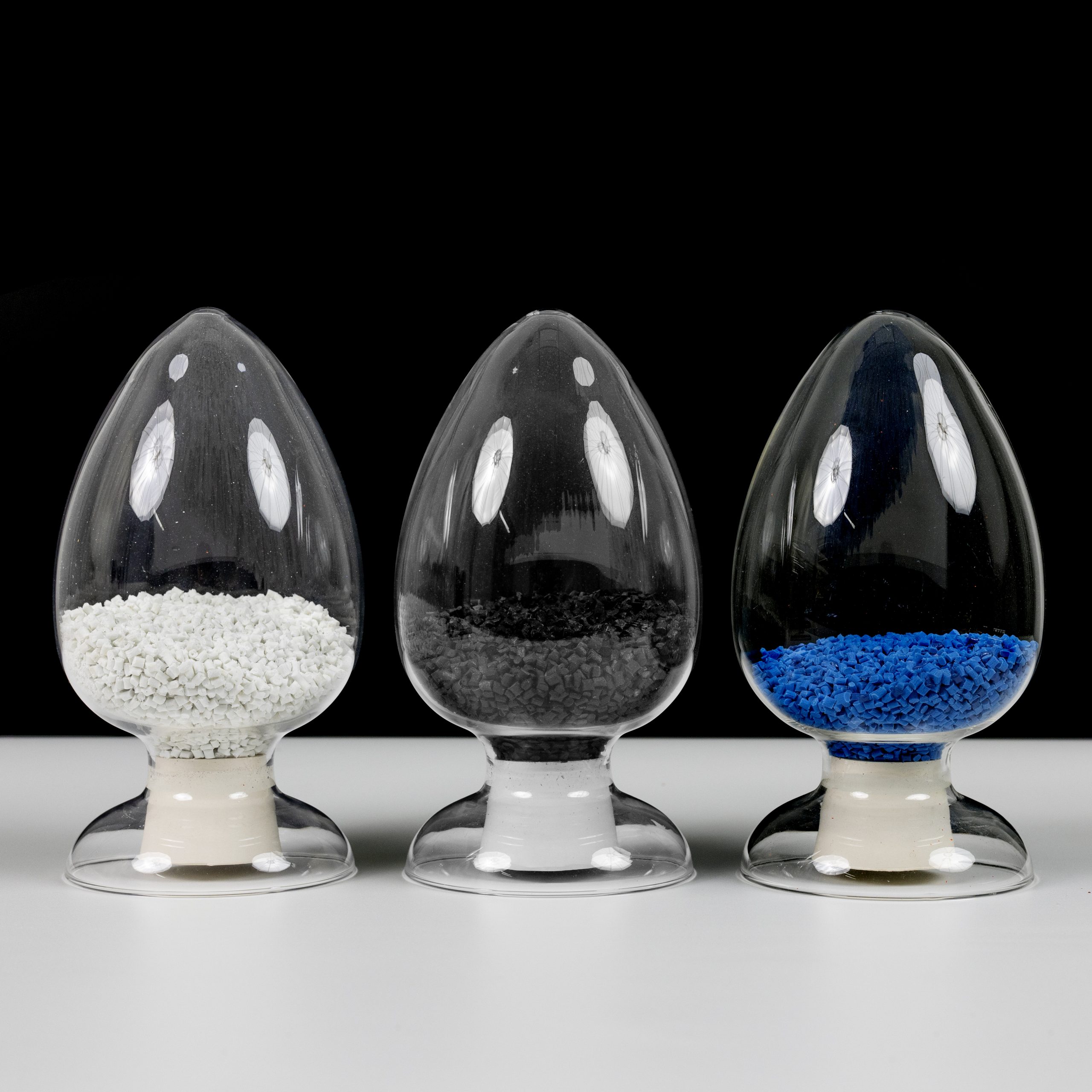
조달을 시작할 준비가 되셨나요? Nylonplastic은 본 가이드에서 다루는 모든 소재를 표준 등급 및 맞춤형 등급으로 공급하며, IATF 16949, ISO 9001 및 ISO 14001 인증을 받은 품질을 보장합니다. 견적 요청하기 →
이 프로젝트에 맞춰 어떤 나일론 플라스틱을 맞춤 제작할 수 있는지
나일론 플라스틱은 소재 개질과 제품 설계, 금형 설계 및 제작, 사출 성형, CNC 가공, 3D 프린팅을 결합한 기술입니다. 적합한 적용 범위는 일반적인 소재 명칭만으로는 단정할 수 없으며, 도면과 사용 조건을 바탕으로 선정됩니다.
| 사용자 지정 영역 | 검토할 옵션 | 필요한 정보 |
|---|---|---|
| Reinforcement system | Glass-fiber, carbon-fiber or unfilled nylon comparison | Stiffness, weight, impact, conductivity and cost priorities |
| Base polymer | PA6, PA66, PA12 or another suitable nylon family | Moisture, heat, chemical and dimensional requirements |
| Prototype route | 3D printing or CNC evaluation before production tooling | CAD file, test quantity and the properties the prototype must represent |
| Production route | Material review, mold DFM, tooling and injection molding | Annual volume, surface class, tolerances and inspection plan |
견적 요청(RFQ) 체크리스트
- CAD and load direction for the real component
- Stiffness, weight, impact and temperature targets
- Electrical conductivity or insulation requirement
- Surface, color, warpage and dimensional limits
- Prototype quantity, annual volume and tooling budget
DFM 지원, NDA 체결, 재료 또는 조성 관련 문서 및 검사 요건 등은 견적 협의 과정에서 논의할 수 있습니다. 제공 가능 여부는 프로젝트 범위와 합의된 품질 계획에 따라 달라집니다.
검토 단계에서 양산 단계까지
- 정의: 도면, 애플리케이션, 환경 및 볼륨을 공유합니다.
- 리뷰: 재료, 공정, DFM 및 검증 관련 위험 요소를 비교한다.
- 검증: 필요에 따라 시제품, 3D 프린팅, CNC 가공 또는 시제품 금형을 활용하십시오.
- 제작: 합의된 점검이 완료된 후에야 금형이나 생산을 진행해야 합니다.
Glass Fiber vs Carbon Fiber Nylon: Select the Reinforcement Around the Load
Glass-fiber nylon and carbon-fiber nylon are not interchangeable “stronger nylon” options. Glass fiber is often the cost-effective route to higher stiffness, heat performance and dimensional control. Carbon fiber can offer higher specific stiffness, lower weight and conductivity potential, but it also increases cost, anisotropy and sensitivity to fiber orientation. Compare matched base resin, fiber content, test direction and moisture condition before choosing.
Begin with the load direction, allowable deflection, weight limit, temperature, ESD or conductivity requirement, tolerance, surface requirement, manufacturing process and budget. If the part is a molded bracket, the flow direction and weld line may control the result. If it is machined or printed, stock direction and layer or tool orientation must also be documented.
| Decision factor | Glass-fiber nylon | Carbon-fiber nylon | What to verify |
|---|---|---|---|
| Stiffness and heat | Strong stiffness improvement with broad grade availability | Often higher specific stiffness and lower weight potential | Matched fiber percentage, test direction and temperature |
| 무게 | Usually heavier than comparable carbon-filled grades | Useful where stiffness per mass matters | Density, wall design and required deflection |
| Conductivity | Usually limited unless a conductive package is added | May provide ESD or conductivity potential | Surface and volume resistivity at the actual grade |
| Dimensional behavior | Fiber orientation and shrinkage still matter | Orientation and anisotropy can be pronounced | Flow direction, warpage and conditioned dimensions |
| Cost and tooling | Often lower material cost and broad supply | Often higher material cost and greater abrasive concern | Annual volume, tool steel, wear inserts and scrap value |
Orientation, Anisotropy and Mold Design
Short fibers align with melt flow in molded parts. The resulting stiffness, shrinkage and thermal expansion can differ along and across the flow direction. Gate location, runner balance, weld lines, ribs and wall thickness therefore belong in the material decision. A flat tensile coupon does not represent a bracket with a weld line or a housing with ribs and bosses.
For injection molding, request the gate and flow direction, fiber orientation assumptions, cooling layout and warpage review. For CNC machining, note how the stock was produced and whether machining releases stress. For 3D printing, define layer direction, infill, shell, chamber condition and post-processing. The same words “glass-filled” or “carbon-filled” can describe very different part behavior across processes.
Heat, Weight, ESD and Surface Requirements
Use carbon fiber when a weight or stiffness-per-mass target justifies the added cost and the electrical behavior is useful or manageable. Use glass fiber when a robust stiffness and heat solution with broad sourcing is more important. Neither reinforcement automatically solves creep, impact, chemical resistance or surface appearance. The base nylon, fiber length, fiber percentage, additive package and moisture condition remain important.
| 신청 | Starting comparison | Validation evidence |
|---|---|---|
| Lightweight bracket | Carbon fiber for stiffness per mass; glass fiber for cost control | Deflection, vibration, density and fatigue |
| Hot fixture or housing | Compare matched reinforced grades at temperature | HDT, creep, thermal cycling and conditioned dimensions |
| ESD enclosure | Carbon-filled grade may be a candidate | Resistivity, grounding, shielding and surface consistency |
| Visible molded component | Glass fiber may offer a more practical finish route | Texture, gloss, fiber read-through and gate appearance |
Cost, Tool Wear and Supplier Evidence
Material price is only one part of the decision. Carbon-filled grades may increase tool wear, require wear-resistant gates or inserts, affect polish and increase scrap cost when orientation or warpage is not controlled. Glass-filled grades can also be abrasive. Ask which steel, surface treatment, replaceable components, maintenance interval and spare parts are included in the tool plan.
Request a grade-specific data sheet, processing guide, moisture condition, test direction, fiber content, color, approved source and change-notification policy. Compare data under matched test methods and do not transfer a value from one base resin or fiber percentage to another. We can review the load direction, weight, heat, ESD, process, volume and candidate grades before the drawing is frozen.
GF Nylon and CF Nylon RFQ Checklist
- Base nylon, fiber type, fiber content, color and exact grade.
- Load direction, allowable deflection, fatigue, impact and temperature.
- Weight, ESD, conductivity, surface, texture and cosmetic zones.
- Injection molding, CNC machining or 3D printing route and orientation.
- Tool steel, wear inserts, dimensional inspection and conditioning state.
- Annual volume, price target, approved suppliers and change control.
Send the load direction, weight, heat, ESD, process, volume and candidate grades with CAD and the controlled drawing. We can compare glass-fiber and carbon-fiber nylon against measurable part requirements and define the validation coupons or molded samples needed.
자주 묻는 질문
Can Nylon Plastic compare glass- and carbon-fiber grades for one drawing?
Yes. A useful comparison needs the load direction, wall sections, temperature, moisture, surface requirement, target weight and quantity. Fiber percentage alone is not enough to select a grade.
Which reinforcement is normally more cost-effective?
Glass fiber is usually the lower-cost structural route. Carbon fiber may be justified when stiffness-to-weight, lower density or a specific electrical behavior is more important than material price.
Why do gate location and fiber direction matter?
Reinforced polymers are directional. Flow orientation affects stiffness, shrinkage, warpage, weld lines and failure location, so material selection and mold DFM should be reviewed together.
Can a prototype be made before production tooling?
Nylon Plastic offers 3D printing and CNC routes that can support geometry and assembly review. The team should clarify which prototype properties will and will not represent the final molded reinforced material.
Request a Custom Project Review
Send the drawing, application, operating conditions and expected quantity. Nylon Plastic can review material modification, prototyping, tooling and production options within the agreed project scope.