Engineering plastics have transformed automotive design, enabling weight reduction, component consolidation, and improved performance. Here’s a comprehensive guide to selecting the right engineering plastics for automotive applications.
Why Engineering Plastics in Automotive
Every 10% reduction in vehicle weight improves fuel efficiency by 5-7%. Engineering plastics and composites are key to automotive lightweighting strategies. Beyond weight reduction, plastics offer design flexibility, corrosion resistance, and cost reduction compared to metals.
Key Automotive Application Areas
엔진룸 내 부품
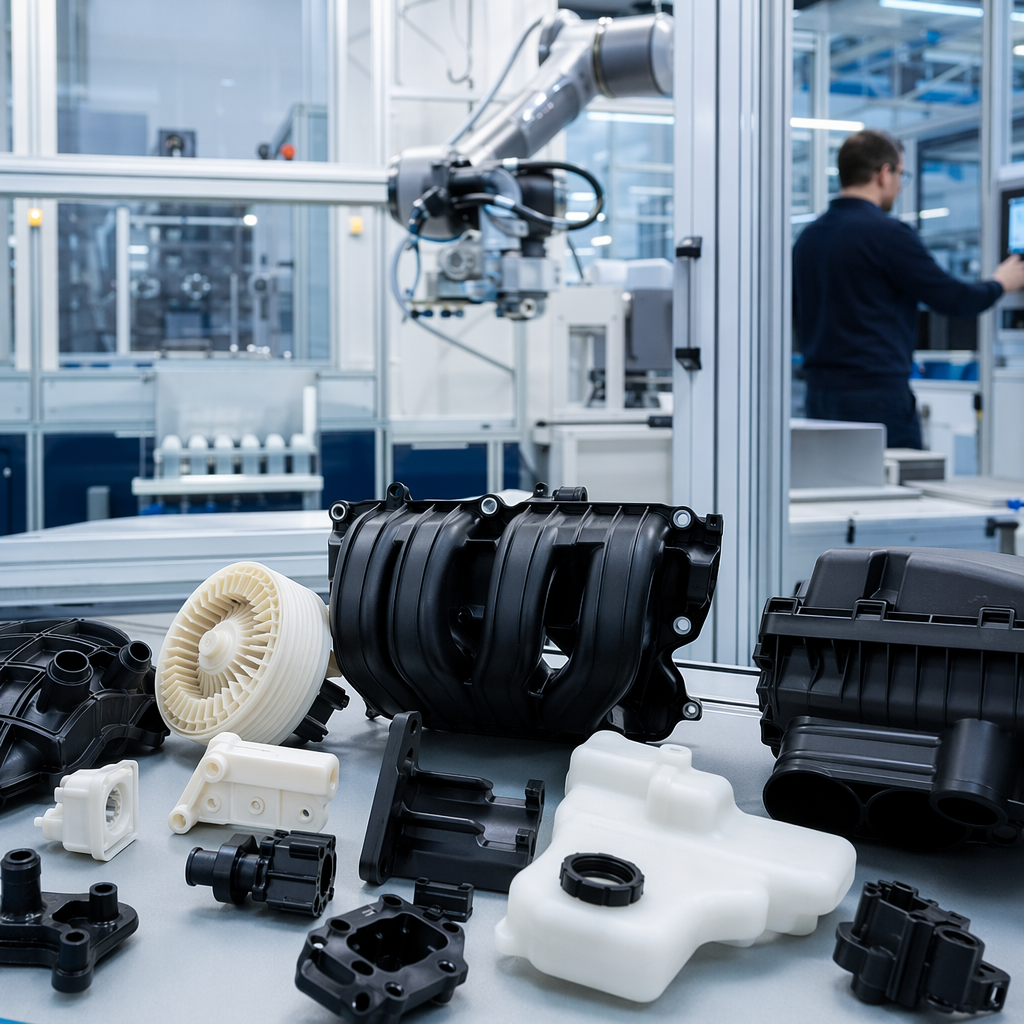
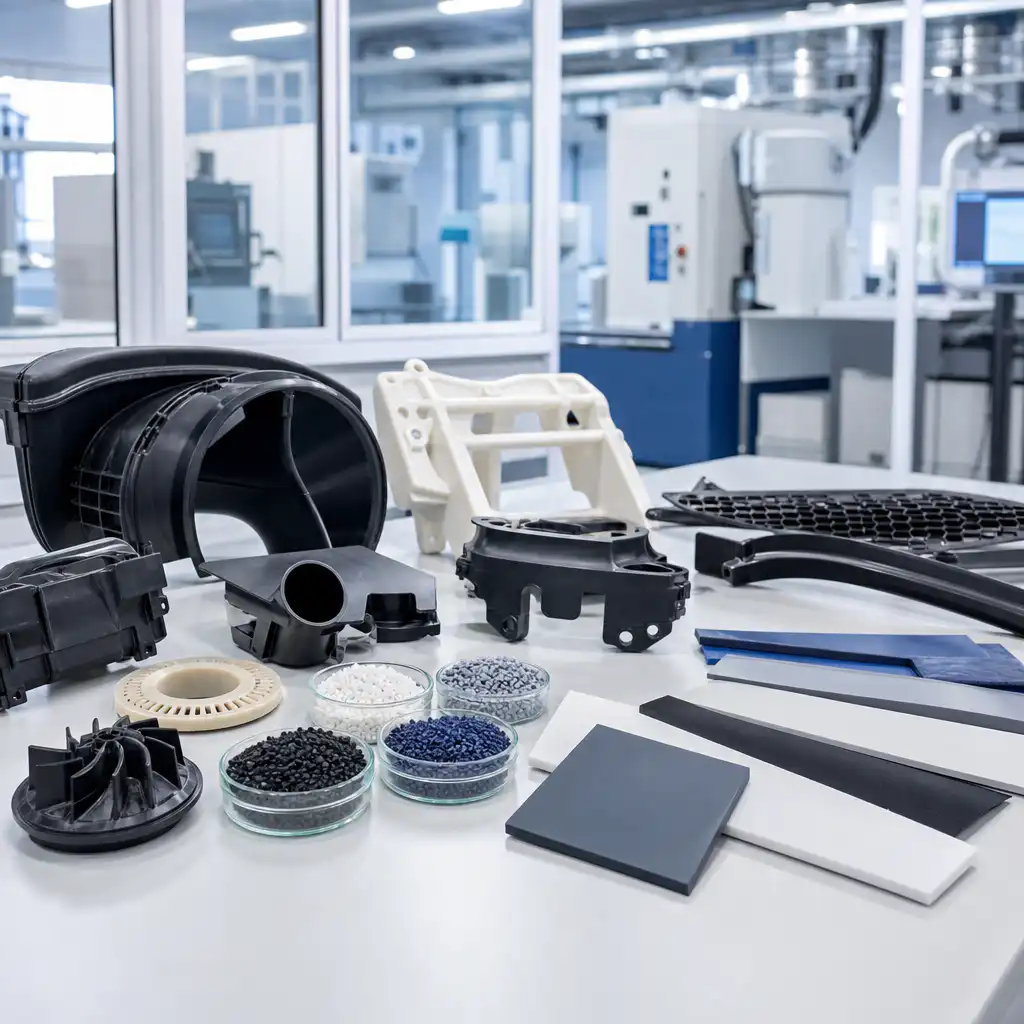
Requirements: Heat resistance (100-150°C continuous), oil resistance, dimensional stability. Materials: PA66-GF30 (glass fiber reinforced Nylon 66), PPA (polyphthalamide), PPS. These components must withstand continuous high temperatures and chemical exposure from engine fluids.
Structural and Chassis Components
Requirements: High strength, impact resistance, long-term durability. Materials: Long-fiber reinforced thermoplastics (LFRT), GMT (glass mat thermoplastics), PA66-CF (carbon fiber reinforced nylon). Carbon fiber reinforced plastics increasingly replace metal structural brackets.
내장 부품
Requirements: Low VOC emissions, good surface finish, UV stability. Materials: ABS, PC/ABS alloys, PMMA (acrylic). These parts prioritize aesthetics and occupant safety (low flammability, smoke toxicity).
외장 부품
Requirements: UV resistance, impact resistance, paintability. Materials: TPO (thermoplastic olefins), PA6-GF, PET-GF. Bumper systems, mirror housings, and wheel arch liners commonly use these materials.
Electrical and Electronic Components
Requirements: Flame retardancy, electrical insulation, thermal management. Materials: PA66 with flame retardant additives, PBT-GF, LCP (liquid crystal polymer). EV battery components require specialized high-voltage insulation materials.
Industry Certifications Required
Automotive suppliers must meet IATF 16949 quality management standards. Materials used in automotive applications should have OEM approvals (e.g., VW, BMW, Toyota material specifications). Full material traceability and IMDS (International Material Data System) registration are mandatory for most automotive programs.
Emerging Trends
Electric Vehicles
EV adoption drives new material requirements: battery housing (flame retardant, thermally conductive plastics), motor components (high-temperature, electrically insulating materials), and charging infrastructure components.
Sustainability
Recycled content and bio-based materials are increasingly required by OEMs. Post-industrial recycled (PIR) nylon compounds maintain performance while reducing environmental impact.
Supplier Requirements for Automotive Programs
- IATF 16949 certification (mandatory)
- Full PPAP (Production Part Approval Process) documentation
- IMDS registration for all materials
- Long-term price stability agreements
- Capacity commitment for production ramp phases
Nylonplastic’s Automotive Capability
Nylonplastic is IATF 16949, ISO 9001, ISO 14001, and ISO 45001 certified. We supply engineering plastic materials and CNC machined/3D printed components for automotive applications, including under-hood parts, tooling fixtures, and EV battery components. Our export experience covers 30+ countries with established logistics to major automotive manufacturing hubs.

조달을 시작할 준비가 되셨나요? Nylonplastic은 본 가이드에서 다루는 모든 소재를 표준 등급 및 맞춤형 등급으로 공급하며, IATF 16949, ISO 9001 및 ISO 14001 인증을 받은 품질을 보장합니다. 견적 요청하기 →