
나일론 계열 이해하기
폴리아미드(나일론) 소재는 분자 구조에 따라 차이가 있으며, 이는 물성과 용도에 영향을 미칩니다.
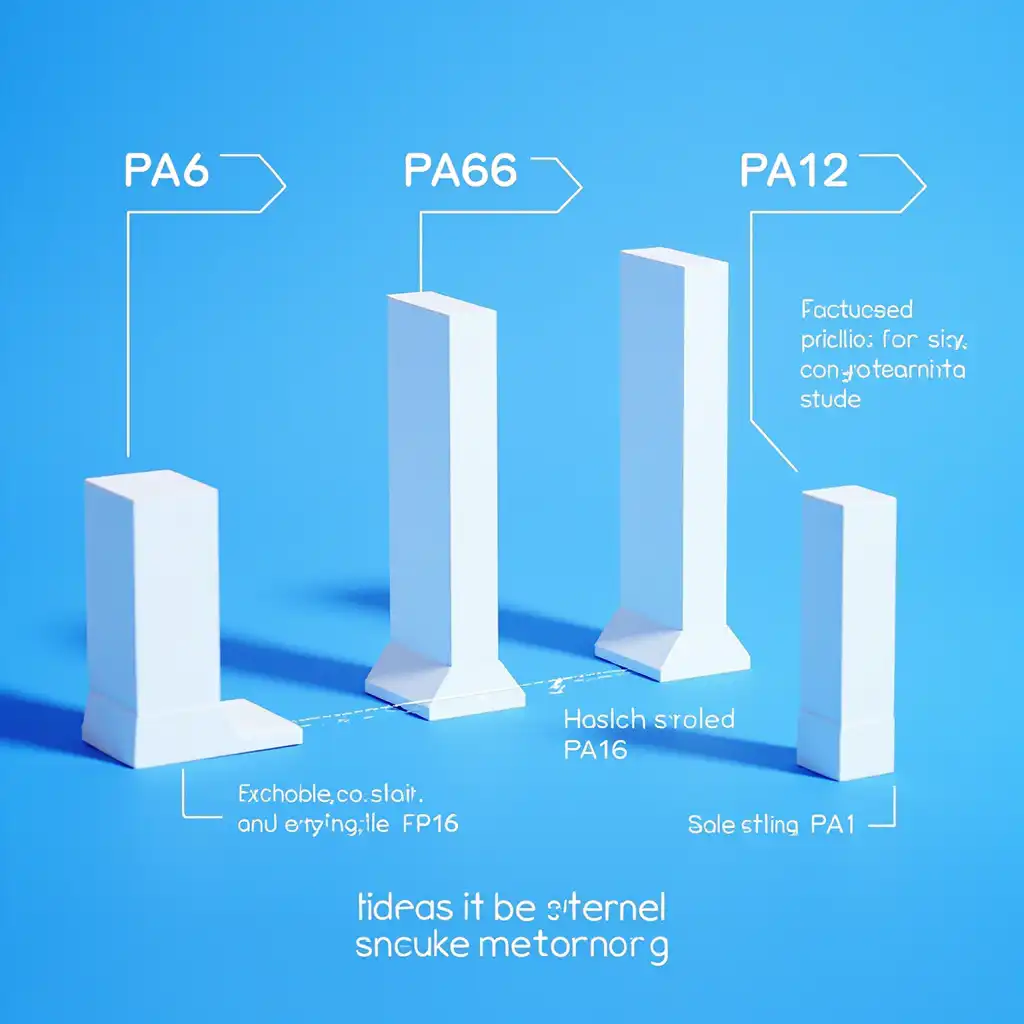
PA6 — 폴리아미드 6
- 융점: 220°C
- 장점: 더 뛰어난 내충격성, 저렴한 비용, 간편한 가공
- 다음에 가장 적합합니다: 일반 기계 부품, 3D 프린팅, 소비재
PA66 — 폴리아미드 66
- 융점: 265°C
- 장점: 더 뛰어난 내열성, 우수한 기계적 강도
- 다음에 가장 적합합니다: 자동차 엔진 부품, 고온 용도
PA12 — 폴리아미드 12
- 융점: 180°C
- 장점: 수분 흡수율이 가장 낮고, 내화학성이 가장 우수함
- 다음에 가장 적합합니다: 연료 라인, 실외 사용, 습기에 민감한 환경
선택 가이드
내열성이 필요하면 PA66을, 비용 대비 내충격성이 중요하면 PA6을, 내습성 및 내화학성이 필요하면 PA12를 선택하십시오.
자주 묻는 질문
PA6, PA66, PA12 중 어떤 소재가 부품에 적합한지 어떻게 알 수 있을까요? — 나일론 소재군 종합 비교 가이드
PA6 vs PA66 vs PA12 — 나일론 소재군 종합 비교 가이드: 부재의 하중 용량, 사용 온도 범위, 습기 노출, 마모 특성 및 가공 방법이 실제 사용 조건과 일치할 때 해당 부재에 적합합니다.
PA6, PA66, PA12 비교 시 어떤 특성을 확인해야 할까요? — 나일론 소재군 종합 비교 가이드
강도, 강성, 내충격성, 내열성, 수분 흡수율, 치수 안정성, 마찰, 마모 및 화학적 호환성을 확인하십시오.
PA6, PA66, PA12 중 가장 큰 선정 위험 요소는 무엇인가 — 나일론 소재군 종합 비교 가이드?
가장 큰 위험은 실제 환경, 가공 방법, 부품 형상 및 장기 사용 등을 고려하지 않고 데이터시트에 기재된 수치만 보고 선택하는 것입니다.
‘PA6 vs PA66 vs PA12 — 나일론 소재군 종합 비교 가이드’에 소개된 소재들은 양산 전에 언제 테스트해야 할까요?
부품이 하중, 열, 화학 물질, 습기, 엄격한 공차, 규제 요건 또는 새로운 작동 환경에 노출될 경우 시험을 실시하는 것이 좋습니다.