
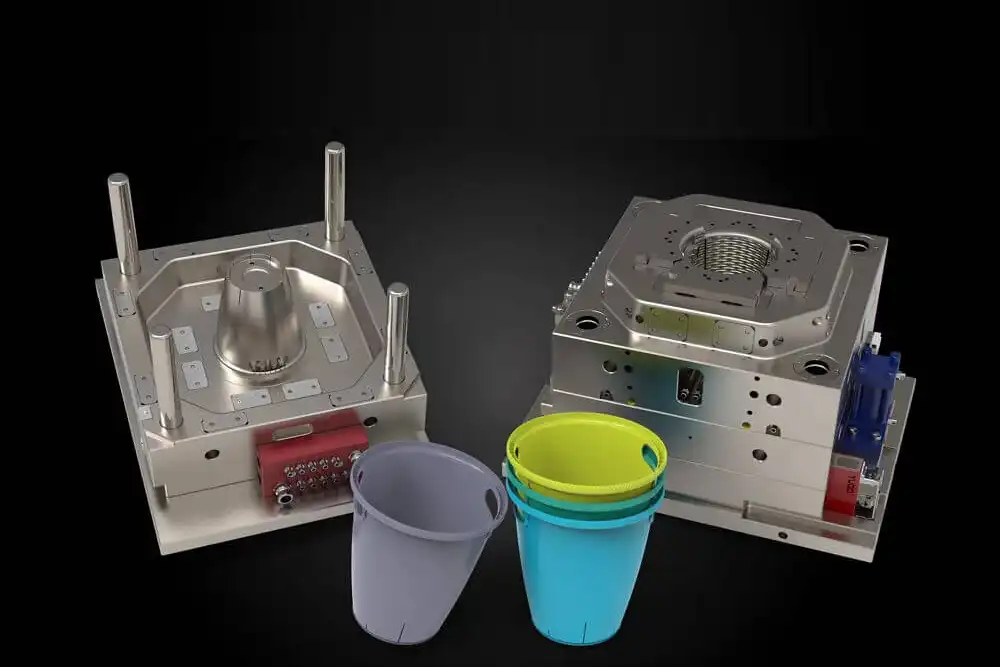
A bucket injection mold project starts with the complete container system, not only the bucket body. The bucket, lid, handle, decoration, stacking requirement, resin and molding machine must be reviewed together before tooling is released.
For a custom bucket injection mould quotation, share the target capacity, 3D model or sample, material, closure and handle design, appearance standard, annual demand, molding-machine information and required trial approval. The final mold scope depends on those project inputs.
Define the Bucket Mold Scope Before Quotation
Bucket Body
Capacity, brimful volume, wall distribution, top rim, base, nesting, stacking and load requirements.
Lid and Closure
Seal geometry, opening method, tamper-evident features, venting and fit with the approved bucket rim.
Handle and Decoration
Wire or molded handle interface, label or in-mold decoration requirement, logo area, texture and visible surfaces.
A nominal capacity such as 25 L does not define the tool by itself. Overall dimensions, fill level, product density, lifting load, closure method and the available molding machine can change the design and quoted scope.
Bucket Injection Mold Project Inputs
| Input | What to specify | Why it affects the mold |
|---|---|---|
| Container geometry | CAD or sample, capacity, dimensions, wall targets, rim, base and stacking features | Defines cavity, core, parting line, cooling and ejection requirements |
| Resin and product use | Exact grade where known, color, filled product, temperature and regulatory documents | Changes shrinkage assumptions, flow, cooling and validation scope |
| Lid and handle | Matching components, assembly method, load and opening requirements | Controls interface dimensions and whether separate tools are needed |
| Decoration and appearance | Label method, texture, gloss, logo, visible surfaces and approved reference | Affects cavity surface, handling, automation and sample approval |
| Production environment | Molding machine, automation, expected demand and maintenance plan | Determines machine fit, tool layout and operating assumptions |
DFM Checks for Bucket, Lid and Handle Tooling
Large thin-wall containers can be sensitive to filling, cooling and ejection. The review should connect each design feature to the planned resin, machine and test method rather than applying a universal rule.
Wall and structure
- Review wall transitions, ribs, rim stiffness and base stability.
- Check nesting and stacking clearances with real mating parts.
- Define the load condition for the handle and lifting points.
Gate and flow
- Review gate position, filling balance and weld-line risk.
- Consider how labels, color and surface requirements affect the process.
- Confirm whether flow analysis or an early trial is needed.
Cooling and warpage
- Plan cooling around deep walls, rim, base and local thick sections.
- Define roundness, flatness and stacking checks after molding.
- Measure samples in the agreed conditioning state.
Parting and ejection
- Confirm draft, parting line, venting and ejector locations.
- Protect sealing, decoration and other visible areas.
- Review safe release without distorting the rim or wall.
Match the Mold to the Production Machine
A mold can be correct for the part and still be unsuitable for the intended press. Before design approval, compare the mold concept with the machine and automation that will run it.
| Machine or cell detail | Review question |
|---|---|
| Shot and plasticizing capacity | Can the selected resin and part weight be processed within the machine’s suitable operating range? |
| Clamp and platen | Do mold size, projected area, tie-bar spacing and mounting method fit the press? |
| Opening and ejection | Is there enough stroke and clearance for bucket release, lid features and part handling? |
| Cooling and utilities | Are water circuits, connections and temperature-control assumptions compatible with the plant? |
| Automation | How will the bucket, lid, handle or label be loaded, removed, checked and packed? |

Trial Samples and Mold Approval
The quotation should define what happens between the first mold trial and final acceptance. Approval can include the bucket body, matching lid and handle interfaces, but the exact inspection and functional tests must be agreed for the project.
Sample identification
- Record resin, color, cavity, process condition and sample stage.
- Keep drawing revision and measurement state with the samples.
- Separate dimensional samples from appearance samples if needed.
Approval evidence
- Check agreed critical dimensions, weight and visible surfaces.
- Verify bucket-to-lid fit, handle assembly, stacking and nesting.
- Run project-specific leakage, load, drop or transport tests where required.
Any change after the trial should be recorded against the approved drawing and sample. This prevents a cosmetic adjustment from changing a sealing, stacking or handling feature without review.
Material and Documentation Review
PP and polyethylene grades are commonly considered for buckets and pails, but the exact grade must match the product, temperature, chemical exposure, impact requirement, decoration method and regulatory scope. Food-contact, chemical or recycled-content requirements should be confirmed with the selected grade and applicable documents; they should not be assumed from the resin family alone.
- Plastic injection molding services for the molding stage.
- Injection mold gate design for gate and flow decisions.
- Integrated plastic manufacturing for connected tooling, molding, inspection and delivery scope.
Bucket Injection Mold FAQ
What should be included in a bucket mold quotation?
The quotation should identify the bucket, lid and handle scope; mold configuration; resin and machine assumptions; decoration requirements; sample and approval stages; inspection records; tooling ownership or maintenance terms; and included or excluded production items.
Can a bucket mold be quoted from capacity alone?
No. Capacity is only one input. Geometry, wall distribution, resin, closure, handle, stack and nesting requirements, machine fit, demand and validation scope also affect the mold.
How should mold life or delivery time be stated?
Both should be quoted against the selected mold specification and project scope. Steel, cooling, cavity arrangement, resin, maintenance, design maturity and trial requirements can change the result.
What files should be sent if no final CAD exists?
Send available drawings, samples, capacity and dimensions, lid and handle references, product-use conditions, appearance requirements and production-machine data. The supplier can then identify what must be completed before a firm tooling quotation.
Request a Bucket Injection Mold Review
보내기
- Bucket, lid and handle CAD or samples.
- Capacity, dimensions and critical interfaces.
- Resin, color, decoration and product-use conditions.
- Production machine and automation information.
- Expected demand, trial and inspection requirements.
The review should clarify
- Tooling scope and machine assumptions.
- DFM questions for filling, cooling and ejection.
- Sample, measurement and functional approval stages.
- Required documents and quotation exclusions.
- Open items needed before tooling release.
Share the project data that changes the mold decision. The technical team can review the bucket system and define the information needed for a project-specific quotation.