PA12 기초: 분자 구조와 PA6 및 PA66과 다른 점
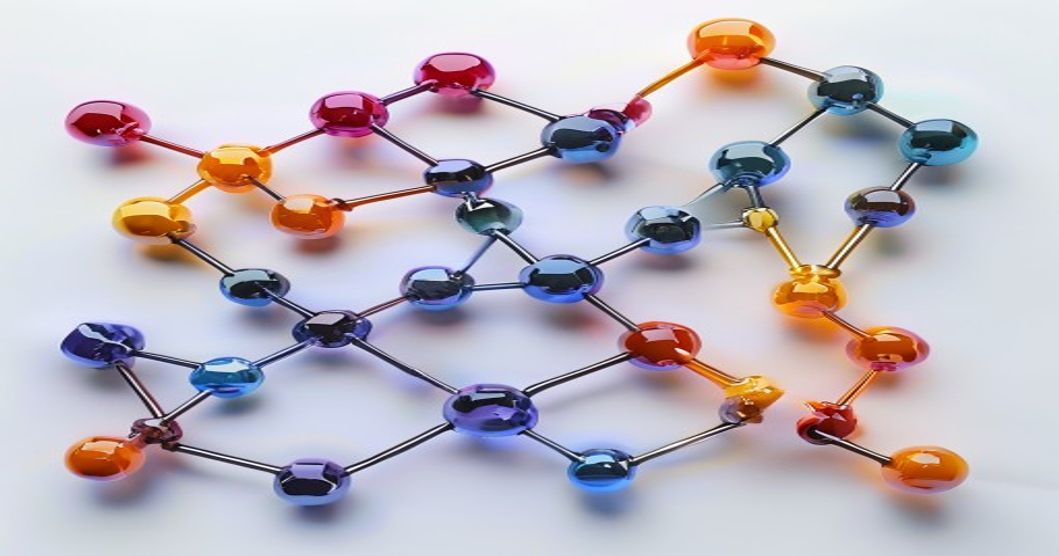
PA12, commercially known as nylon 12, is a polyamide engineering plastic with the molecular formula -[NH-(CH2)11-CO]n]-. This long-chain polyamide distinguishes itself from the more common PA6 and PA66 through its significantly lower amide group density. While PA6 has an amide group every six carbon atoms and PA66 has one every six as well, PA12 distributes its amide groups across eleven methylene units, resulting in a fundamental shift in material behavior.
The non-polar methylene segments between amide groups create a more flexible molecular chain that folds and packs differently than shorter-chain nylons. This flexibility reduces the overall polarity of the polymer, which directly translates to lower moisture absorption. Unfilled PA12 absorbs approximately 0.25 to 0.30% water at equilibrium in a 50% relative humidity environment, compared to 2.5 to 3.0% for PA6 and 2.5% for PA66. This dramatically lower moisture uptake means PA12 undergoes minimal dimensional changes in humid conditions, preserving tight tolerances without the extensive pre-drying or post-molding conditioning required for PA6 and PA66.
Despite the lower amide density, PA12 forms strong intermolecular hydrogen bonds that drive high crystallinity. This crystalline structure, combined with the flexible backbone, gives PA12 an unusual combination of toughness, chemical resistance, and dimensional stability that shorter-chain nylons struggle to match. The melting point of PA12, approximately 178 degrees Celsius, is lower than PA6 (220 degrees Celsius) and PA66 (260 degrees Celsius), which enables lower processing temperatures and reduced thermal stress during molding.
당사의 엔지니어링 플라스틱 공급에 관하여
As an ISO 9001 certified engineering plastics manufacturer and exporter based in China, we specialize in providing high-quality nylon (PA6, PA66, PA12), polyacetal (POM), thermoplastic polyurethane (TPU), polypropylene (PP), and specialty engineering compounds to B2B buyers worldwide. Our products include glass fiber reinforced, carbon fiber filled, flame retardant, and custom-modified grades tailored to your application requirements. With in-house testing laboratories and a dedicated R&D team, we ensure consistent quality across every batch. Whether you need standard grades or custom formulations, we deliver reliable material solutions for automotive, electronics, industrial, and consumer goods applications.
Benefits of Carbon Fiber Reinforcement in PA12
While unfilled PA12 offers excellent toughness and moisture resistance, its stiffness and thermal performance fall short of the demands in many engineering applications. Carbon fiber reinforcement addresses these limitations by introducing high-modulus, high-strength carbon filaments into the PA12 matrix, creating a composite material that leverages the chemical resistance and dimensional stability of PA12 alongside the exceptional mechanical properties of carbon fiber.
Carbon fibers have a tensile modulus of 230 to 600 GPa and a tensile strength of 3.5 to 7.0 GPa, orders of magnitude above the PA12 matrix. When incorporated at loading levels of 10 to 40% by weight, these fibers carry the majority of applied loads, dramatically increasing stiffness, strength, and thermal conductivity while reducing creep and thermal expansion. The result is a high-performance engineering compound suitable for structural components, precision instruments, and demanding industrial applications.
Unlike glass fiber reinforcement, carbon fiber also imparts electrical conductivity to the compound. This property enables electrostatic dissipation (ESD) and electromagnetic interference (EMI) shielding in electronic housings and enclosures, a capability that glass-filled PA12 cannot provide. The dark gray to black color of carbon fiber compounds also serves as a natural visual indicator of the material type in manufacturing environments.
Mechanical Property Improvements with Carbon Fiber Reinforcement
Tensile Strength and Stiffness
Unfilled PA12 has a tensile strength of approximately 48 to 55 MPa and a tensile modulus of 1,200 to 1,500 MPa. Adding 20% carbon fiber raises tensile strength to approximately 100 to 120 MPa and tensile modulus to 6,000 to 8,000 MPa. At 30% carbon fiber loading, tensile strength reaches 130 to 150 MPa with a modulus of 10,000 to 12,000 MPa. These improvements represent a 2.5 to 3-fold increase in stiffness and a 2 to 3-fold increase in strength over the base polymer.
The specific stiffness (stiffness-to-weight ratio) of carbon fiber filled PA12 is particularly noteworthy. At 30% loading, the compound has a density of approximately 1.28 grams per cubic centimeter, compared to 1.01 grams per cubic centimeter for unfilled PA12. The modulus increase far outweighs the density increase, yielding a specific modulus superior to both glass-filled PA12 and unfilled PA66.
Thermal Performance
Carbon fiber reinforcement significantly improves the thermal performance of PA12. The heat deflection temperature (HDT) at 1.82 MPa increases from approximately 55 degrees Celsius for unfilled PA12 to 190 to 210 degrees Celsius at 30% carbon fiber loading. This improvement results from the fibers restricting molecular mobility at elevated temperatures. The thermal conductivity also increases from approximately 0.25 W/m-K for unfilled PA12 to 0.5 to 0.8 W/m-K for carbon-filled grades, improving heat dissipation in electronic and thermal management applications.
Crep and Fatigue Resistance
Carbon fiber reinforcement drastically reduces creep deformation under sustained loads. Unfilled PA12 exhibits measurable creep above 40 degrees Celsius under loads exceeding 10 MPa. Carbon fiber filled grades show minimal creep even at 80 degrees Celsius under loads of 30 to 40 MPa. This characteristic is critical for structural components like brackets, clamps, and housings that must maintain dimensional accuracy under long-term load.
Fatigue resistance also improves substantially. Carbon-filled PA12 withstands significantly more loading cycles before failure compared to the unfilled polymer, making it suitable for dynamic applications including gears, pulleys, and reciprocating mechanism components.

Carbon Fiber Filled PA12 vs. Glass Fiber Filled PA12
Both carbon fiber and glass fiber reinforcement improve the mechanical performance of PA12, but the two approaches produce compounds with distinct characteristics suited to different application requirements.
Stiffness and Weight
At equivalent loading levels, carbon fiber provides approximately 30 to 50% higher modulus than glass fiber. A 30% carbon fiber PA12 compound achieves a tensile modulus of 10,000 to 12,000 MPa, while a 30% glass fiber PA12 compound typically reaches 6,500 to 8,000 MPa. Carbon fiber’s lower density (1.78 g/cm3 for carbon fiber vs. 2.54 g/cm3 for E-glass) also means that carbon-filled compounds are lighter. A 30% carbon fiber PA12 compound weighs approximately 1.28 g/cm3 compared to 1.38 g/cm3 for 30% glass fiber PA12, a difference of roughly 8% that matters in weight-sensitive aerospace and automotive applications.
전기적 특성
Perhaps the most significant functional difference is electrical conductivity. Carbon fiber is electrically conductive, making carbon-filled PA12 compounds conductive enough for electrostatic dissipation (ESD) and, at higher loadings, electromagnetic shielding. Glass fiber is electrically insulating, so glass-filled PA12 remains an insulator. For electronic housings, sensor components, and applications requiring controlled electrical behavior, this difference alone can dictate the choice between carbon and glass reinforcement.
Wear and Abrasion Resistance
Carbon fiber provides self-lubricating characteristics that glass fiber lacks. Carbon-filled PA12 compounds exhibit lower friction coefficients and better wear resistance against metal surfaces. This makes carbon fiber the preferred choice for bearing surfaces, sliding components, and applications where metal-on-polymer contact occurs. Glass fiber, by contrast, can be abrasive and accelerate wear on mating metal surfaces in sliding applications.
비용 관련 고려 사항
Carbon fiber reinforcement carries a significant cost premium over glass fiber. Depending on fiber type (standard modulus vs. high modulus) and supplier, carbon-filled PA12 can cost two to four times more than glass-filled equivalents. For applications where the added stiffness, lower weight, electrical conductivity, or self-lubricating properties of carbon fiber justify the cost, the investment pays dividends in performance and reliability. For cost-sensitive structural applications where maximum stiffness is not required, glass fiber reinforced PA12 may offer a better value proposition.
Processing Guidelines for Carbon Fiber Filled PA12 Compounds
건조 요구 사항
Although PA12 absorbs significantly less moisture than PA6 or PA66, carbon fiber filled grades should still be dried before processing to prevent surface defects and ensure optimal mechanical properties. Recommended drying conditions are 80 to 100 degrees Celsius for 3 to 4 hours, targeting a moisture content below 0.10%. The carbon fibers do not absorb moisture, so drying requirements are driven entirely by the PA12 matrix.
사출 성형 파라미터
Carbon fiber filled PA12 compounds process at melt temperatures of 220 to 260 degrees Celsius, somewhat higher than unfilled PA12 due to the thermal mass and viscosity contribution of the fibers. Mold temperatures of 60 to 100 degrees Celsius are recommended, with higher temperatures producing better surface finish and more consistent crystallinity. The material exhibits higher melt viscosity than unfilled PA12, requiring higher injection pressures and faster fill rates to avoid short shots in thin-wall sections.
Fiber Orientation Considerations
Carbon fibers align in the direction of melt flow during injection molding, creating anisotropic mechanical properties. Properties in the flow direction are 20 to 40% higher than in the transverse direction. This anisotropy must be accounted for in part design, particularly for structural components where load direction is predictable. Gate placement should be optimized to align fiber orientation with primary load paths. Where isotropic behavior is required, design features like ribs and gussets oriented perpendicular to flow direction help equalize performance.
Tooling Wear
Key Applications in Automotive, Aerospace, and Industrial
자동차 분야 적용 사례
Carbon fiber filled PA12 serves a growing range of automotive applications that demand high stiffness, low weight, and dimensional stability. Fuel system components, including quick-connect fittings, fuel line connectors, and vapor management valves, leverage the chemical resistance of PA12 combined with the strength and thermal stability provided by carbon fiber. Under-hood sensor housings benefit from the compound’s thermal stability and electrical properties. Structural brackets, pedal components, and transmission parts use the material for its high strength-to-weight ratio and creep resistance.
The shift toward electric vehicles has expanded opportunities for carbon-filled PA12 in battery module housings, busbar insulators, and charging connector components. The electrical conductivity of the compound provides natural ESD protection without requiring separate conductive coatings or inserts.
Aerospace and Aviation
In aerospace, weight reduction is a primary design driver that makes carbon fiber filled PA12 an attractive alternative to metal components. Cable ducts, clamps, brackets, and panel fasteners made from carbon-filled PA12 reduce weight while maintaining the mechanical performance and flame retardancy required by aviation standards. The low moisture absorption ensures dimensional stability across the wide temperature and humidity variations encountered in aircraft environments.
Industrial and Electronics
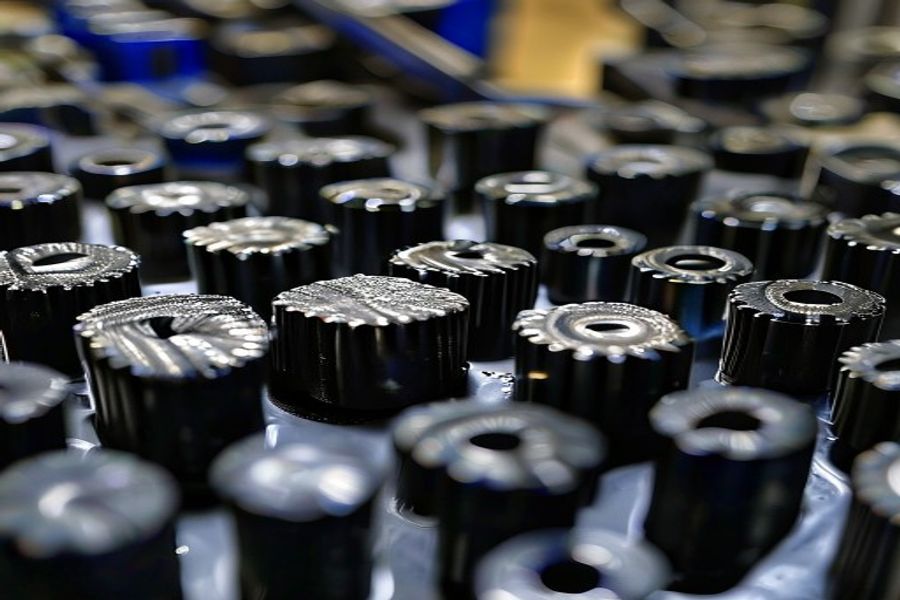
Industrial applications for carbon fiber filled PA12 include precision gears, bearing cages, pump components, and conveyor system parts where the combination of low friction, high stiffness, and chemical resistance provides extended service life. In electronics, the material serves for EMI shielding housings, sensor enclosures, and connector bodies where electrical conductivity, dimensional stability, and processability converge. The compound’s ability to be injection molded into complex geometries with integrated features reduces assembly steps and part counts in electronic assemblies.
Selecting the Right Carbon Fiber Percentage for Your Needs
The carbon fiber loading level in PA12 compounds is the primary variable controlling the balance between cost, processability, and performance. Selecting the right percentage requires evaluating the specific demands of your application.
At 10 to 15% carbon fiber, the compound provides moderate stiffness improvement (2 to 3 times unfilled modulus) while maintaining reasonable impact strength and lower cost. This range suits applications where dimensional stability and slightly enhanced stiffness are needed without the full performance of a heavily reinforced compound.
At 20 to 30% carbon fiber, the compound delivers the most common performance tier for engineering applications. Stiffness reaches 5 to 8 times unfilled levels, HDT exceeds 180 degrees Celsius, and electrical conductivity becomes sufficient for ESD applications. This loading range represents the best balance of performance and processability for most automotive, industrial, and electronic applications.
At 30 to 40% carbon fiber, maximum stiffness and thermal performance are achieved, but processability becomes more challenging due to high melt viscosity and fiber breakage during injection. Impact strength decreases as fiber content increases beyond 30%. This range is reserved for highly demanding structural applications where maximum performance justifies the processing difficulty and higher material cost.
Consult with your supplier to obtain grade-specific property data sheets and processing recommendations. Testing in actual part geometry and under real-world loading conditions remains the most reliable method for validating grade selection before committing to production volumes.
자주 묻는 질문
How do you know whether PA12 Fundamentals: Molecular Structure and Why It Differs from PA6 and PA66 fits a part?
PA12 Fundamentals: Molecular Structure and Why It Differs from PA6 and PA66 fits a part when its load capacity, temperature range, moisture exposure, wear behavior, and processing method match the real service conditions.
What properties should be checked for PA12 Fundamentals: Molecular Structure and Why It Differs from PA6 and PA66?
강도, 강성, 내충격성, 내열성, 수분 흡수율, 치수 안정성, 마찰, 마모 및 화학적 호환성을 확인하십시오.
What is the biggest selection risk for PA12 Fundamentals: Molecular Structure and Why It Differs from PA6 and PA66?
가장 큰 위험은 실제 환경, 가공 방법, 부품 형상 및 장기 사용 등을 고려하지 않고 데이터시트에 기재된 수치만 보고 선택하는 것입니다.
When should PA12 Fundamentals: Molecular Structure and Why It Differs from PA6 and PA66 be tested before production?
부품이 하중, 열, 화학 물질, 습기, 엄격한 공차, 규제 요건 또는 새로운 작동 환경에 노출될 경우 시험을 실시하는 것이 좋습니다.