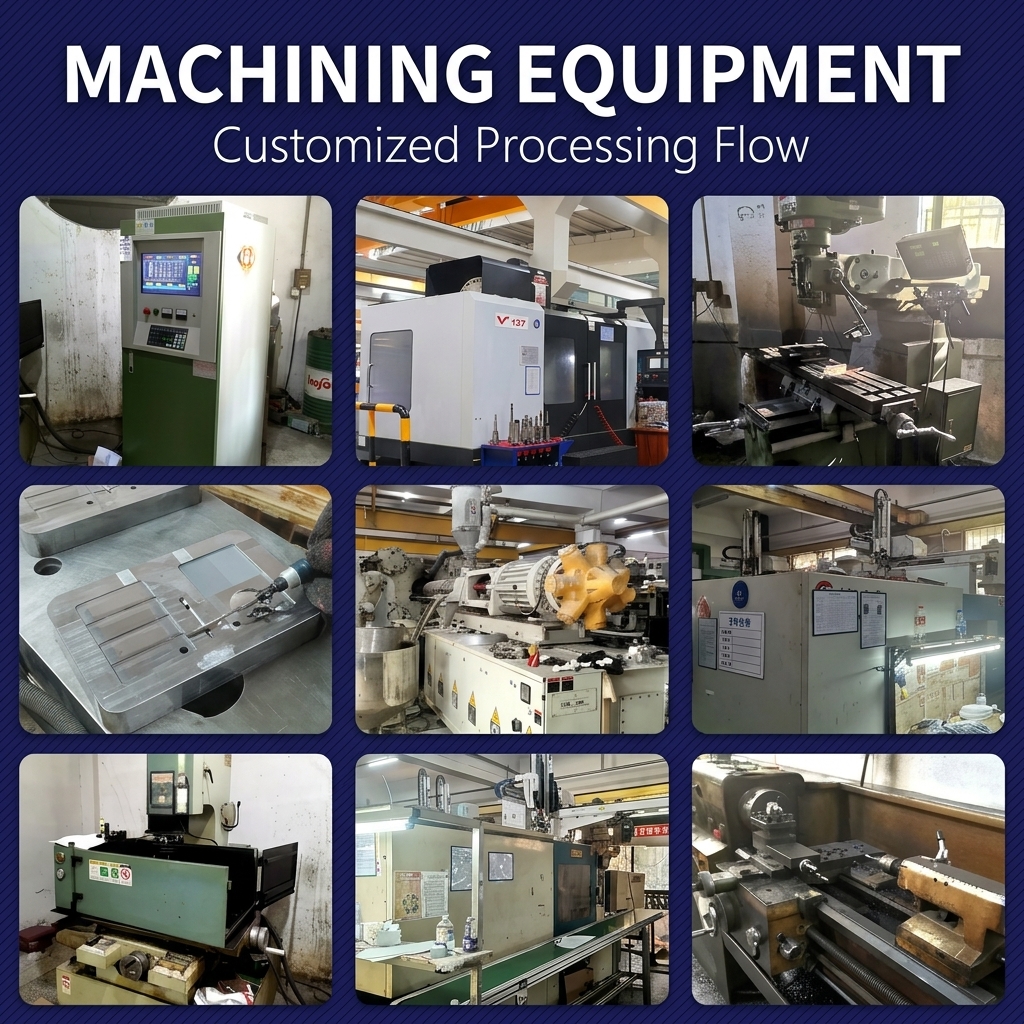
This cnc milling services practical guide explains practical considerations for material selection, design review, manufacturing, and sourcing decisions.
I had a customer call me last month and say, “I need 5-axis milling for this part.” I looked at his drawing and asked, “Why?” Long silence. “Because… it’s a complex part?”
핵심 개념 및 기초
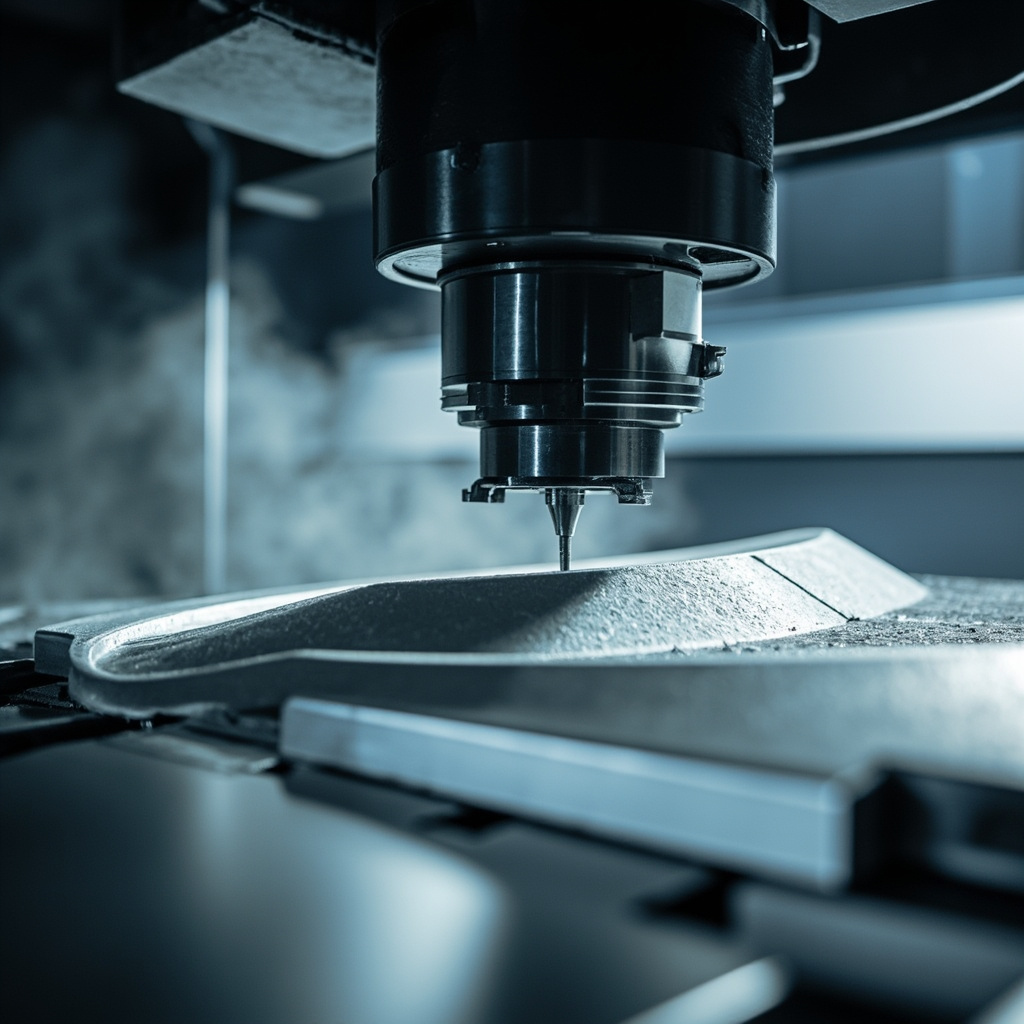
CNC milling is subtractive manufacturing using a rotating cutting tool that moves across a stationary (or repositioning) workpiece to remove material. Think of it as a very precise, very powerful sculpting process — but with spinny bits of carbide instead of a chisel.
Here’s what each axis configuration actually means on the shop floor:
3-axis milling: The tool moves in X (left-right), Y (front-back), and Z (up-down). The workpiece stays fixed. You can machine any feature accessible from the top — pockets, holes, slots, profiles. If you need features on other faces, you flip the part and do another setup. This is the workhorse of the industry and the right answer for probably 70% of milled parts.
4-axis milling: Adds a rotary axis (A-axis) that rotates the workpiece around the X-axis. Think of it as a 3-axis machine that can spin the part to access multiple sides. Great for parts with features around a cylinder or on multiple sides of a rectangular block — without the operator having to re- between faces.
5-axis milling: Adds two rotary axes (typically A and B, or A and C) so the tool can approach the workpiece from virtually any angle. The key advantage isn’t just accessing five sides of a cube — it’s being able to tilt the tool to reach undercuts, machine complex curved surfaces in a single setup, and maintain tighter geometric relationships between features on different faces because you never unclamp the part.
3+2 (positional 5-axis): Uses the rotary axes to position the part, then locks them and machines as if it were 3-axis. Different from full simultaneous 5-axis where all axes move at once. Cheaper than simultaneous, but can’t do true contoured 5-axis surfaces.
At nylonplastic.com, we run the full range because we’ve learned that different parts need different tools. Our CNC machining service lets us match your part to the right machine — not the other way around. That matters more than most people realize.
주요 공정 및 기술
Let’s get specific about what each process can and can’t do. This is the stuff that shows up in your quote — and in your part quality:
| 기능 | 3축 밀링 | 4축 밀링 | 5-Axis (Simultaneous) | 3+2 (Positional) |
|---|---|---|---|---|
| Faces per setup | 1 (top) | Up to 4 (cylindrical/indexed) | 5+ (any angle) | 5 (indexed) |
| Typical tolerance | ±0.025mm | ±0.02mm | ±0.01mm | ±0.015mm |
| Undercut capability | No (requires special tooling) | 한정판 | Full — tilt tool to any angle | 한정판 |
| Curved surface finish | Faceted (stair-step) | Improved (fewer setups) | Smooth continuous | Good (indexed, then 3-axis) |
| Setup count (6-sided part) | 5–6 setups | 2–3 setups | 1–2 setups | 1–2 setups |
| ming complexity | Simple | 보통 | High (CAM + simulation) | 보통 |
| Relative shop rate | $ | $$ | $$$ | $$ |
| Best for | Flat parts, simple profiles, one-sided features | Parts with radial features, multi-side prismatic parts | Impellers, turbine blades, complex organic surfaces | Multi-face prismatic parts needing tight positional tolerance |
The real decision tree is simpler than most people think:
- All features accessible from one side? → 3-axis.
- Features on multiple faces of a block, tight positional relationships? → 3+2 or 4-axis.
- Complex curved surfaces that require continuous tool tilt? → True 5-axis.
- Not sure? → Send us the model. We’ll tell you what makes sense. No charge for the conversation.
산업 애플리케이션
Here’s where different CNC milling services earn their keep across real industries — not hypothetical textbook examples, but the stuff we actually machine week in and week out:
| 산업 | 신청 | 재료 | 주요 요구 사항 | nylonplastic.com의 장점 |
|---|---|---|---|---|
| 자동차 | Engine blocks, cylinder heads, turbocharger housings | Cast aluminum / 6061-T6 | Flatness across large surfaces, bore alignment | Large-bed 5-axis capacity — single setup for multi-bore alignment eliminates tolerance stack |
| 항공우주 | Turbine blade root s, structural rib components | Titanium Ti-6Al-4V / Inconel 718 | Thin-wall integrity, certified material properties | optimization for superalloys — we know how fast you can push Inconel before the tool quits |
| 의료 | Orthopedic implant trays, surgical robot arms | Titanium Grade 5 / 316L | Ra 0.4μm surface finish, no burrs, full traceability | Medical-grade finishing with ISO 13485 documentation — not just the part, the paperwork too |
| 전자 제품 | Precision enclosure shells, heat sink bodies | Aluminum 6061 / Copper C110 | EMI shielding, fine fin pitch, cosmetic surfaces | 3+2 machining for six-sided enclosures — tight seams, clean edges, anodize-ready surfaces |
| 산업 장비 | Gearbox housings, pump bodies | Ductile iron / 4140 Steel | Bearing bore concentricity, sealing face flatness | Post-machining with CMM verification — we prove the bores are where the drawing says they are |
| 로봇 자동화 | Joint housings, sensor mounts, wrist assemblies | Aluminum 7075 / Stainless 304 | Complex internal geometry, lightweight, cable routing channels | 5-axis simultaneous for organic internal channels — no post-machining, no assembly alignment issues |
Notice a theme here? Nobody is buying “5-axis milling” because they want to pay for a fancy machine. They’re buying parts that work — parts where the right process choice means fewer setups, better accuracy, and lower total cost. That’s the conversation worth having.
재료 선정 — 실제로 효과가 있는 것은 무엇인가
Different milling processes handle different materials better. This isn’t just about what the machine can cut — it’s about what the process lets you achieve in terms of finish, tolerance, and cost:
Aluminum (6061, 7075, 2024, 5083): Machines beautifully on any axis configuration. The limiting factor with aluminum is almost never the process — it’s the design. Watch for thin-wall vibration on 5-axis contoured parts; chatter marks on a cosmetic surface mean you’re pushing the tool too hard or your needs work.
Stainless Steel (303, 304, 316, 17-4PH): Work-hardens if you’re not careful. This matters more on 5-axis because the tool engagement angle changes continuously during simultaneous moves. A good CAM mer adjusts for this. A bad one burns up tooling and leaves you with a work-hardened part that eats the next tool too. We for constant chip load — it takes longer to write the , but it saves you in cycle time and scrapped parts.
Titanium (Grade 2, Grade 5/Ti-6Al-4V): Low thermal conductivity means heat stays in the cut zone. On 3-axis, this is manageable with proper coolant. On 5-axis, tool tilt can trap heat against the part. Our approach: high-pressure through-tool coolant where possible, conservative step-overs, and strategies that keep the tool moving — never dwelling.
Tool Steel & Alloy Steel (4140, 4340, D2, A2): These want rigidity. A 5-axis machine is inherently less rigid than a well-set-up 3-axis because of the rotary table stack. For hardened steels, sometimes 3-axis with a rock-solid beats 5-axis with a compromise setup. We’ll tell you which.
Engineering Plastics (PEEK, Delrin/Acetal, Nylon, PTFE): Completely different beast. Heat is the enemy — too fast and the plastic melts instead of cutting. Sharp tools, high speed, light cuts. Our 엔지니어링 플라스틱 가이드 covers this in detail. For plastic parts, 3-axis is often the sweet spot because you’re not fighting thermal expansion across multiple rotary axes.

For detailed machinability ratings and cost-per-part estimates across 50+ materials, bookmark our 재료 선택 허브. It’s the reference we built for our own quoting team, and it’ll save you from discovering that your chosen material machines at half the speed you budgeted for.
비용과 성능 간의 상충 관계
Here’s the math that drives your milling quote, in plain language:
3-axis vs. 5-axis cost comparison (real numbers): A simple aluminum bracket with features on two faces might cost $85 on a 3-axis machine (two setups) versus $110 on 5-axis (one setup). More expensive per hour, but faster. For that part, 3-axis wins on pure cost. But a complex manifold with features on five faces? 3-axis needs five setups at maybe $85 each in labor = $425 plus extra QC time. 5-axis does it in one setup at $150. You save money AND get better positional accuracy.
The setup count multiplier: Every setup you eliminate removes: fixturing time, probing time, operator labor, and — critically — the tolerance error that stacks up every time you unclamp and re-clamp a part. For a part where the relationship between holes on Face 1 and Face 3 needs to be ±0.05mm, the tolerance stack across three setups can eat most of that allowance. One 5-axis setup and the relationship is as accurate as the machine itself.
ming costs: 5-axis CAM ming takes longer and costs more — figure 2-5x the ming time of a comparable 3-axis part. For a one-off prototype, that ming cost might dominate. For a 500-piece production run, you pay it once and amortize it. Run the math both ways before deciding.
When 3-axis is absolutely the right call: Flat plates, simple brackets, parts with features only on one face, anything where the tolerance budget is generous enough that multiple setups won’t cause problems. Also: large parts that won’t physically fit in a 5-axis machine’s work envelope — 5-axis machines trade raw travel for rotary axes.
When 5-axis earns its keep: Curved organic surfaces, tight positional relationships across multiple faces, undercut features, parts where eliminating setups improves quality enough to justify the higher shop rate. And almost any aerospace or medical part with positional tolerances under 0.05mm across multiple faces.
We help our customers make this call every day. Sometimes the answer surprises them. Our 원스톱 제조 솔루션 lets you get quotes for both approaches side by side — real numbers, not rules of thumb.

품질 기준 및 모범 사례
Quality in CNC milling is about what you inspect and how you inspect it — but also about what you control before the cut even starts:
Machine calibration. A 5-axis machine needs regular calibration of its rotary axes — the A and B/C axes have to know exactly where “zero” is, or your positional accuracy goes out the window. We calibrate on a scheduled cycle and verify with a ball-bar test. Ask any shop about their calibration schedule. If they don’t have one, walk away.
Tool management. Tool length and diameter offsets matter more on 5-axis because the tool is tilting. A 0.05mm error in tool length on a 3-axis machine affects only Z height. On a 5-axis machine with the tool tilted at 45°, it affects both Z and XY position. We use laser tool setters and verify tool geometry before critical features.
In-process probing. Renishaw-style spindle probes check part position and critical features between operations. On a multi-setup 3-axis job, probing at each setup catches errors before they become scrap. On 5-axis, probing verifies that the part hasn’t shifted during aggressive simultaneous cuts.
CMM verification. For parts with GD&T callouts — true position, profile, concentricity — a CMM is non-negotiable. Calipers and micrometers can’t verify true position across five faces. Our CMM reports are included with every production order; you don’t have to ask for them.
시작하기 — 실질적인 단계
Sourcing CNC milling services doesn’t have to be complicated. Here’s the process that works:
1. Know your geometry. Before you start comparing 3-axis vs. 5-axis quotes, understand what your part actually needs. Count the faces with features. Look at the tightest positional tolerances. Check for undercuts or curved surfaces that need continuous tool tilt. If you’re uncertain, send us the model — we’ll tell you what process fits.
2. Provide a complete package. STEP file for 3D geometry, PDF drawing with critical dimensions and tolerances, material specification, surface finish callout, and quantity. The more complete your package, the faster and more accurate the quote. Missing information means assumptions, and assumptions mean surprises later.
3. Ask for process rationale. A good shop doesn’t just quote a price — they explain why they chose 3-axis, 5-axis, or a hybrid approach. If the quote says “5-axis — $X” with no explanation, ask. You’re paying for their expertise, not just their spindle time.
4. Get DFM feedback before committing. A 5-axis machine can make almost anything, but some things it shouldn’t. Too-thin walls vibrate. Sharp internal corners on hard materials break tools. Our DFM review at nylonplastic.com catches these issues before they become expensive problems — and it’s included with every quote.
5. Start small, validate, then scale. For anything critical, get a first article. Check fit and function. Then release the production quantity. The days you spend validating will save you from the weeks you’d spend reworking.
For a deeper dive into designing parts that machine efficiently, our 제품 디자인 지침 cover DFM best practices for milling, turning, and multi-axis work. Read it before you model — it’s easier to design right the first time than to rework a design that’s already been approved.

When is 3-axis enough?
Whenever the geometry can be made in one or two orientations.
When does 5-axis pay off?
What should the quote include?
Material, quantity, tolerances, critical surfaces, and finish requirements.
결론
Here’s the bottom line on CNC milling services: the “best” process is the one that meets your requirements at the lowest total cost — not the one with the most axes.
Most parts don’t need 5-axis. Some absolutely do. The skill is knowing which is which before you spend money. That’s where a manufacturing partner who tells you the truth — even when it means recommending a cheaper process — earns their value.
At nylonplastic.com, we run 3-axis, 4-axis, 5-axis, turning, EDM, and grinding under one roof. We don’t have a favorite machine to keep busy — we have your part to get right. Sometimes that means 5-axis simultaneous for a medical robot wrist housing with organic internal channels. Sometimes it means a $75 3-axis job on a flat bracket that just needs to work.
Both matter. Both get the same attention to quality. And both get an honest recommendation about what process fits — because the right answer isn’t the same for every part, and pretending otherwise costs you money.
관련 리소스
- CNC 가공 서비스 — 전체 역량 개요 — Machine specifications, work envelopes, and our complete in-house manufacturing lineup.
- CNC 가공 재료 가이드 — Machinability ratings, cost comparisons, and practical advice for 50+ engineering materials.
- 표면 마감 가이드 — Anodizing, plating, powder coating, and polishing options with real cost and lead time data.
- Mold Design & Mold Making — When your volumes outgrow CNC milling, here’s how we transition parts from machining to injection molding.
Not sure whether your part needs 3-axis, 5-axis, or something in between? Send us your model. We’ll review it, recommend the right process, and give you a quote that matches your geometry to the machine — not the other way around. No sales pitch, no upsells, just an engineer looking at your part and telling you what actually makes sense. 파일을 업로드하고 견적을 받아보세요 →
자주 묻는 질문
When is CNC Milling Services: 3-Axis vs 5-Axis and What Your Parts Actually Need the right choice?
CNC Milling Services: 3-Axis vs 5-Axis and What Your Parts Actually Need is the right choice when the part requires machined accuracy, controlled surfaces, repeatable features, and a material that can be cut reliably.
What should be confirmed before ordering CNC Milling Services: 3-Axis vs 5-Axis and What Your Parts Actually Need?
생산을 시작하기 전에 도면 버전, 재료 등급, 공차, 수량, 임계 치수, 표면 마감 및 검사 요구 사항을 확인합니다.
What usually drives cost in CNC Milling Services: 3-Axis vs 5-Axis and What Your Parts Actually Need?
비용은 일반적으로 재료, 설정 시간, 기계 시간, 공차 난이도, 고정, 공구 접근, 마감, 검사 및 주문 수량에 따라 결정됩니다.
How can quality risk be reduced in CNC Milling Services: 3-Axis vs 5-Axis and What Your Parts Actually Need?
중요한 기능을 명확하게 표시하고, 불필요하게 엄격한 공차를 피하고, 제조 가능성을 조기에 확인하고, 중요한 치수에 대한 검사 데이터를 사용하면 품질 위험을 줄일 수 있습니다.