나일론 대 폴리프로필렌: 부품이 더 큰 하중을 견뎌야 하거나, 마모에 강해야 하거나, 고온에서도 충분한 강성을 유지해야 할 경우에는 나일론을 선택하십시오. 낮은 수분 흡수율, 다양한 수성 화학 물질에 대한 폭넓은 내성, 낮은 밀도, 그리고 단가가 더 중요한 고려 사항일 경우에는 폴리프로필렌을 선택하십시오.
모든 상황에 적용되는 정답은 없습니다. 등급을 비교하기 전에 사용 온도, 지속 하중, 유체 노출, 치수 공차 및 예상 생산량을 명확히 정의해야 합니다.

한눈에 보기
| 결정적 순간 | 나일론 | 폴리프로필렌 | 엔지니어링 점검 |
|---|---|---|---|
| 하중 및 마모 | 보통 더 강하다 | 가벼운 작업에 더 적합합니다 | 크리프 및 베어링 응력 확인 |
| 수분 | 물을 더 많이 흡수합니다 | 이용률이 매우 낮음 | 조건부 치수를 정의하십시오 |
| 열 | 일반적으로 더 높은 강성을 유지합니다 | 부하 온도 여유폭 감소 | 수지 계열뿐만 아니라 실제 등급도 비교해 보세요 |
| 화학 물질 노출 | 유류 및 다양한 탄화수소에 효과적 | 산, 염기 및 습한 환경에서 종종 더 뛰어난 성능을 발휘합니다 | 농도, 온도 및 노출 시간을 확인하십시오. |
| 부품 비용 | 수지 및 가공 비용 상승 | 보통 더 낮음 | 밀도, 사이클 시간 및 불량 발생 위험을 포함하십시오 |
부동산 직접 비교
| 속성 | PA66 (건식) | PA66 (응축형) | PP 호모폴리머 | PP 공중합체 |
|---|---|---|---|---|
| 인장 강도(MPa) | 80-85 | 50-55 | 30-38 | 25-30 |
| 굴곡 탄성률(GPa) | 2.8-3.0 | 1.2-1.5 | 1.2-1.5 | 0.9-1.2 |
| 노치 이조드 충격 강도 (kJ/m²) | 4-6 | 15-25 | 3-5 | 20-40 (23°C 기준) |
| HDT @ 1.82MPa(°C) | 70-80 | — | 50-60 | 45-55 |
| 연속 사용 온도 (°C) | 100-130 | — | 80-100 | 80-100 |
| 밀도(g/cm³) | 1.14 | — | 0.90-0.91 | 0.90 |
| 수분 흡수율 (24시간, %) | 1.2-1.5 | — | <0.01 | <0.01 |
| 가격 ($/kg, 대량) | 3.00-4.50 | — | 1.50-2.50 | 1.80-2.80 |

나일론의 강점: 강도, 내열성, 내마모성
나일론은 고온 환경에서 기계적 하중을 견뎌야 하는 용도에서 두각을 나타냅니다. 80°C에서 건조한 PA66은 실온 인장 강도의 60~70%를 유지하는 반면, PP는 30~40%로 떨어집니다. 기어, 베어링 및 구조용 브래킷의 경우, 나일론의 굽힘 탄성 계수가 2~3배 더 높기 때문에 동일한 강성을 확보하면서도 벽 두께를 더 얇게 만들 수 있어, 나일론이 PP보다 밀도가 25% 더 높음에도 불구하고 부품 중량을 줄일 수 있습니다. 마모가 발생하는 응용 분야(기어, 미끄럼면)에서, 충전제가 첨가되지 않은 나일론의 PV 한계는 약 0.09 MPa·m/s인 반면 PP는 약 0.03 MPa·m/s이며, 내부 윤활제(MoS₂, PTFE)를 첨가하면 나일론의 PV 한계를 0.2 MPa·m/s 이상으로 높일 수 있습니다.
PP의 장점: 내화학성, 내습성, 그리고 비용
폴리프로필렌은 수분 흡수를 거의 하지 않습니다 ((포화 시 <0.01%)로, 수중, 습한 환경 및 화학 물질에 노출되는 용도에서 가장 일반적으로 선택되는 소재입니다. 나일론은 포화 시 2-8%의 수분을 흡수하며(등급에 따라 다름), 이로 인해 건조 강도의 30-40%를 상실하고 치수가 0.5-1.5% 팽창합니다. 또한 PP는 실온에서 대부분의 산, 염기 및 유기 용매에 내성을 보이지만, 나일론은 강산, 페놀 및 산화제에 의해 부식됩니다. 화학 탱크 용도의 경우, PP의 내화학성만으로도 나일론은 고려 대상에서 제외됩니다.
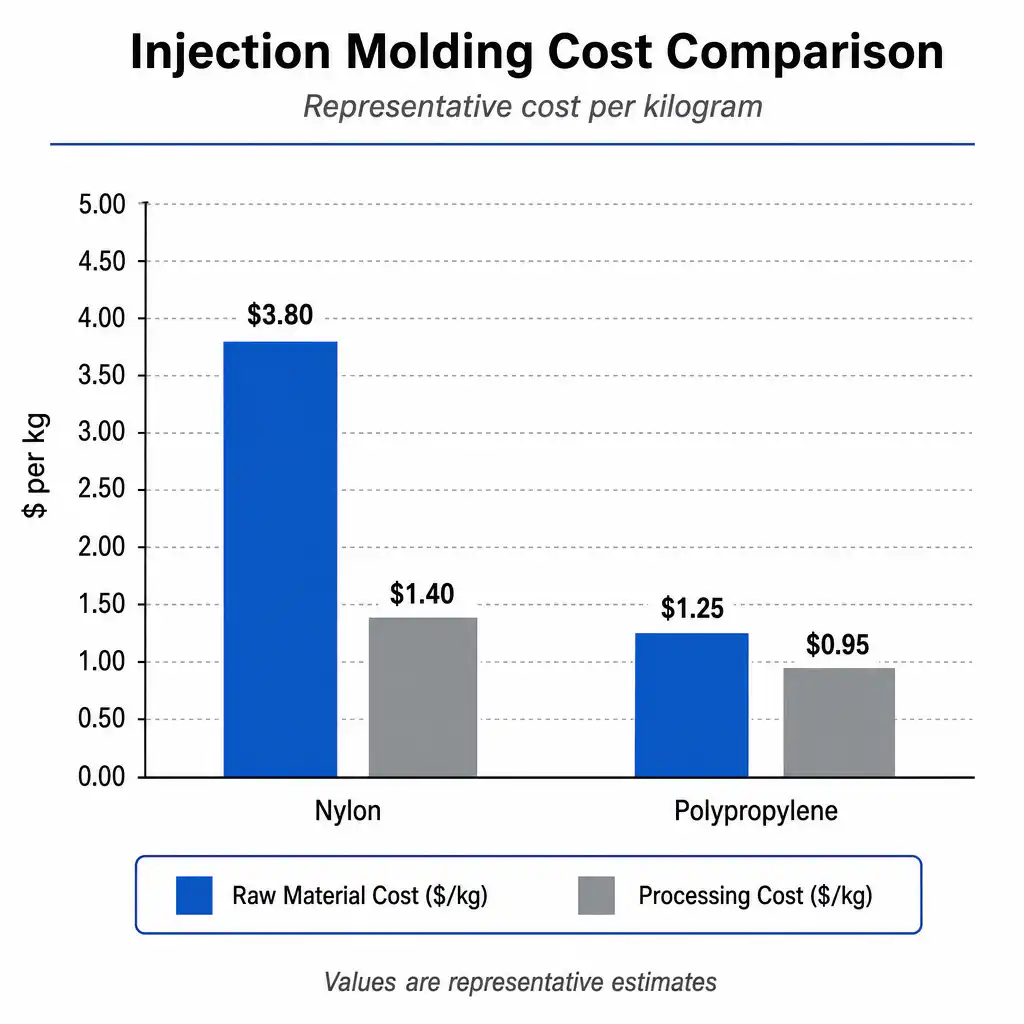
비용 측면에서, kg당 $1.50-2.50인 PP는 kg당 $3.00-4.50인 PA66보다 40-60% 더 저렴합니다. 30 MPa 이상의 강도가 필요하지 않은 대량 생산 소비재의 경우, 이러한 비용 차이는 결정적인 요소가 됩니다. PP의 낮은 밀도(0.90 대 1.14 g/cm³)는 부품당 비용 이점을 더욱 확대합니다. 100g의 PA66 부품은 PP로 제작할 경우 79g의 무게가 나갑니다. 즉, 부품당 21%의 소재가 덜 사용됩니다.
재료 선정을 위한 설계 지침
- 지속적인 온도가 80°C를 초과할 경우 나일론을 사용하십시오: PP의 HDT는 하중이 가해지면 50~60°C로 떨어집니다. 엔진룸, 전동 공구 또는 열원 근처에서 사용되는 모든 용도의 경우 나일론(PA66 또는 PA6)이 최소 기준이며, 130°C 이상에서는 PPA 또는 PPS가 필요할 수 있습니다.
- 실외 및 습한 환경에서는 PP를 사용하십시오: 자외선 안정화 처리된 PP 등급(2-3% 카본 블랙 또는 HALS 함유)은 수년간의 실외 노출에도 견딜 수 있습니다. 나일론은 자외선 안정화 처리가 필요하며, 그럼에도 표면 품질이 더 빨리 저하됩니다. 수중 또는 고습도 환경에서 사용되는 부품의 경우, PP는 수분 흡수율이 0%이므로 치수 변형이 발생하지 않습니다.
- 밀도 조정 비용 비교를 실행합니다: 부품당 재료비 = (부품 부피 [cm³]) × (밀도 [g/cm³]) × (수지 가격 $/kg) ÷ 1000. $2/kg × 0.90의 밀도를 가진 PP 부품의 재료비는 $1.80/L이며, PA66의 경우 $4/kg × 1.14의 밀도로 $4.56/L의 원자재 비용이 발생하며, 이는 kg당 가격을 비교하는 설계자들에게 2.5배라는 놀라운 차이를 보여줍니다.
- 중간 수준의 성능을 원한다면 유리 섬유가 함유된 등급을 고려해 보세요: PP-GF30은 약 $2.50-3.50/kg의 비율에서 70~90 MPa의 인장 강도를 나타내며, 이는 80 MPa인 건조 PA66에 근접한 수치입니다. GFPP는 나일론의 내열성에는 미치지 못하지만, 상온에서 사용되는 구조용 부품의 경우 강도 격차를 상당히 좁혀줍니다.
- 리빙 힌지: PP 전용: 폴리프로필렌은 높은 피로 저항성과 낮은 탄성 계수를 동시에 갖춘 독특한 특성을 지녀, 10⁶회 이상의 굽힘 사이클을 견딜 수 있는 리빙 힌지를 안정적으로 형성할 수 있는 유일한 범용 플라스틱입니다. 반면 나일론 리빙 힌지는 노치 민감도와 높은 강성으로 인해 수백 사이클 만에 파손됩니다.
- 전체 노출 목록을 확인하여 화학적 호환성을 점검하십시오: 나일론은 강산(HCl, H₂SO₄), 페놀, 방향족 탄화수소 및 염화아연 용액과 접촉 시 성능이 저하됩니다. PP는 강산화제(농축 질산, 할로겐)와 접촉 시 성능이 저하되며, 방향족/염소화 탄화수소에 접촉 시 팽창합니다. 단순히 데이터시트만 참고하지 말고, 실제 공정에서 사용하는 화학 물질을 사용하여 테스트하십시오.
산업별 적용 분야 매트릭스
| 산업 | 일반적인 부품 | 재질/등급 | 주요 요구 사항 |
|---|---|---|---|
| 자동차 엔진룸 | 엔진 커버, 흡기 매니폴드, 라디에이터 탱크 | PA66-GF30 | PPA 또는 PA66 (HDT >200°C) |
| 소비자용 포장 | 식품 용기, 뚜껑, 밀봉 장치 | PP 단일중합체/공중합체 | 비용 <$2/kg + 식품 접촉 승인 |
| 전동 공구 | 하우징, 기어 케이스, 팬 임펠러 | PA6-GF30 | -20°C에서의 충격 + 모터에서 발생하는 열 |
| 화학 공정 | 탱크, 배관 부속품, 펌프 하우징 | PP 호모 또는 PP-GF20 | pH 1~14 범위 전반에 걸친 내화학성 |

비용 결정 프레임워크
원료: PP는 $1.50-2.80/kg, PA66은 $3.00-4.50/kg, PA6은 $2.50-3.50/kg입니다. 특수 등급의 경우 그 격차가 더 벌어지는데, 유리 섬유 강화 PP는 비강화 기준재 대비 $0.50-1.00/kg이 추가되고, 유리 섬유 강화 나일론은 $1.00-2.00/kg이 추가됩니다.
가공 비용: PP는 나일론보다 10-20% 사이클이 더 빠릅니다(용융 점도가 낮고 냉각 속도가 빠름). 50g 부품의 경우, 사이클 시간이 20초인 PP와 24초인 나일론을 비교하면, 시간당 $30의 생산 속도에서 부품당 약 0.02의 기계 시간을 절약할 수 있습니다. 100만 개 이상의 부품을 생산할 경우, 사이클 시간만으로도 $20,000을 절약하게 됩니다.
실패 비용에 대한 고려 사항: 나일론 부품이 수분을 흡수하여 팽창해 허용 오차를 벗어나게 되면, 재작업 비용은 재료비 절감액을 훨씬 능가하게 됩니다. 반대로, PP 부품이 지속적인 하중을 받아 크리프 현상이 발생하여 현장에서 제품이 고장 나면, 보증 비용 때문에 나일론의 높은 단가가 오히려 저렴해 보일 정도입니다. 단순히 kg당 가격만 고려하지 말고, 해당 용도의 주요 고장 양상을 바탕으로 선택하십시오.
재료별 일반적인 결함
| 결함 | 외관 | 근본 원인 | 해결책 |
|---|---|---|---|
| 뒤틀림 / 변형 | 탈형 후 일부가 휘거나 뒤틀리는 현상 | 불균일한 냉각; 이방성 수축 | 냉각 레이아웃 최적화; 벽 두께 균일성 확인 <15% |
| 취성 파괴 | 변형 없이 파단되는 부품 | 나일론: 성형 시 수분이 너무 적음. PP: 자외선/열에 의해 열화됨 | 나일론: 수분 함량을 1.5~2.5% 수준으로 조절. PP: 자외선 안정제 첨가 |
| 표면 박리 | 층별로 진행되는 피부 필링 | 오염; 호환되지 않는 재가공재; 이형제 잔류물 축적 | 배럴을 세척하고, 재분쇄량을 다음 수준으로 제한하십시오. <20%; 금형 표면 세척 |
| 변형 / 영구 변형 | 일부 부품이 지속적인 하중을 받으면 변형된다 | 하중 수준에 대한 탄성 계수가 부족합니다. | GF 등급으로 변경; 리브 추가; 단기 탄성 계수가 아닌 크리프 탄성 계수를 명시 |
등급을 선택하기 전 구매자 체크리스트
- 지속 작동 온도 및 최고 작동 온도를 기록하십시오.
- 지속적인 구조적 하중과 간헐적인 충격 하중을 구분하십시오.
- 해당 부품이 노출될 모든 화학 물질, 세정제, 오일 및 습도 조건을 나열하십시오.
- 치수가 성형 직후의 건조 상태인지, 아니면 조건 조절 후의 상태인지 명시하십시오.
- 수지 가격만 따지지 말고 성형 부품의 원가를 비교해 보십시오.
프로젝트에 나일론 플라스틱을 선택해야 하는 이유
정밀 제조
한 지붕 아래 30개 이상의 CNC 및 사출 성형 라인
ISO 9001:2015 인증 획득
인증된 품질 관리 시스템, 전체 검사 보고서
15~25일의 리드 타임
신속한 처리 및 긴급 처리 옵션 제공
전 세계 배송
북미, 유럽, 아시아행 항공 및 해상 화물 운송
‘나일론 대 폴리프로필렌’ 가이드 다운로드
기술 데이터, 설계 지침 및 공급업체 확인 체크리스트가 포함된 무료 PDF 참고 가이드.
관련 기사
자주 묻는 질문
나일론과 폴리프로필렌 중 어느 쪽이 더 강할까요?
나일론(PA66)은 폴리프로필렌보다 강도가 약 2~3배 더 높습니다. 건조 상태의 PA66은 인장 강도가 80~85 MPa인 반면, PP 단일중합체의 인장 강도는 30~38 MPa입니다. 그러나 조건이 적용된 나일론(50% 상대습도 평형 상태)의 인장 강도는 50~55 MPa로 떨어지지만, 여전히 PP보다 대략 50% 더 강합니다. 강성의 경우, 나일론의 굽힘 탄성계수(건조 상태)는 2.8~3.0 GPa로, PP의 1.2~1.5 GPa보다 약 2배 높습니다. 유리 섬유가 충전된 등급을 비교하면 강도 차이는 상당히 좁혀집니다. PP-GF30은 70~90 MPa에 달하며, 이는 충전제가 첨가되지 않은 건조 PA66의 강도에 근접합니다.
나일론과 PP 중 어느 쪽의 내화학성이 더 우수할까요?
폴리프로필렌은 내화학성이 훨씬 뛰어납니다. PP는 실온에서 80°C까지 대부분의 산, 염기, 알코올 및 수용액에 내성을 보입니다. 나일론은 강산(HCl, H₂SO₄), 페놀, 방향족 탄화수소, 뜨거운 물(80°C 이상에서는 가수분해가 발생), 산화제에 의해 부식됩니다. 화학 물질 저장, 가공 장비 및 실험실 용도로는 거의 항상 PP가 더 나은 선택입니다. 단, 나일론은 PP보다 탄화수소(가솔린, 오일, 그리스)에 대한 내성이 더 뛰어나며, PP는 방향족 및 염소화 탄화수소에 노출되면 팽창합니다.
야외 사용에는 나일론과 PP 중 어느 것이 더 좋을까요?
두 재료 모두 원료 상태에서는 이상적이지 않습니다. 둘 다 자외선에 노출되면 열화됩니다. 자외선 안정화 처리된 PP(2% 카본 블랙 또는 HALS 첨가제 포함)는 자외선 안정화 처리된 나일론보다 내후성이 뛰어나며 가격도 저렴합니다. PP는 수분을 흡수하지 않기 때문에, 수분이 포화된 나일론에 균열을 일으킬 수 있는 동결-해동 손상을 방지합니다. 80°C 이상의 고온 환경에서 장기간 야외 구조용으로 사용할 경우, 내후성에는 한계가 있더라도 유리 섬유가 충전된 자외선 안정화 나일론이 더 나은 선택입니다. PP는 HDT에 가까워질수록 기계적 강도가 저하되기 때문입니다.
나일론이 폴리프로필렌보다 왜 더 비싼가요?
나일론의 가격이 더 비싼 이유는 다음과 같습니다. (1) 원료 단량체 생산(PA66의 경우 아디핀산 + 헥사메틸렌디아민, PA6의 경우 카프로락탐)에는 여러 단계의 석유화학 공정이 필요한 반면, PP는 단일 단계의 프로필렌 중합 공정으로 생산되기 때문입니다. (2) 가공에 더 많은 에너지가 소요됩니다. 나일론은 260~300°C에서 성형되는 반면, PP는 200~240°C에서 성형됩니다. (3) 밀도가 더 높기 때문에(1.14 대 0.90 g/cm³), 동일한 부품 부피를 생산할 때 중량 기준으로 더 많은 소재가 필요합니다. 이 추가 비용은 더 높은 강도, 내열성 및 내마모성을 보장해 주며, 이는 엔지니어링 용도에서는 가치가 있지만 단순한 용기나 저응력 소비재에는 낭비로 여겨집니다.
자료 검토 요청
도면, 연간 생산량, 사용 온도, 부하 및 유체 노출 정보를 보내 주십시오. 금형 제작이나 생산에 들어가기 전에 적합한 나일론 및 폴리프로필렌 등급을 비교해 드릴 수 있습니다.