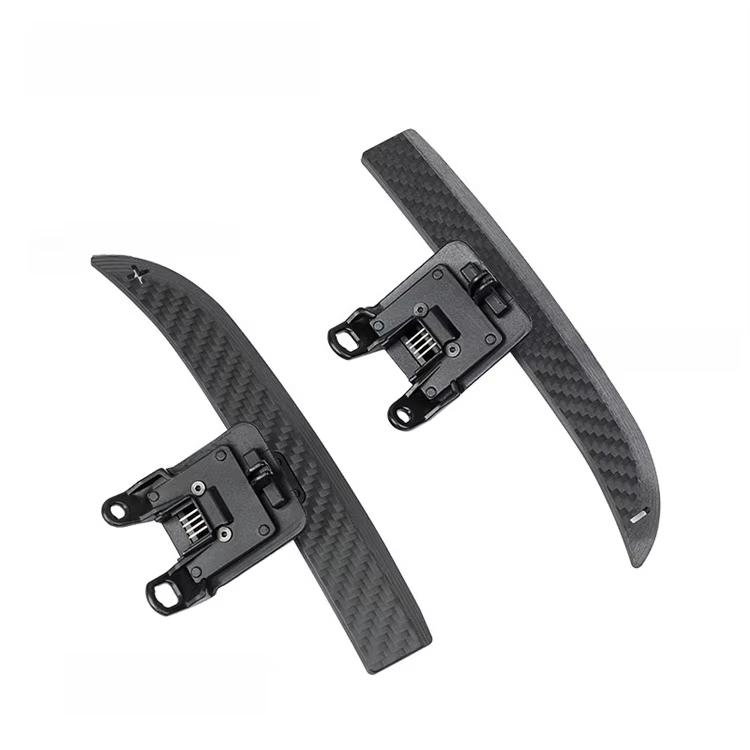
PA6 mineral-filled nylon, often called PA6-MD, is selected when a molded part needs better dimensional stability and lower warpage than unfilled PA6 without the full stiffness or fiber-orientation effect of a glass- or carbon-filled grade. The filler does not remove nylon’s moisture sensitivity, so material selection, drying, mold temperature, wall design and inspection condition must be reviewed together.

What Is PA6 Mineral-Filled Nylon?
PA6-MD is a nylon 6 compound containing mineral additives such as talc, calcium carbonate or wollastonite. The filler reduces the resin fraction that drives shrinkage and can improve surface hardness and dimensional consistency. The tradeoff is lower tensile strength than a comparable glass-filled grade and a different balance of impact, weld-line and processing behavior.
Mineral-filled PA6 is a material family, not one universal grade. Filler loading, particle treatment, color package, stabilizers and processing history can change the result. Ask for the exact grade and lot documentation instead of approving a part from the words “mineral filled” alone.
| Material route | Main advantage | Main watch-out | Typical decision |
|---|---|---|---|
| Unfilled PA6 | Balanced toughness and flow | Moisture response and higher molding shrinkage | General molded parts where flexibility matters |
| PA6-MD | Lower warpage and better surface stability | Lower strength than a reinforced grade | Flat housings, covers and dimensional parts |
| PA-GF20 | Higher stiffness and load capability | Fiber orientation, anisotropic shrinkage and surface fiber | Structural parts with a defined load path |
| PA-CF30 | High stiffness and low expansion in selected directions | Cost, processing wear and strong orientation effects | Stiff, dimension-critical parts after validation |
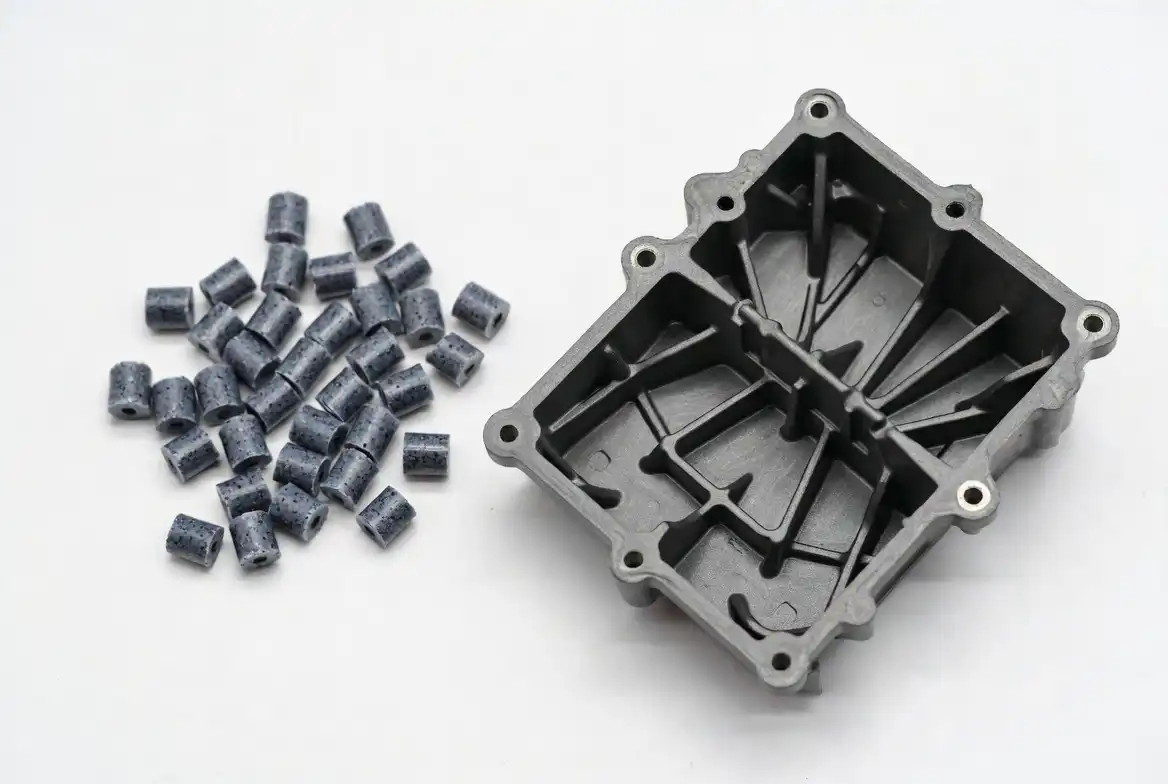
Designing Parts for Low Warpage
PA6-MD can reduce warpage risk, but it cannot correct a poor geometry. Keep wall thickness as uniform as the function allows, avoid abrupt mass changes, support flat panels with ribs and place ribs so they do not create an uncontrolled sink or cooling difference. Gate location, flow length and cooling-channel layout still influence the final shape.
Define the measurement condition before the tool is released. Nylon dimensions change with moisture and temperature, so a supplier needs the conditioned state, critical datum scheme, tolerance stack and functional fit requirement. Measuring a dry part in a warm inspection room and comparing it with a conditioned drawing can create a false process problem.
Processing and Drying Controls
PA6-MD must be dried according to the compound supplier’s data sheet. A common starting point is a desiccant dryer near 80 C for several hours, with a verified moisture target often below 0.15 percent, but the exact value depends on the grade, packaging and residence time. Keep the material sealed after drying and record dryer temperature, time and moisture checks.
Mold temperature, fill profile, packing, gate seal and cooling time should be validated on the actual cavity. Mineral filler may improve dimensional stability, but it can also change flow resistance and weld-line behavior. Do not copy a PA-GF20 or unfilled PA6 setup sheet without a short-shot review and dimensional study.
Inspection and Production Validation
- Approve the exact resin grade, filler level, color and moisture condition.
- Measure critical dimensions at the agreed temperature and conditioning state.
- Compare flatness, hole position, boss location and mating fit across multiple cavities and lots.
- Record process window limits rather than approving one favorable sample.
- Revalidate when the grade, mold revision, gate, drying process or inspection method changes.
How Nylon Plastic Supports Material Selection
Nylon Plastic supports material modification and molded plastic-part development from resin selection through DFM, sampling and production review. For a PA6-MD decision, the useful comparison includes unfilled PA, PA-GF20 and PA-CF30 when the application needs a different balance of strength, stiffness, warpage, wear or cost. The objective is a grade that can be purchased consistently and validated in the finished part.
관련 읽기
자주 묻는 질문
What does MD mean in PA6-MD?
MD means mineral-filled. Mineral additives such as talc, calcium carbonate or wollastonite are compounded into PA6 to reduce shrinkage and improve dimensional stability.
How does mineral-filled PA6 compare with PA-GF20?
PA6-MD generally prioritizes lower warpage and a more stable surface, while PA-GF20 usually provides higher stiffness and load capability. The right choice depends on strength, flatness, impact and fiber-orientation limits.
What are typical mineral filler levels in PA6-MD?
Commercial grades vary, and many engineering grades fall roughly in the 20-40 percent range. Confirm the exact filler type and loading in the grade data sheet because the loading changes flow, strength and shrinkage.
Does mineral-filled PA6 require drying before molding?
Yes. The mineral filler does not eliminate nylon moisture sensitivity. Dry the compound to the supplier’s target, keep it sealed and verify moisture before molding.
Can PA6-MD eliminate all warpage?
No. It can reduce shrinkage-related movement, but gate location, wall thickness, cooling balance, packing, moisture and measurement condition still determine the finished shape.
What should be included in a PA6-MD RFQ?
Include the part CAD and drawing, flatness and dimensional limits, service temperature, moisture or chemical exposure, annual volume, exact material preference and the required inspection condition.
Request a PA6-MD Material Review
Send the part drawing, flatness and tolerance requirements, service environment, annual volume and preferred PA6-MD or reinforced nylon grade.