Global brands demand manufacturing partners who deliver speed, precision, and reliability—not excuses for delays that threaten profits and market position. Smart manufacturing practices, enabled by advanced technology and systematic processes, transform how nylon components move from concept to production.
What is Smart Manufacturing?

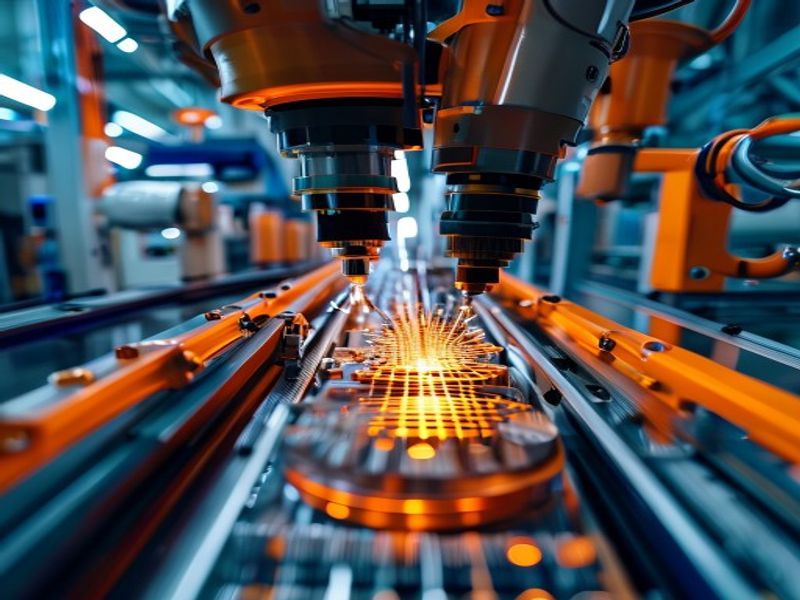
Smart manufacturing integrates technology, data, and process optimization to deliver better outcomes: digital design integration with CAD-to-mold workflow and simulation, process monitoring with real-time data from machines and molds, predictive capability to identify issues before they affect quality, and continuous improvement through data-driven optimization over time.
Technology Enablers
Mold Flow Simulation
Before steel is cut, simulation predicts how nylon will flow into the mold: fill pattern visualization, weld line and air trap identification, fiber orientation prediction for reinforced materials, and cooling analysis for cycle time optimization. Simulation reduces trial iterations by 50-70%, accelerating time to production.
Scientific Molding
Scientific molding replaces trial-and-error with data-driven process development. Viscosity curve establishes optimal injection speed range. Cavity balance ensures multi-cavity fill uniformity. Pressure drop identifies consistent fill-to-pack transition. Gate freeze determines minimum required hold time.
| Phase | Purpose | Key Outputs |
|---|---|---|
| Viscosity curve | Understand material behavior | Optimal injection speed range |
| Cavity balance | Multi-cavity fill uniformity | Balanced fill parameters |
| Pressure drop | Identify transfer point | Consistent fill-to-pack transition |
| Gate freeze | Determine hold time | Minimum required hold time |
In-Mold Sensing
Pressure and temperature sensors in the mold provide real-time feedback: detect process drift before it creates defects, enable automatic rejection of suspect parts, provide data for root cause analysis, and support process validation requirements.
Benefits for Nylon Applications
Faster Development Cycles
Digital simulation and scientific molding reduce development time: fewer mold trials required, faster process qualification, earlier identification of design issues, and smoother transition to production.
일관된 품질
Process monitoring ensures every part meets specifications: real-time quality verification, statistical process control, traceability for regulated industries, and reduced scrap and rework.
비용 효율성
Smart manufacturing reduces total cost through: shorter cycle times from optimized processes, reduced trial and debugging time, lower scrap rates, and predictive maintenance reducing unplanned downtime.
Our Smart Manufacturing Capabilities
We’ve invested in technology and training to deliver these benefits: mold flow simulation for all new tooling, scientific molding process development, real-time process monitoring and documentation, statistical process control on production runs, and an experienced engineering team applying these tools. With over 20 years in engineering plastics, we combine technology expertise with material knowledge to deliver the speed, precision, and reliability your business requires.
자주 묻는 질문
How do you know whether Smart Manufacturing for Global Nylon Component Needs fits a part?
Smart Manufacturing for Global Nylon Component Needs fits a part when its load capacity, temperature range, moisture exposure, wear behavior, and processing method match the real service conditions.
What properties should be checked for Smart Manufacturing for Global Nylon Component Needs?
강도, 강성, 내충격성, 내열성, 수분 흡수율, 치수 안정성, 마찰, 마모 및 화학적 호환성을 확인하십시오.
What is the biggest selection risk for Smart Manufacturing for Global Nylon Component Needs?
가장 큰 위험은 실제 환경, 가공 방법, 부품 형상 및 장기 사용 등을 고려하지 않고 데이터시트에 기재된 수치만 보고 선택하는 것입니다.
When should Smart Manufacturing for Global Nylon Component Needs be tested before production?
부품이 하중, 열, 화학 물질, 습기, 엄격한 공차, 규제 요건 또는 새로운 작동 환경에 노출될 경우 시험을 실시하는 것이 좋습니다.