
Welding and CNC machining are fundamentally different manufacturing processes that frequently complement each other in production environments. Welding joins materials — primarily metals — through fusion, creating monolithic structures from multiple components. CNC machining removes material from a solid workpiece to achieve precise dimensions and surface finishes. Understanding the strengths, limitations, and typical applications of each process enables informed manufacturing decisions.
Welding: Process Overview
Welding is a fabrication process that joins materials (typically metals or thermoplastics) by applying heat, pressure, or both, with or without filler material. The result is a fused joint with continuous metallurgical or chemical structure across the interface. Common industrial welding processes include:
- MIG (GMAW — Gas Metal Arc Welding): Continuous wire electrode fed through a torch with shielding gas. High deposition rate, suitable for production environments. Primary applications: structural steel fabrication, automotive manufacturing, general fabrication.
- TIG (GTAW — Gas Tungsten Arc Welding): Non-consumable tungsten electrode with manual filler rod. Produces the highest-quality welds with excellent appearance. Primary applications: aerospace, nuclear, food-grade stainless steel, precision piping.
- Stick (SMAW — Shielded Metal Arc Welding): Flux-coated consumable electrode. Rugged, portable, works in outdoor conditions with wind. Primary applications: construction, field repair, pipeline welding.
Welding vs CNC Machining: Comparative Analysis
| 팩터 | 용접 | CNC 가공 |
|---|---|---|
| 공정 유형 | Joining (additive-like) | (subtractive) |
| 정밀도 | ±0.030-0.125 inches | ±0.001~0.005인치 |
| Material Efficiency | High (additive, minimal waste) | Moderate (chips, swarf) |
| Speed (large structures) | Fast (welds 20+ feet/day) | Slow (machining from solid billet) |
| Speed (small precision part) | Slow (many small joints) | Fast (minutes per part) |
| Post-Processing Required | Distortion, grinding, stress relief | Deburring only (for most parts) |
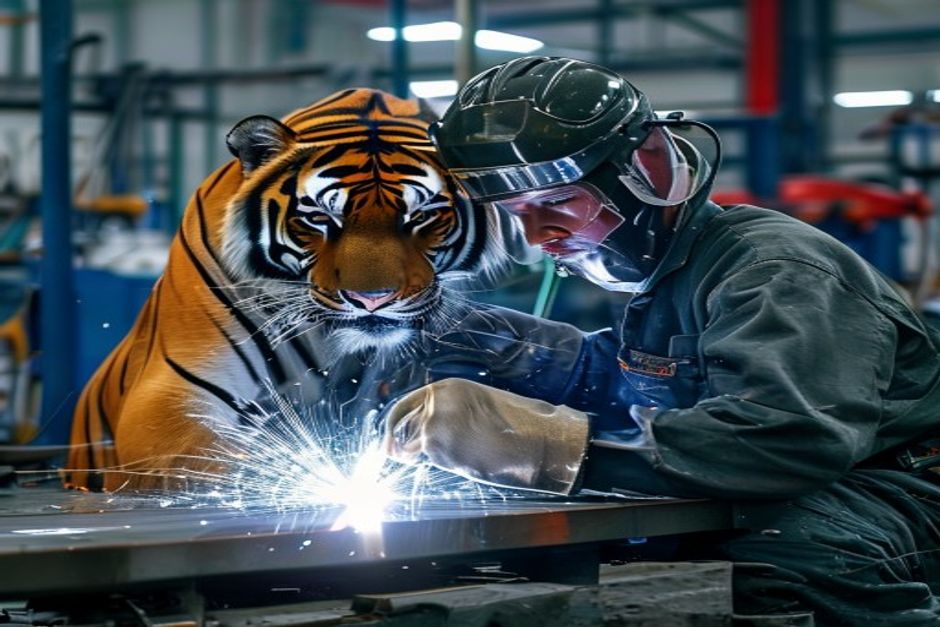
The Weld-Machine Integration
In many manufacturing operations, welding and CNC machining are integrated into a sequential workflow:
- Component Preparation: Individual plates, tubes, and forgings are CNC-machined to create weld preparation features (bevels, root faces, alignment features)
- 용접: Components are assembled and welded into the structural form. Tolerances at this stage are ±0.030 inch or more.
- Stress Relief: The weldment undergoes thermal stress relief (typically 1,100-1,200°F for steel) to relieve welding-induced residual stresses that would cause distortion during subsequent machining
- Blanchard Grinding or Face Milling: Critical surfaces are ground or machined flat as reference datums for subsequent machining
- CNC 가공: The weldment is d on previously machined datums, and precision features (bores, bolt circles, mounting pads) are machined to final tolerance
- Final : CMM verification against drawing tolerances
When to Choose Each Process
- Choose Welding for: Large structural assemblies (frames, bases, platforms), joining thick plates (1+ inch), creating closed fabrications (tanks, pressure vessels), field assembly and repair, cost-effective production of structures where precision is not required on weld joints
- Choose CNC Machining for: Precision components (±0.001 inch required), complex 3D geometries from solid material, high surface finish requirements, production of interchangeable components, plastic components (cannot be conventionally welded)
- Choose Weld + Machine for: Large precision structures (machine tool bases, CMM frames, aerospace structural components), situations where machining a large solid billet would be prohibitively expensive, mixed-material assemblies requiring precision features
Welding vs CNC Machining: Route Decision Table
| 요구 사항 | 용접 | CNC 가공 |
|---|---|---|
| 기하학 | Joins fabricated plates, tubes or formed sections | Removes material from a solid or semi-finished blank |
| 관용 | Plan distortion, weld shrinkage and post-weld machining | Control tool deflection, workholding and thermal growth |
| Material limit | Heat-affected zone and joint compatibility govern the route | Machinability, residual stress and chip control govern the route |
| Inspection | Visual, NDT and dimensional checks may be required | Use gauges, CMM or process capability checks on critical features |
Choose the route from the finished geometry and acceptance plan. A hybrid weld-plus-machining route can be valid when a fabricated blank reduces material waste but critical interfaces still need machined datums.
자주 묻는 질문
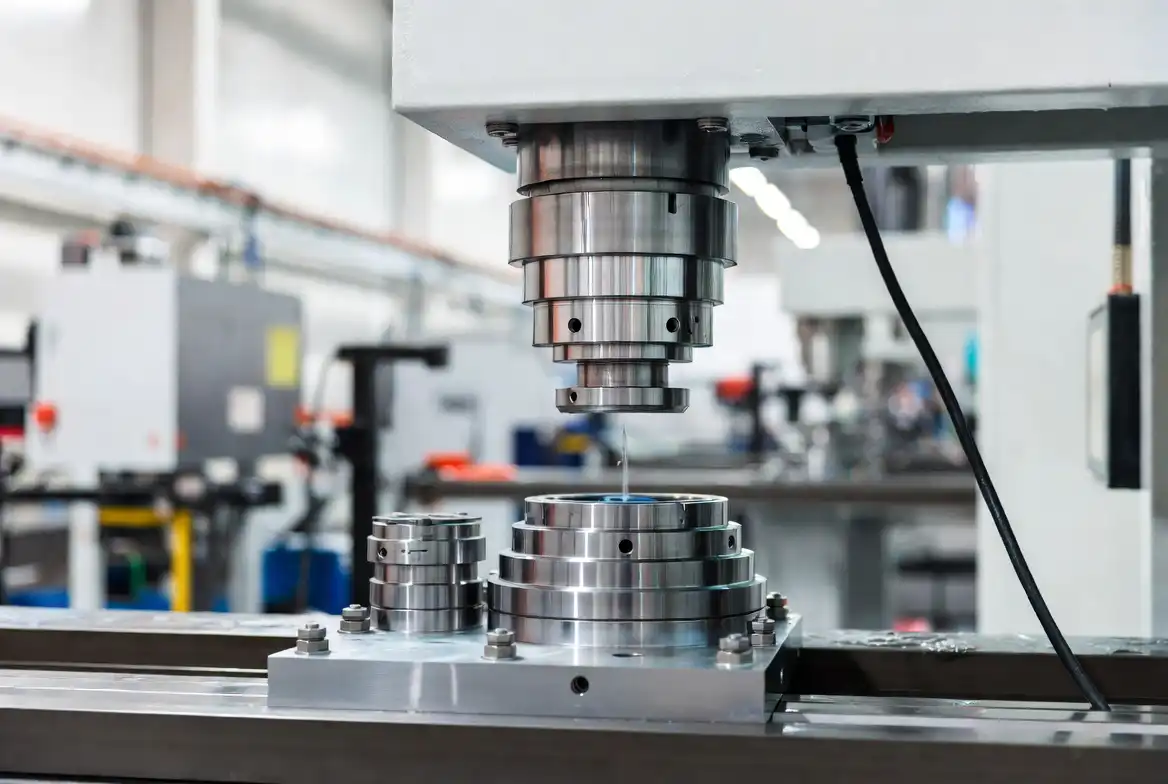
When is Welding vs CNC Machining: When to Use Each Manufacturing Process the right choice?
Welding vs CNC Machining: When to Use Each Manufacturing Process is the right choice when the part requires machined accuracy, controlled surfaces, repeatable features, and a material that can be cut reliably.
What should be confirmed before ordering Welding vs CNC Machining: When to Use Each Manufacturing Process?
생산을 시작하기 전에 도면 버전, 재료 등급, 공차, 수량, 임계 치수, 표면 마감 및 검사 요구 사항을 확인합니다.
What usually drives cost in Welding vs CNC Machining: When to Use Each Manufacturing Process?
비용은 일반적으로 재료, 설정 시간, 기계 시간, 공차 난이도, 고정, 공구 접근, 마감, 검사 및 주문 수량에 따라 결정됩니다.
How can quality risk be reduced in Welding vs CNC Machining: When to Use Each Manufacturing Process?
중요한 기능을 명확하게 표시하고, 불필요하게 엄격한 공차를 피하고, 제조 가능성을 조기에 확인하고, 중요한 치수에 대한 검사 데이터를 사용하면 품질 위험을 줄일 수 있습니다.