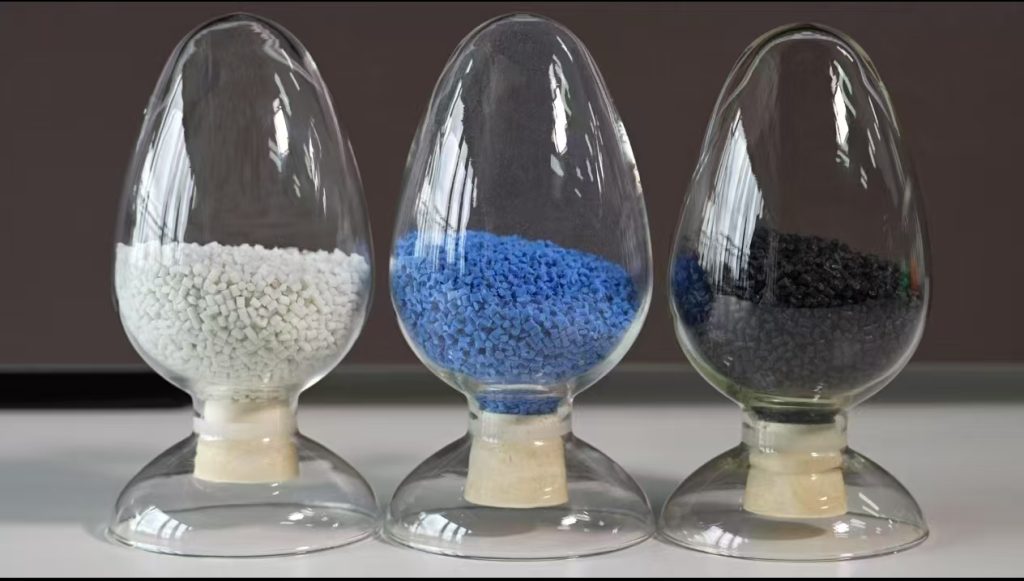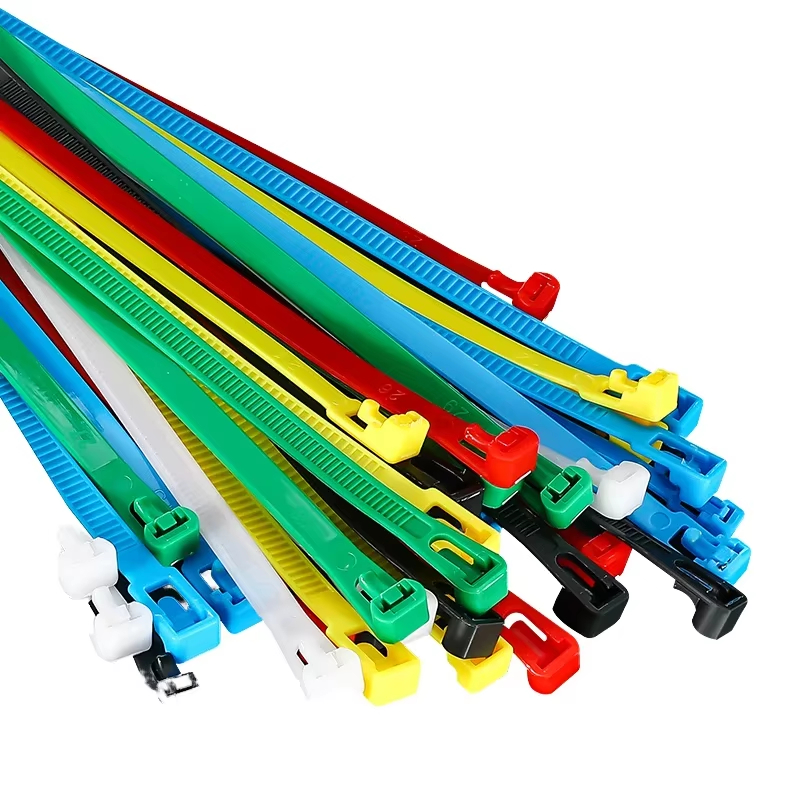
Nylon material properties depend on the PA family, reinforcement, additives, moisture state, temperature, and test direction. Unfilled PA6 and PA66 provide toughness and wear resistance; PA12 reduces moisture-driven dimensional change; GF20 and GF30 compounds increase stiffness and loaded-temperature performance but introduce fiber orientation and tooling wear.
Use the ranges below for screening only. Final design values must come from the approved grade’s technical data sheet under the intended conditioning and test method.

Nylon Properties at a Glance
| Material Route | Typical Advantage | Primary Limitation |
|---|---|---|
| Unfilled PA6 | Toughness, processability, and cost balance | Meaningful moisture response |
| Unfilled PA66 | Strength and higher thermal margin | Drying and conditioning control |
| PA12 | Low moisture uptake and dimensional stability | Higher cost and lower stiffness |
| PA-GF20 | Moderate stiffness with more retained toughness | Fiber orientation and abrasive processing |
| PA-GF30 | Structural stiffness and lower shrinkage | Warpage anisotropy, weld lines, and surface texture |
나일론 소재 특성의 개요
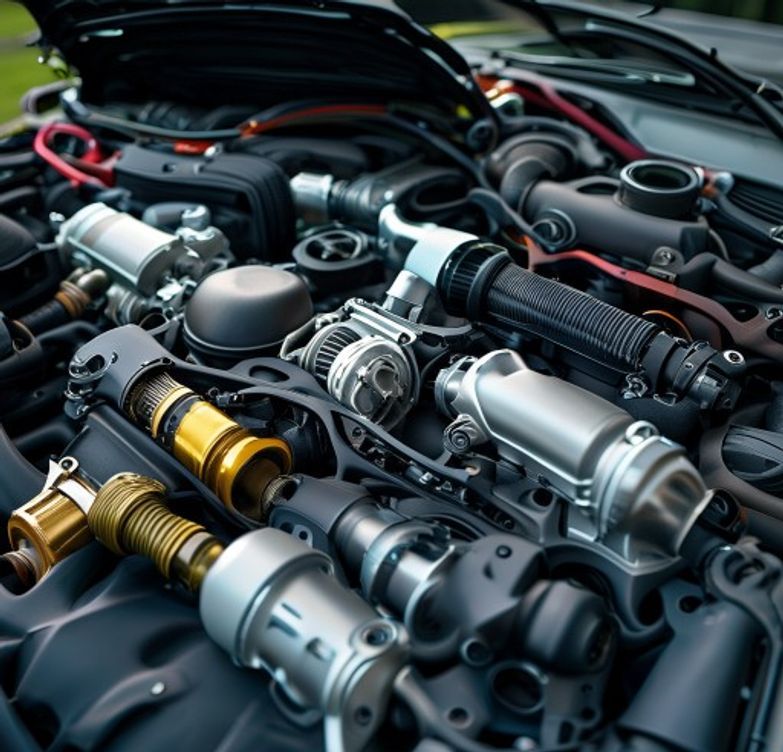
Nylon combines fatigue resistance, toughness, wear performance, and moldability in a way that makes it useful for gears, housings, brackets, connectors, bushings, and other functional parts. The same family can be compounded for stiffness, flame performance, impact resistance, lubrication, conductivity, or heat stabilization.
If PA66 is the candidate material, continue with the PA66 (Nylon 66) properties, applications and grade-selection guide before comparing an exact commercial grade.
Typical Mechanical Properties by Nylon Grade
| Typical Dry Property | PA6 | PA66 | PA12 | PA6-GF30 | PA66-GF30 |
|---|---|---|---|---|---|
| Tensile strength | 70~85 MPa | 75-90 MPa | 45~55 MPa | 140-180 MPa | 160-200 MPa |
| Tensile modulus | 2.4-3.0 GPa | 2.7-3.2 GPa | 1.2-1.8 GPa | 7-10 GPa | 8-11 GPa |
| Elongation | 높음 | Moderate to high | 높음 | 낮음 | 낮음 |
| Directional sensitivity | 낮음 | 낮음 | 낮음 | 높음 | 높음 |
Ranges vary by grade and test method. Reinforced values are strongest along favorable fiber orientation; transverse and weld-line properties may be substantially lower.
Thermal Properties and Service Temperature
| 속성 | PA6 | PA66 | PA12 | GF30 Effect |
|---|---|---|---|---|
| Typical melting range | About 220-225 C | About 255-265 C | About 175-180 C | Reinforcement does not materially change the matrix melting point |
| Loaded heat resistance | 보통 | 더 높음 | Lower | Usually increases substantially |
| Thermal expansion | 학년별 | 학년별 | Relatively stable with moisture | Lower along fiber orientation |
Melting point, HDT, and continuous-use temperature answer different questions. Use HDT under the relevant load for short-term deflection screening and the supplier’s long-term rating for continuous service.
수분 흡수 및 환경적 영향
| 재료 | Relative Moisture Uptake | Engineering Consequence |
|---|---|---|
| PA6 | 높음 | More dimensional movement and conditioning effect |
| PA66 | 높음 | Strength, stiffness, dimensions, and electrical behavior change with moisture |
| PA12 | 낮음 | Better dimensional stability in humid service |
| GF20/GF30 nylon | Reduced in proportion to polymer content | Still requires moisture-state definition and drying control |
Absorbed moisture usually lowers stiffness and strength while increasing toughness. Define whether dimensions and tests apply dry-as-molded or after conditioning, especially for press fits, gears, connector pitch, and sealing surfaces.
나일론의 내화학성
Nylon generally performs well with oils, greases, fuels, and many hydrocarbons, but strong acids, oxidizing agents, hot water, steam, and some solvents can limit service life. Compatibility changes with temperature, concentration, exposure time, stress, and moisture. Use the 나일론 화학적 호환성 표 for screening, then test the final grade and loaded part.
전기적 특성 및 가연성 특성
Unmodified nylon is generally insulating, but moisture can reduce electrical resistance. Carbon-filled and conductive formulations behave differently. Flame ratings also belong to the exact grade, color, thickness, and certification record; do not infer UL 94 performance from the polymer family name.
- Specify required dielectric or resistance values under the expected humidity.
- For ESD compounds, define the target surface or volume resistance range.
- For flame-retardant grades, confirm listing, thickness, color, and compliance documentation.

Unfilled PA vs GF20 vs GF30
Start with unfilled PA when toughness, fatigue, wear, surface finish, and processing simplicity are more important than maximum stiffness. Move to GF20 when moderate reinforcement can control deflection while retaining more toughness and flow. Move to GF30 when the structural target justifies additional anisotropy, surface texture, and tool wear.
Review PA6 GF20, PA66 GF20, PA6 GF30, 및 PA66 GF30 as separate grade routes, not interchangeable labels.
How to Read a Nylon Technical Data Sheet
Start with the complete grade name rather than the polymer family. A PA66 heat-stabilized grade, a PA66-GF30 compound, and an impact-modified PA66 may share the same base resin but behave very differently. Check the notes beside every important value before comparing suppliers.
- Conditioning state: identify dry-as-molded, conditioned, and test humidity.
- Test direction: reinforced grades should report flow and transverse behavior where relevant.
- Load and temperature: distinguish short-term tensile data, HDT, creep, and long-term service ratings.
- Specimen details: thickness, molding conditions, and test standard can change reported performance.
- Compliance: verify flame, automotive, food-contact, electrical, or restricted-substance approvals on the exact grade and color.
Translate Properties into Part Requirements
A high tensile value does not automatically solve part failure. Deflection may be controlled by modulus and geometry; a snap feature may depend on strain and notch sensitivity; a gear may be limited by moisture-conditioned dimensions, wear, or temperature. Gate location and weld lines can dominate a reinforced part even when the published data sheet looks strong. Tie every requested property to a feature, load case, tolerance, or approval on the drawing.
Buyer Pain Points and Nylon Plastic Support
| Common Buyer Problem | 그것이 중요한 이유 | Practical Support |
|---|---|---|
| Supplier data sheets use different conditioning and test methods | Headline values cannot be compared directly | Normalize grade, moisture state, test direction, and standard before shortlisting |
| The drawing specifies only “nylon” | PA6, PA66, PA12, GF20, and GF30 can produce different cost and performance | Separate matrix selection from reinforcement and additive selection |
| A material change is reviewed without the production process | Molding flow, machining stress, or printing orientation changes the result | Use integrated material, injection molding, CNC, and 3D-printing experience to review the route |
| Batch and moisture controls are discussed after defects appear | Incoming material variation becomes a production problem | Define COA, moisture, traceability, sample, and lot-approval requirements before purchase |
Nylon Plastic has worked across material modification and finished plastic parts since 2005. Custom compounding is available when a standard pure PA, GF20, or GF30 grade cannot meet the required balance of stiffness, impact, dimensional stability, color, or compliance.
자주 묻는 질문
Which nylon has the best dimensional stability?
PA12 generally has lower moisture uptake than PA6 or PA66. Glass reinforcement can reduce shrinkage and moisture-related movement, but it also creates directional behavior. The best choice depends on tolerance, humidity, temperature, and load.
Does GF30 nylon absorb water?
Yes. The glass fibers do not absorb water, but the nylon matrix does. GF30 usually absorbs less moisture per unit mass than unfilled nylon, yet drying, conditioning, and dimensional-state requirements still matter.
Are nylon data-sheet values dry or conditioned?
They may be either. Always check the conditioning note, specimen orientation, temperature, and test method. Comparing a dry reinforced value with a conditioned unfilled value can produce a misleading conclusion.
What information is needed to select a nylon grade?
Define load, temperature, humidity, chemicals, wear, impact, tolerances, molding process, color, annual quantity, and regulatory requirements before choosing the PA family and modification package.
Material and Selection Resources
Request a Nylon Material Review
Send the drawing, target properties, annual volume, service environment, and current grade. We can compare unfilled PA, GF20, GF30, and other modified nylon compounds against the real application requirements.