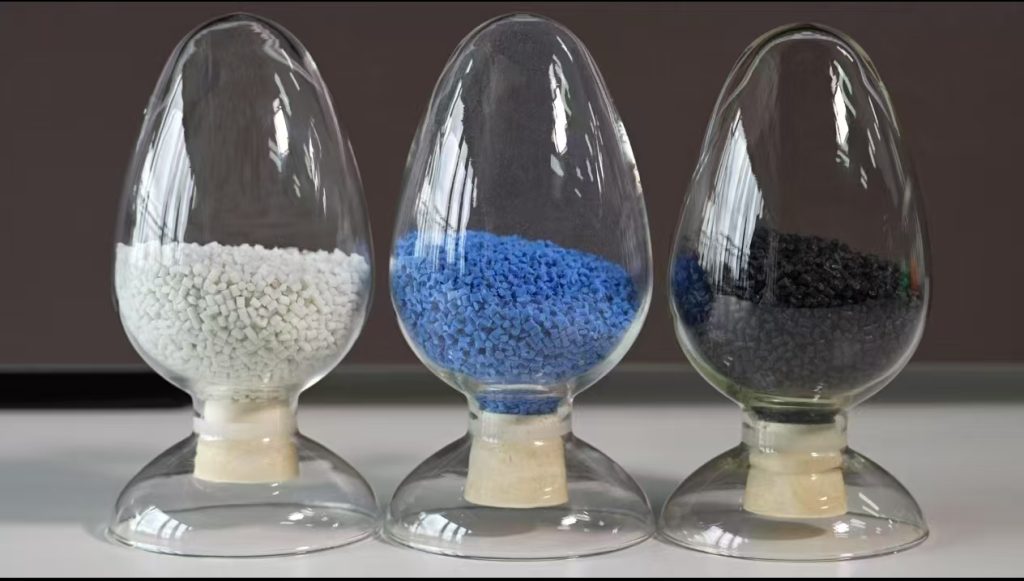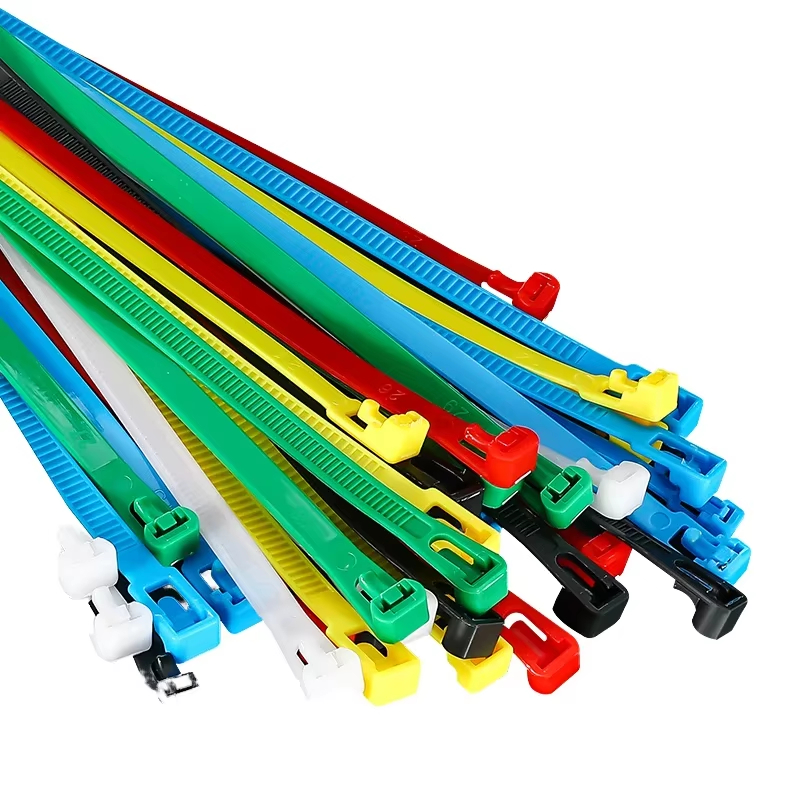
This nylon 6 nylon 66 guide explains practical considerations for material selection, design review, manufacturing, and sourcing decisions.
When specifying nylon for injection molded parts, the choice between Nylon 6 (PA6) and Nylon 66 (PA66) is one of the most consequential decisions an engineer can make. While chemically similar, the difference of one carbon atom in the monomer structure creates a cascade of divergent properties that ripple through every stage of production and part performance.
This guide goes beyond standard datasheet comparisons. We examine how PA6’s broader processing window and superior impact performance stack up against PA66’s higher heat deflection temperature and stiffness, and what each trade-off costs you in practice.
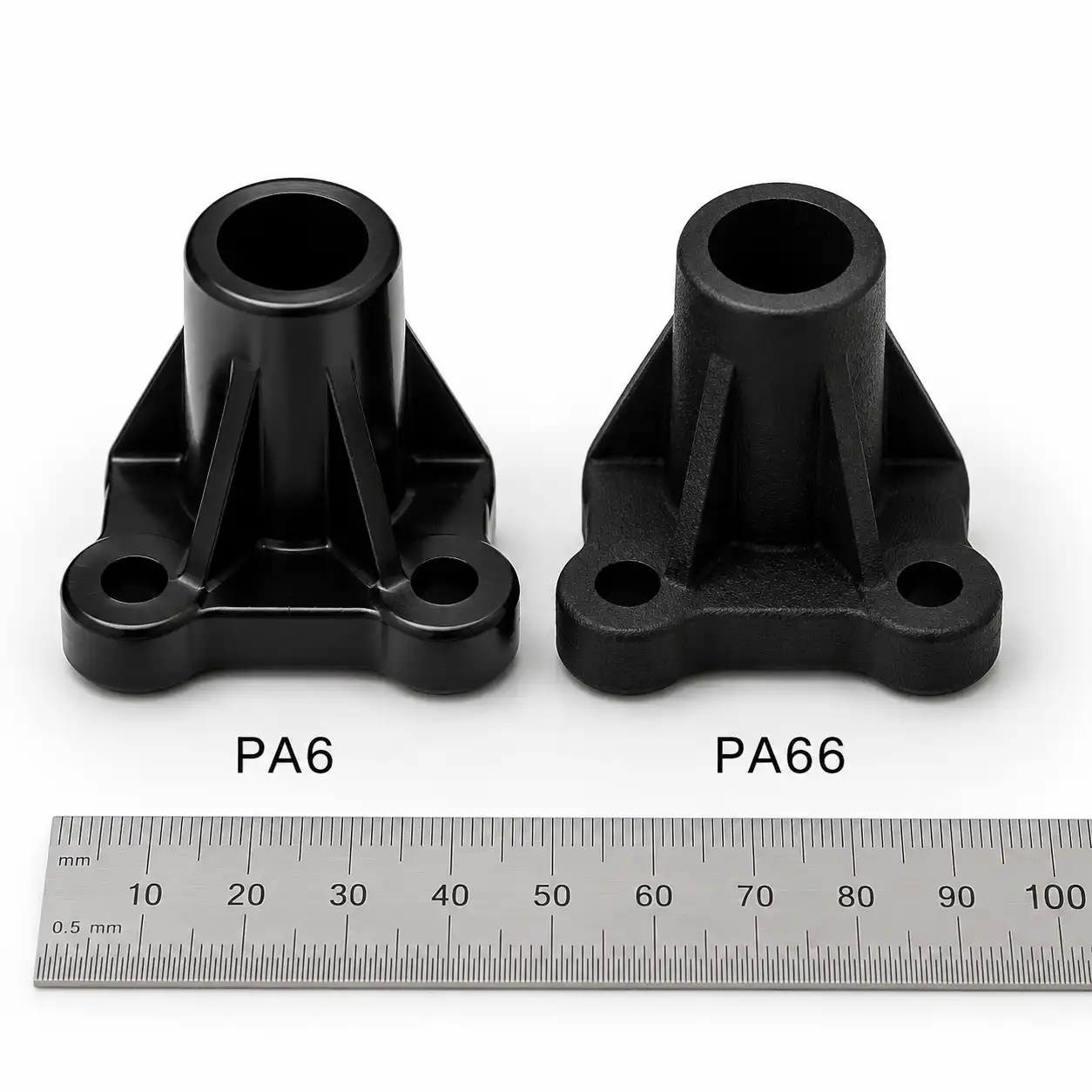
Molecular Architecture: Why the Extra Carbon Matters
The performance divergence originates at the molecular level. Nylon 6 is polymerized from caprolactam, producing chains with amide groups spaced every six carbons. Nylon 66 is formed from hexamethylene diamine and adipic acid, creating chains where the amide density is identical but hydrogen bonding patterns differ.
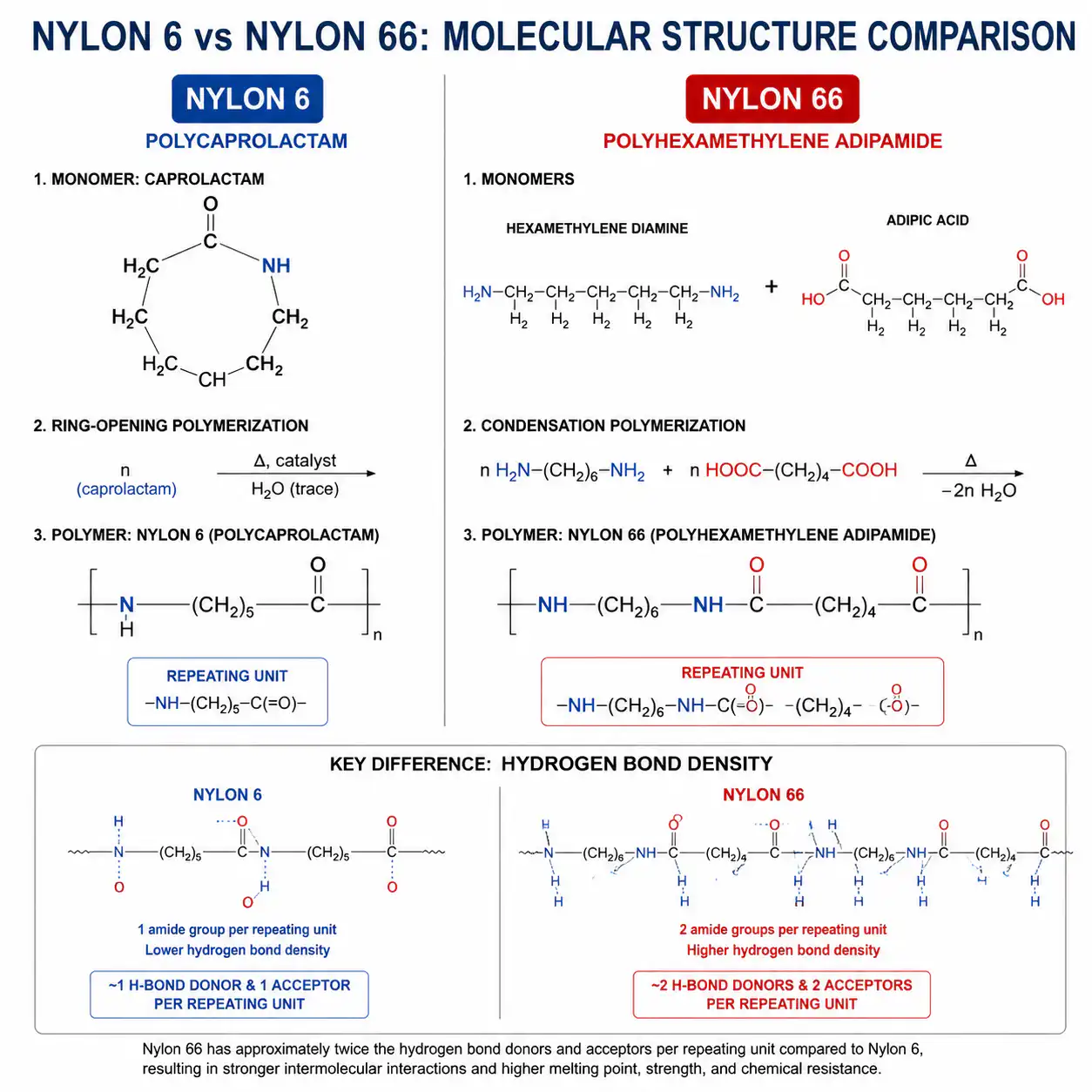
This structural distinction gives PA66 a melting point of 255-265°C versus PA6’s 220°C. The tighter crystalline packing results in 15-25% higher tensile strength and flexural modulus at room temperature. However, PA6’s chain mobility provides 2-3× better notched Izod impact resistance, especially at low temperatures where PA66 can become brittle.
Processing: Moldability vs Mechanical Properties
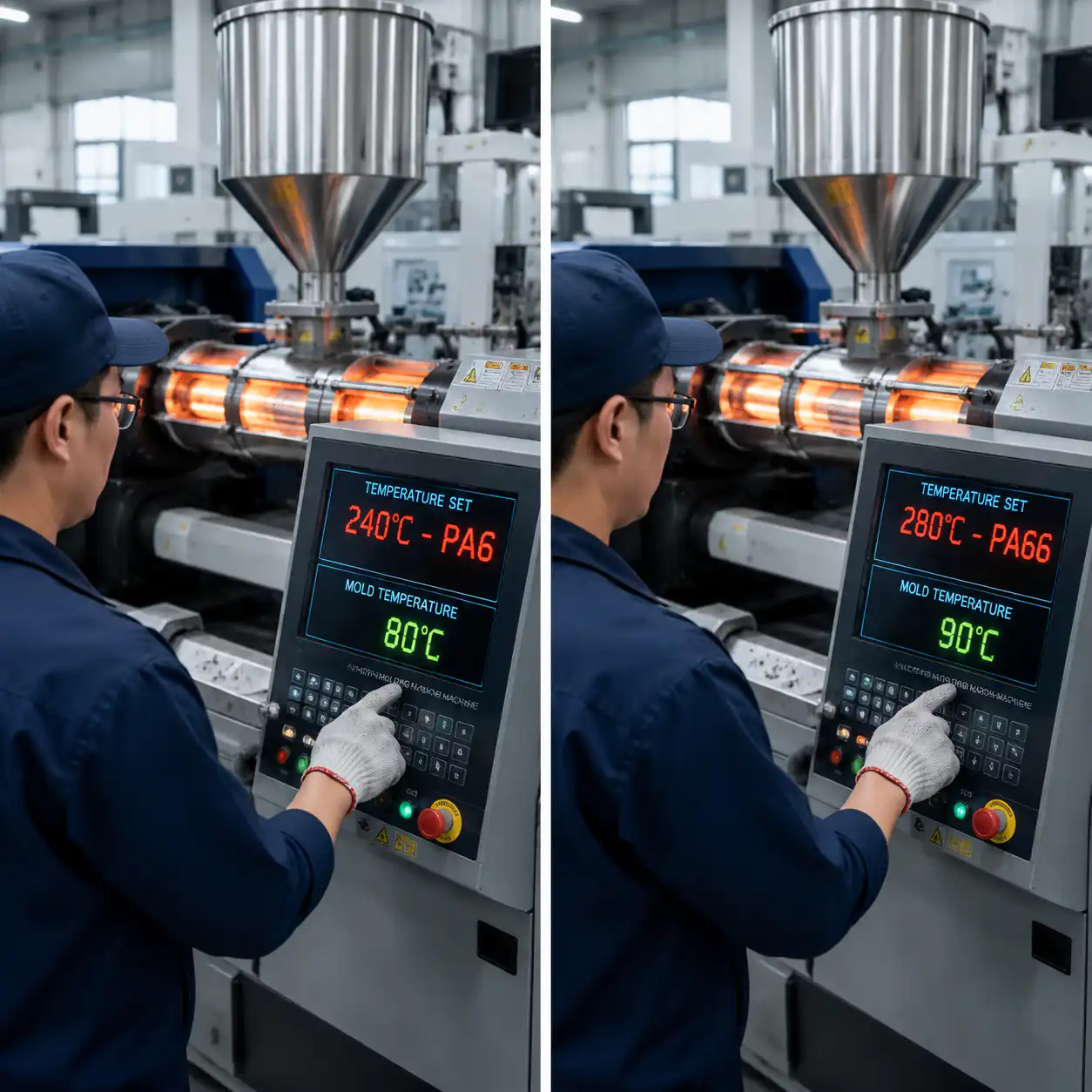
The processing window is where PA6 often wins in production. With a melt temperature range of 230-270°C versus PA66’s 260-300°C, Nylon 6 reduces energy costs and extends barrel life. Its broader crystallization window means less sensitivity to mold temperature variations in multi-cavity tools.
| 속성 | PA6(나일론 6) | PA66 (나일론 66) | 그것이 중요한 이유 |
|---|---|---|---|
| 녹는점 | 220°C | 255-265°C | PA6 requires lower barrel temps, reducing degradation risk |
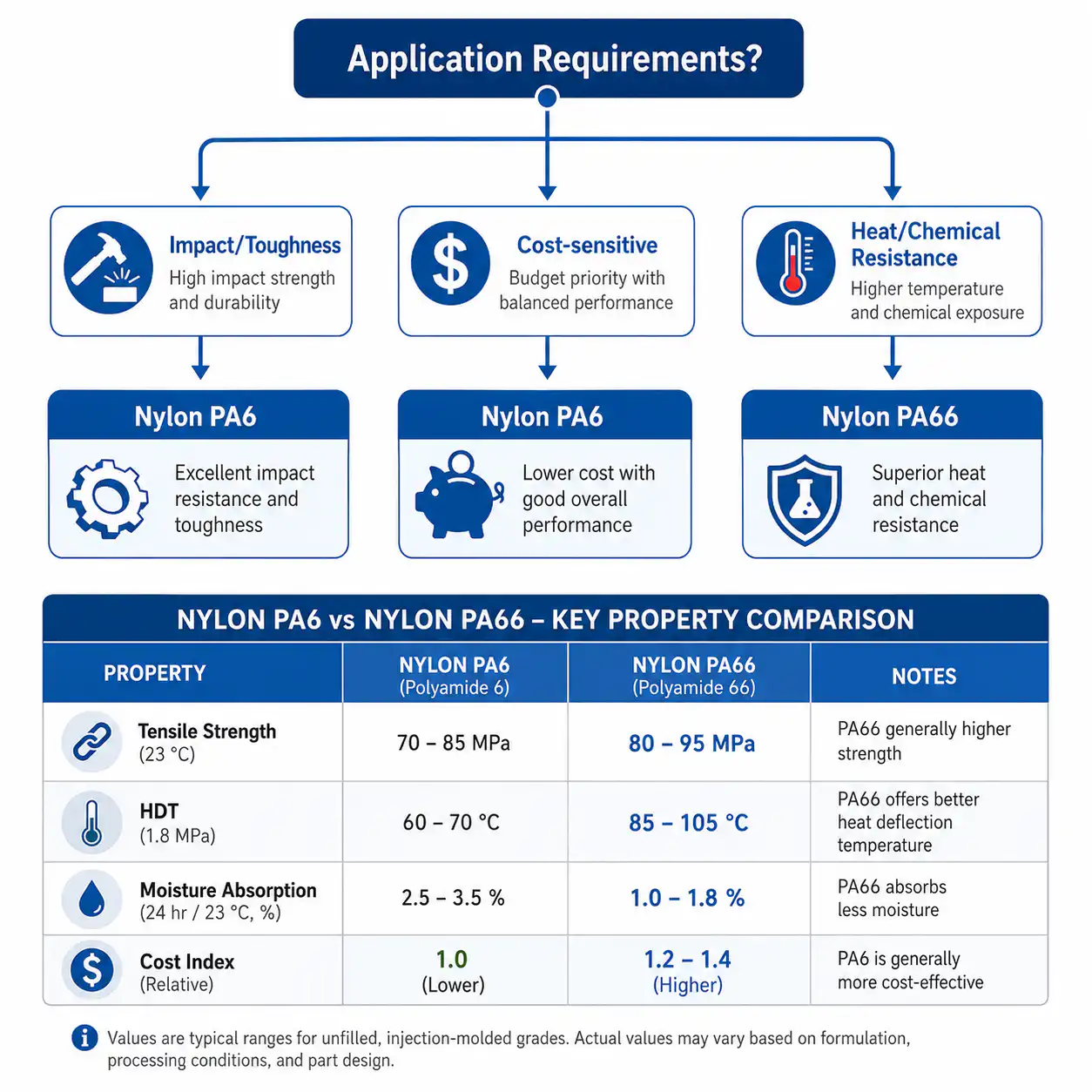
| 인장 강도 (건조 상태) | 70~85 MPa | 80-95 MPa | PA66 ~12% stronger dry; gap narrows when conditioned |
| 굽힘 탄성 계수 (건조 상태) | 2.6-3.0 GPa | 2.8-3.3 GPa | PA66 stiffer; critical for structural brackets |
| 노치 이조드 충격 시험 | 5-8 kJ/m² | 3-5 kJ/m² | PA6 clear winner for snap-fits and impact-prone parts |
| 곰팡이 수축 | 0.5-1.5% | 1.0-2.0% | PA6 holds tighter tolerances; less draft needed |
| Moisture (24h) | 2.5-3.0% | 2.0-2.5% | PA66 absorbs slightly less; more stable in humidity |
| HDT @ 1.8 MPa | 65-80°C | 80~100°C | PA66 handles 15-20°C higher heat; under-hood ready |
Moisture Conditioning: The Hidden Variable
When conditioned to equilibrium (50% RH, 23°C), PA6 tensile drops to 35-45 MPa with dramatically improved impact resistance (15-25 kJ/m² Izod). PA66 conditioned reaches 55-65 MPa with more modest impact gains. Dry-as-molded PA6 parts can be dangerously brittle until they absorb atmospheric moisture—typically 40-90 days post-molding depending on wall thickness.
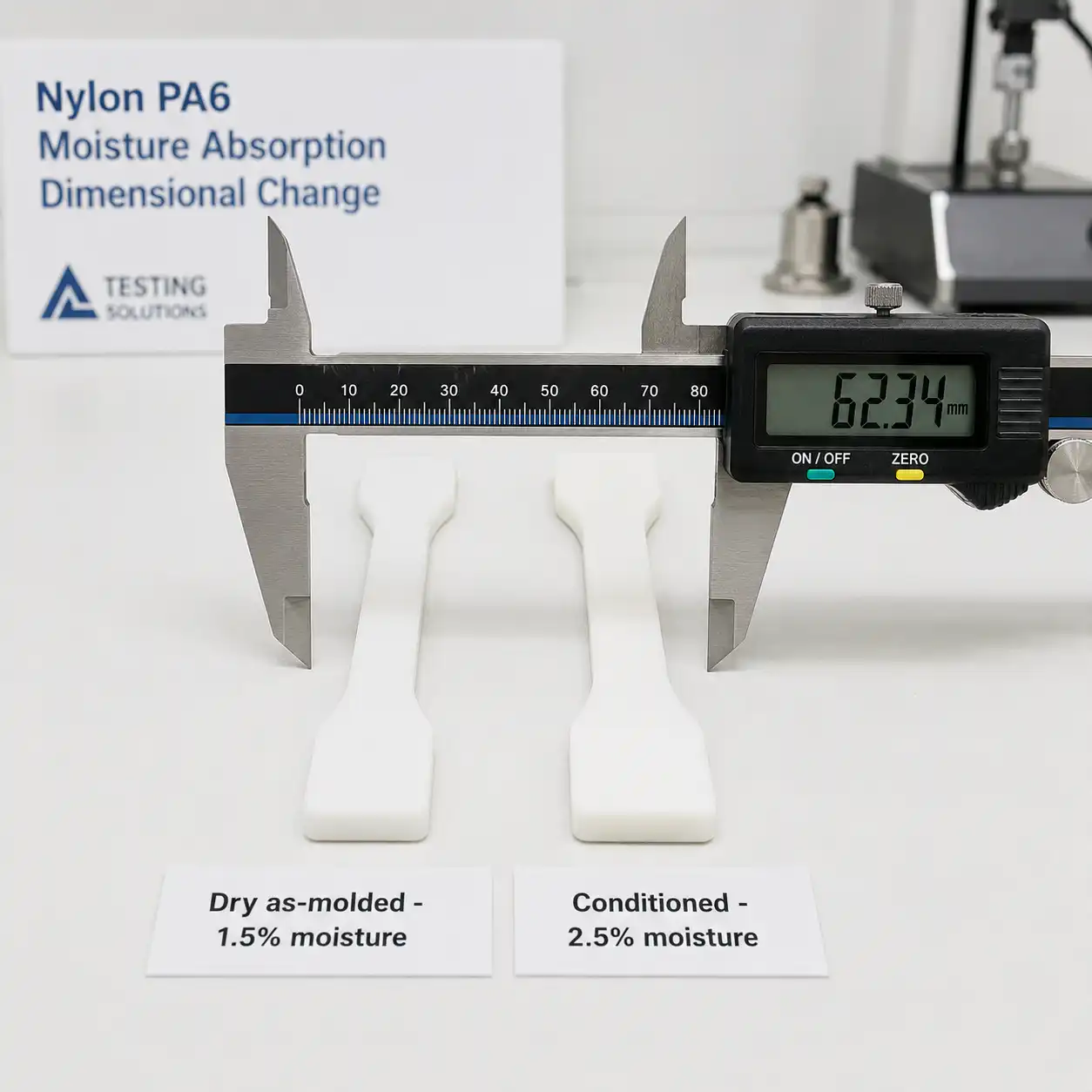
For parts that must ship immediately, PA66 offers a wider safety margin in the dry state. For snap-fit designs where impact resistance is paramount, PA6’s conditioned toughness makes it the better choice once hydrated.
Design Rules: Nylon 6 and 66
- Wall thickness: 0.8-3.0 mm for PA6; 1.0-3.5 mm for PA66. Below 0.8 mm flow length becomes the bottleneck. Uniform walls essential—thickness variations >25% cause differential shrinkage warpage.
- 초안 각도: 0.5-1° minimum. PA66 requires more draft due to higher shrinkage. Textured surfaces: add 1° per 0.025 mm of texture depth.
- 모서리 반경: Minimum 0.5 mm internal radius; 1.0 mm for PA66 to reduce stress concentration at knit lines.
- Gate location: Position gates at the thickest section. PA66’s faster crystallization demands shorter fill times (<2 seconds for parts under 100g).
- Pre-drying: Both hygroscopic. Dry to <0.15% moisture (80°C, 4-6h). Insufficient drying causes splay marks and 15-30% strength loss.
- Hole spacing: Edge distance ≥1.5× hole diameter. Closer spacing risks cracking at mold parting line, especially with PA66’s higher shrinkage.
산업 분야 적용 사례: 각 등급이 빛을 발하는 곳
| 산업 | 일반적인 부품 | 선호 등급 | 선정 근거 |
|---|---|---|---|
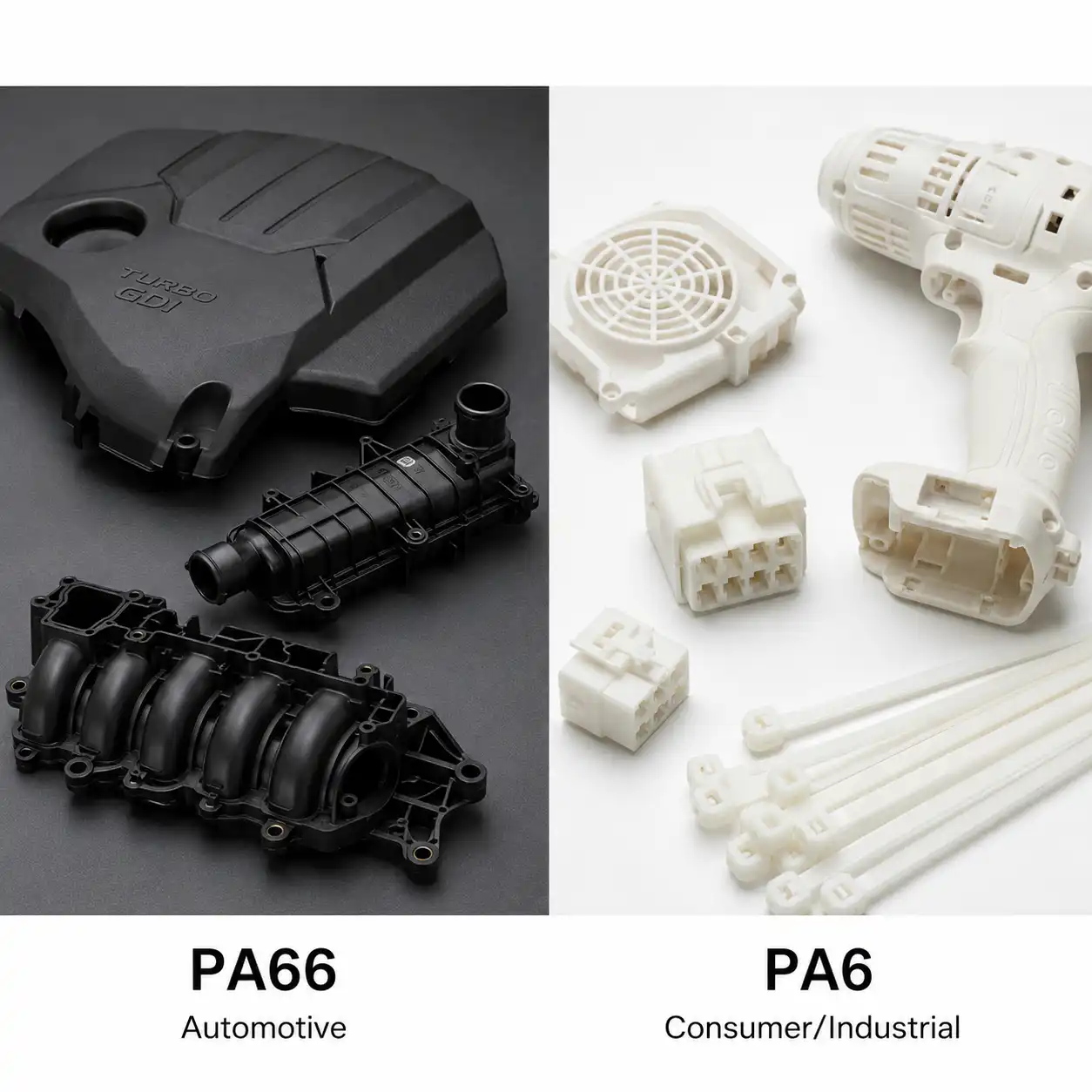
| 자동차 | Engine covers, intake manifolds, radiator end tanks | PA66 GF30 | HDT 240°C withstands under-hood; glass fiber adds stiffness |
| 소비자 제품 | Power tool housings, appliance gears, cable ties | PA6 | Better surface finish, lower cost, superior drop impact |
| Electrical | Connectors, circuit breakers, terminal blocks | PA66 V-0 | Higher RTI rating meets UL requirements |
| 산업 기계 | Gears, bearings, wear pads, conveyor components | PA6 + MoS₂ | Moly-filled PA6 offers excellent wear at lower cost |
| Food & Medical | Food processing components, pharma trays | PA6 | Better FDA-compliant availability, lower extractables |
비용 결정 프레임워크
PA6 baseline: $2.80-3.50/kg vs PA66: $3.50-4.50/kg. The raw material premium for PA66 is roughly 20-30%.
- Low volume (<1,000 pcs): Material cost difference negligible vs mold amortization. Choose on performance.
- Mid volume (1,000-50,000 pcs): PA6 saves $0.15-0.40/kg. For a 200g part at 50K/year, that’s $1,500-4,000 annual savings.
- High volume (>50,000 pcs): PA6’s faster cycle time (5-15% shorter) compounds with material savings for 8-12% lower total cost.
Hidden risk: PA66 supply is more volatile—historically subject to adiponitrile shortages. PA6 caprolactam supply is more diversified.
흔히 발생하는 결함 및 해결 방법
| 결함 | 외관 | 근본 원인 | 해결책 |
|---|---|---|---|
| Splay marks | Silver streaks radiating from gate | Moisture >0.15% in resin | Verify dryer dew point <-30°C; extend drying to 6h at 80°C |
| 뒤틀림 | Part distortion, out-of-flat >0.5mm | Differential shrinkage; PA66 susceptible | Uniform wall thickness; add ribbing; increase mold temp 10-15°C |
| Brittle fracture | Parts crack on ejection or assembly | Dry-as-molded PA6; no conditioning | Condition in 80°C water bath 30 min or allow 40-90 day ambient aging |
| 니트 라인의 취약점 | Visible line, 30-50% strength loss | PA66 fast crystallization freezes melt fronts | Increase mold temp to 80-100°C; relocate gates from stress areas |
프로젝트에 나일론 플라스틱을 선택해야 하는 이유
정밀 제조
30+ CNC & injection molding cells under one roof
ISO 9001:2015
인증된 품질 관리 시스템, 전체 검사 보고서
15~25일의 리드 타임
신속한 처리 및 긴급 처리 옵션 제공
전 세계 배송
Air & sea freight to North America, Europe, Asia
Download Our Nylon Selection Guide
재료 선정 표, 설계 지침 및 공급업체 평가 체크리스트를 다루는 무료 PDF 참고 가이드.
관련 기사
자주 묻는 질문
Which is stronger, Nylon 6 or Nylon 66?
Nylon 66 is approximately 12-15% stronger in tensile strength and flexural modulus when dry (80-95 MPa vs 70-85 MPa). However, when conditioned to ambient humidity, the gap narrows significantly. For impact strength, Nylon 6 is 2-3× better, especially in cold environments where PA66 can become brittle.
Why does Nylon 6 absorb more water than Nylon 66?
The difference is about 0.5% at equilibrium—Nylon 6 absorbs ~2.5-3.0% while Nylon 66 absorbs ~2.0-2.5%. This stems from Nylon 6’s slightly more open crystalline structure, which creates more hydrogen bonding sites for water molecules. The practical effect: PA6 dimensions change more in humid environments, requiring wider tolerance allowances.
Can I use Nylon 6 instead of Nylon 66 to reduce cost?
Yes, in many applications the cost savings outweigh the performance gap. Evaluate your part’s maximum service temperature first: if it’s below 80°C continuous, Nylon 6 is almost always a viable substitute. For under-hood automotive (100-140°C) or structural components requiring maximum stiffness, PA66 remains the safer choice.
What is the recommended mold temperature for Nylon 6 vs 66?
Nylon 6 processes best at mold temperatures of 60-90°C, while Nylon 66 requires 80-120°C to achieve proper crystallinity. The higher mold temperature for PA66 means longer cycle times (5-15% more) and higher energy costs, but results in a part with better dimensional stability and mechanical properties.