
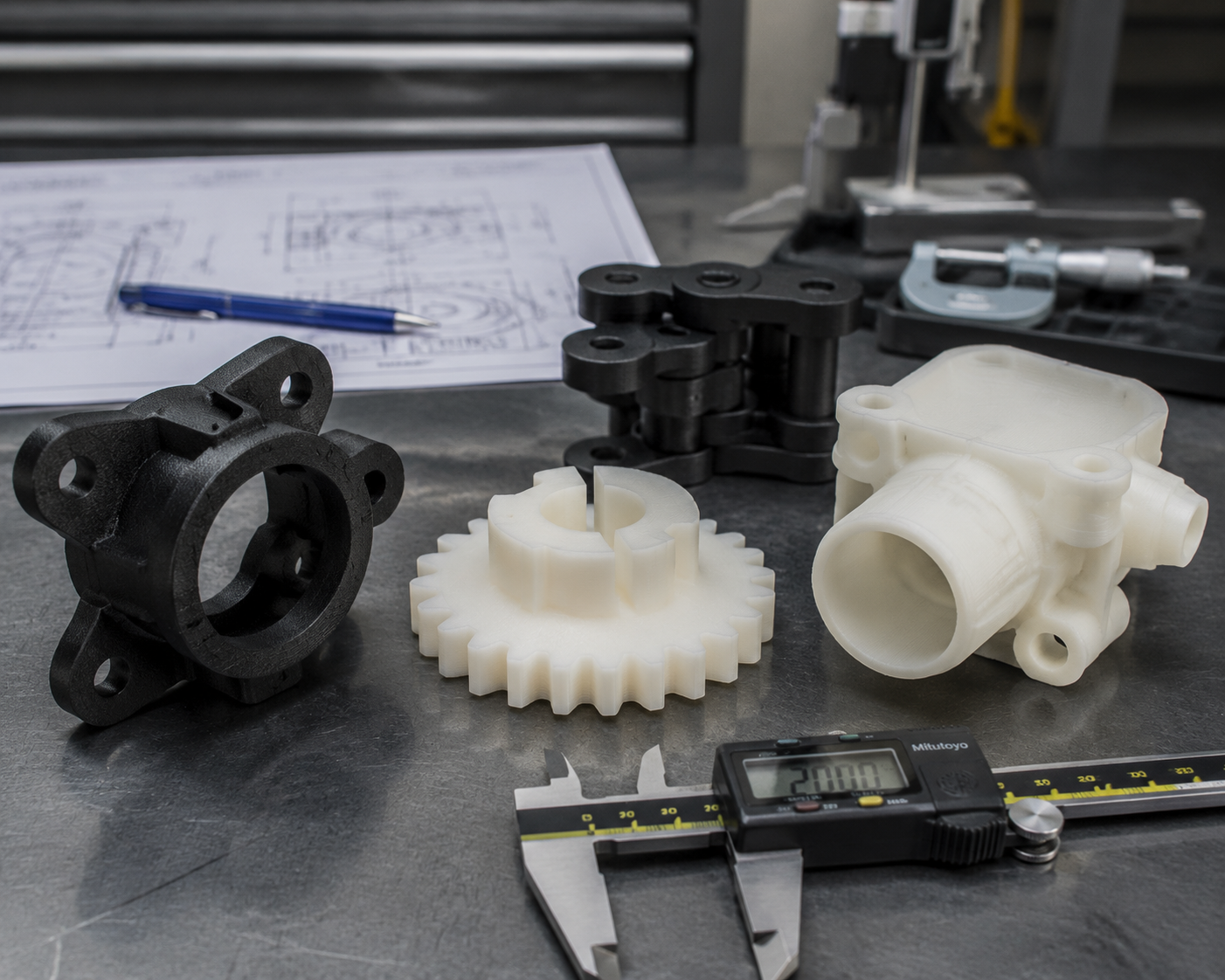
나일론은 적층 제조 분야에서 가장 널리 쓰이는 고분자 소재입니다. 대부분의 3D 프린팅 애호가들은 PLA나 PETG로 시작하지만, 나일론 필라멘트는 프린팅이 공학 영역으로 접어드는 문턱을 상징합니다. 인장 강도가 40 MPa를 넘고, 열변형 온도가 80°C 이상이며, 대부분의 소비자용 필라멘트를 압도하는 내화학성을 지닌 나일론은, 제작한 부품이 단순히 책상 위에서 멋지게 보이는 것을 넘어 실제 환경에서 견뎌내야 할 때 선택하게 되는 소재입니다.
하지만 나일론 3D 프린팅은 실수를 용납하지 않습니다. 이 소재는 집착할 정도로 흡습성이 강합니다. 밤새 덮지 않고 방치한 스풀 하나만으로도 다음 12시간 동안의 출력물을 망칠 만큼의 수분을 흡수할 수 있습니다. ABS보다 훨씬 심하게 뒤틀립니다. 게다가 저가형 프린터로는 도저히 유지할 수 없는 밀폐실 온도를 요구합니다. 수분 관리가 가장 큰 문제라면, 저희의 나일론 건조 안내 정확한 복구 및 저장 워크플로를 다룹니다. 하드웨어가 병목 현상인 경우, 이 비교를 통해 엔지니어링 소재에 가장 적합한 3D 프린터 이 가이드에서는 챔버, 핫엔드, 건조기의 성능을 보다 상세하게 분석합니다. 이 가이드는 재료 과학부터 실제 문제 해결에 이르기까지 모든 내용을 다루며, 제대로 작동하는 나일론 부품이 필요한 엔지니어, 제조업체 및 열정적인 애호가들을 위해 작성되었습니다.
3D 프린팅용 나일론: PA6 vs PA12 vs 복합재
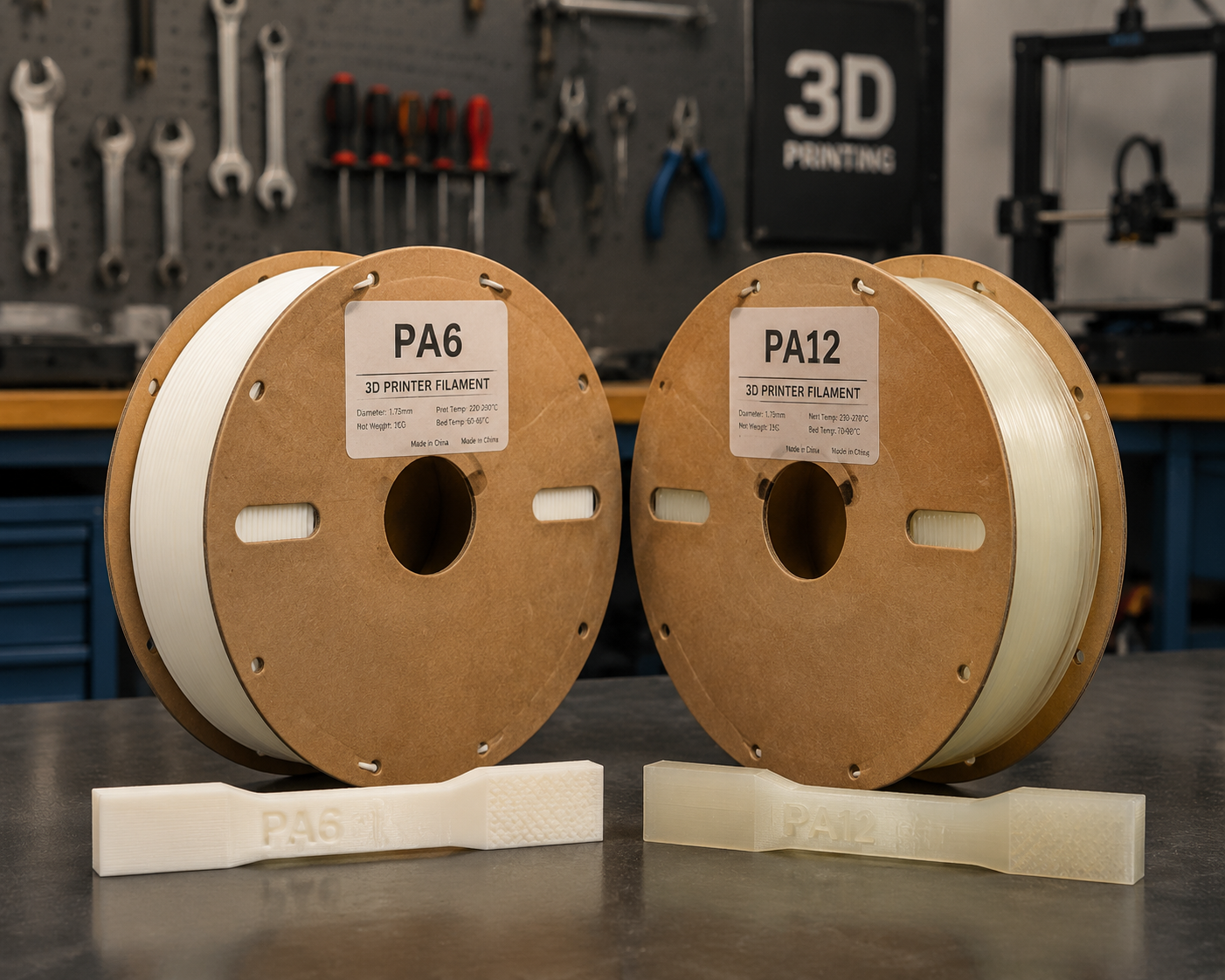
모든 나일론 필라멘트가 똑같은 것은 아닙니다. 가장 널리 사용되는 두 가지 등급인 PA6과 PA12는 열, 하중, 습기에 대해 서로 다른 특성을 보이며, 용도에 맞지 않는 등급을 선택하는 것이 나일론 프린팅에서 가장 흔한 실수입니다.
PA6(나일론 6)
PA6는 강도가 더 높은 소재입니다. 이 소재는 뛰어난 인장 강도(건조 시 일반적으로 65–80 MPa), 우수한 강성, 그리고 약 60°C의 유리전이 온도와 약 220°C의 녹는점을 갖춘 높은 내열성을 제공합니다. PA6는 구조용 부품, 기계용 브래킷, 기어 및 하중 지지 능력이 중요한 모든 용도에 적합한 소재입니다.
단점: PA6는 PA12보다 수분을 더 빨리 흡수하며, 포화 시 자체 중량의 최대 9.5%까지 수분을 흡수합니다. 인쇄 직후 테스트한 “건조한” PA6 부품은 70 MPa의 인장 강도를 보일 수 있지만, 50% 상대 습도(RH) 환경에서 48시간 동안 방치된 동일한 부품의 인장 강도는 45 MPa까지 떨어질 수 있습니다. 이러한 수분 민감성은 필라멘트 자체에도 적용됩니다. PA6은 드라이 박스에서 인쇄하거나 인쇄 중에 적극적으로 건조시켜야 합니다. 주변 공기에 단 2시간만 노출되어도 인쇄 품질이 저하될 수 있습니다.
PA12(나일론 12)
PA12는 강도(일반적으로 45–55 MPa)를 다소 희생하는 대신, 치수 안정성이 획기적으로 향상되고 수분 흡수율이 낮아집니다(포화 시 약 1.5%, PA6의 9.5% 대비). PA12는 유연성이 더 뛰어나고 내충격성 및 피로 수명이 우수하여, 리빙 힌지, 스냅핏, 그리고 균열 없이 반복적으로 굽혀져야 하는 부품에 선호되는 등급입니다. 원재 강도만큼 장착 및 조립 정밀도가 중요한 경우, 당사의 3D 프린팅 공차 가이드 유용한 조력자입니다.
PA12는 PA6보다 뒤틀림이 적게 발생하지만, 여전히 밀폐형 프린팅 환경이 필요합니다. 녹는점이 낮기(약 178°C) 때문에 노즐 온도를 약간 낮게 설정할 수 있는데, 이는 기본 핫엔드를 장착한 프린터에서 260°C 이상을 안정적으로 유지하기 어려운 경우 장점이 될 수 있습니다.
| 속성 | PA6(나일론 6) | PA12(나일론 12) |
|---|---|---|
| 인장 강도 (건조 상태) | 65–80 MPa | 45–55 MPa |
| 휴식 시 연신율 | 20–30% | 25–40% |
| 녹는점 | 220°C | 178°C |
| 수분 흡수율 (24시간) | 2.5–3.0% | 0.5–0.8% |
| 열 변형 온도 (0.45 MPa) | 160°C | 115°C |
| 인쇄 난이도 | 높음 | 중상 |
| 최상의 대상 | 구조 부품, 기어, 고온 기계 부품 | 스냅핏, 리빙 힌지, 내화학성 부품 |
충진 및 복합 나일론
일반 나일론은 까다로운 용도에 있어 최선의 선택이 되는 경우가 드뭅니다. 충전 나일론은 수축과 뒤틀림을 줄여주는 강성 충전재를 첨가함으로써 이 소재의 가장 큰 약점인 치수 안정성 문제를 해결합니다:
유리섬유 강화 나일론 (PA6-GF, PA12-GF): 중량 기준으로 15–30%의 유리 섬유를 첨가하면 강성이 두 배로 증가하고, HDT가 20–40°C 상승하며, 수축률이 ~1.5%에서 ~0.3%로 감소합니다. 대신 마모성이 높아지는 단점이 있는데, 유리 섬유가 함유된 나일론은 단 한 번의 프린팅만으로도 황동 노즐을 파손시킬 수 있습니다. 경화강 또는 루비 노즐을 반드시 사용해야 합니다.
탄소섬유 나일론 (PA6-CF, PA12-CF): 탄소 섬유 보강재는 모든 FDM 필라멘트 중 가장 높은 강성 대 중량 비율을 제공합니다. PA6-CF30은 밀도가 대략 절반 수준임에도 불구하고, 다이캐스트 알루미늄에 필적하는 15 GPa를 초과하는 인장 탄성률을 달성할 수 있습니다. 그러나 탄소 섬유 충진으로 인해 취성이 증가합니다. 파단 신장률이 2–4%로 떨어지기 때문에, CF-나일론은 내충격성이 요구되는 부품이 아닌 강성이 중요한 부품에 적합합니다.
케블라/아라미드 충전 나일론: 탄소 섬유의 취성을 띠지 않으면서도 내마모성과 인성을 요구하는 용도에서는 덜 흔하지만 매우 유용한 소재입니다. 마모 방지 패드, 부싱 및 보호 부품에 사용됩니다.
나일론 필라멘트에 필요한 필수 프린트 설정
나일론은 설정을 대충 하면 절대 용서하지 않습니다. 여러 프린터 플랫폼에서 수천 개의 나일론 부품을 출력한 경험을 바탕으로, 실제로 효과가 있는 방법을 소개합니다.
노즐 온도
PA6: 250–270°C. 260°C에서 시작하여 층간 접착력 테스트 결과에 따라 온도를 조정하십시오. 245°C 이하에서는 층간 접착력이 급격히 떨어집니다. 하중을 받았을 때 깔끔하게 부러지는 부품과 층이 분리되는 부품의 차이는 종종 단 10°C에 불과합니다.
PA12: 245–260°C. 녹는점이 낮기 때문에 PA6보다 약간 낮습니다. 일부 충전재가 첨가된 PA12 등급(특히 탄소섬유)의 경우, 압출 과정에서 충전재 입자가 방열체 역할을 하기 때문에 260–275°C가 필요할 수 있습니다.
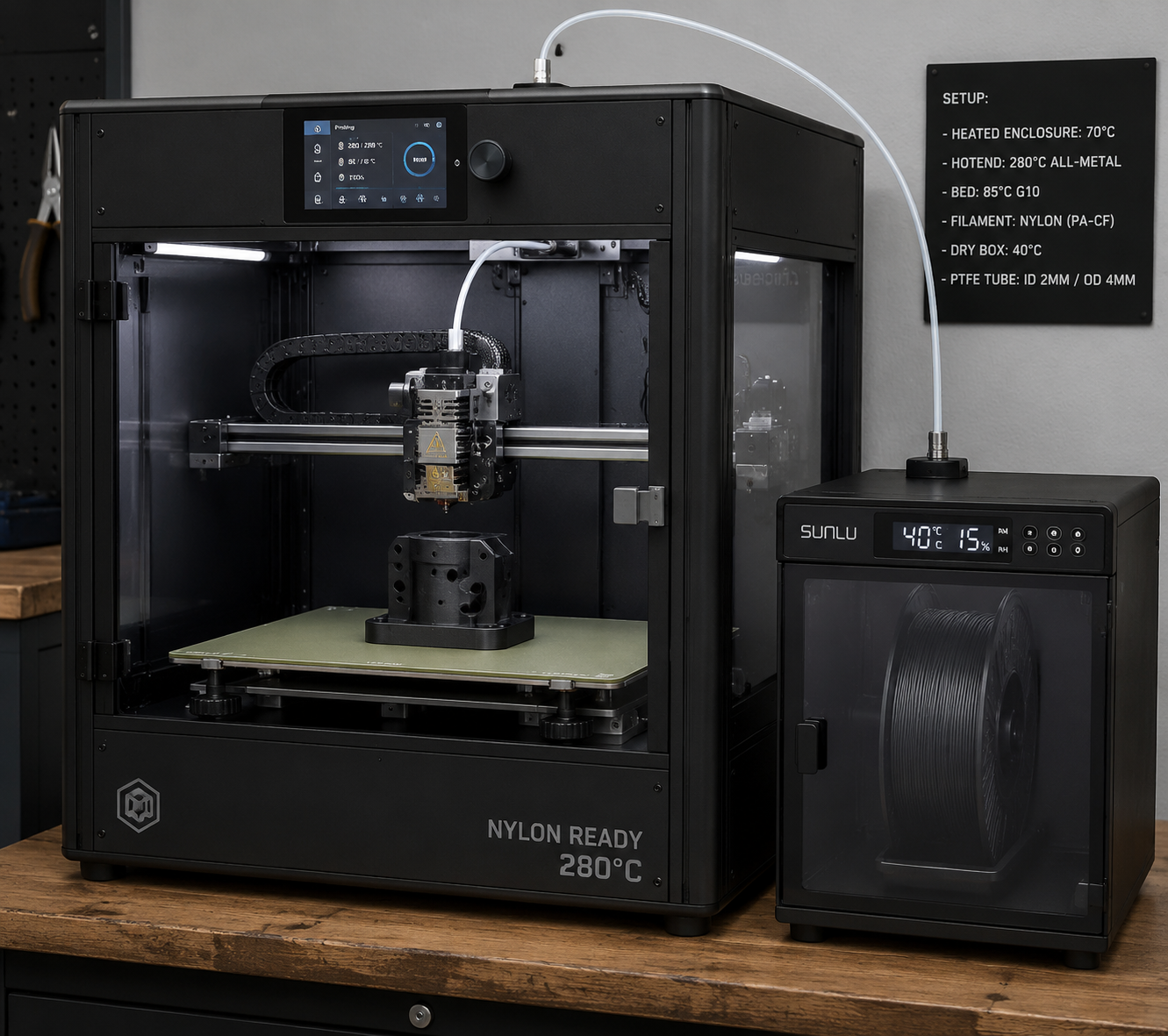
비평적 주석: 일반적인 저가형 프린터에 흔히 사용되는 기본 PTFE 라이닝 핫엔드는 240°C 이상에서 열화되어 유독 가스를 방출합니다. 나일론을 안전하게 인쇄하려면 올메탈 핫엔드가 필요합니다. 프린터의 핫엔드 내부에 흰색 PTFE 튜브가 장착되어 있다면, 먼저 업그레이드를 하지 않은 상태에서 나일론 인쇄를 시도하지 마십시오.
베드 온도 및 접착력
베드 온도: PA6의 경우 70–90°C, PA12의 경우 80–100°C입니다. 인쇄가 끝날 때까지 베드 온도를 일정하게 유지해야 합니다. 나일론 소재를 인쇄하는 도중에 베드 온도를 낮추면 변형이 발생하기 마련입니다.
나일론은 일반적인 적층 표면에 잘 달라붙지 않습니다. 유리 표면만으로는 소용이 없습니다. PEI의 경우, 이형제로 접착 스틱을 사용하면 됩니다(네, 이형제입니다. 나일론이 PEI에 너무 강력하게 결합하여 표면이 뜯겨 나갈 수 있기 때문입니다). 가장 신뢰할 수 있는 해결책은 다음과 같습니다:
- 가로라이트(G10/FR4) 기판: 나일론은 페놀 수지 표면에 자연스럽게 밀착됩니다. 80°C로 가열한 후, 사포질한 G10 위에 직접 프린팅하세요. 접착제, 테이프, 스프레이가 필요 없습니다. 이것이 바로 나일론 베드 접착의 최고 기준입니다.
- 유리에 PVA 접착제 스틱 바르기: 두껍게 도포한 후 인쇄하기 전에 완전히 건조시켜 주세요. PVA는 나일론이 결합할 수 있는 희생층을 형성합니다. 효과는 있지만, 2~3회 인쇄할 때마다 다시 도포해야 합니다.
- 나일론 전용 접착제: Magigoo PA와 Vision Miner Nano 폴리머 접착제는 나일론 전용으로 개발되었으며, 생산 현장에서 사용하기에 그 가격만큼의 가치가 있습니다.
케이스 및 주변 온도
나일론의 경우 인클로저 사용이 필수입니다. 선택 사항이 아니라 필수입니다. 인클로저 내부의 주변 온도를 45–55°C로 유지하도록 하십시오. 40°C 미만이면 어느 한 변의 길이가 50mm를 초과하는 부품의 경우 뒤틀림 현상이 거의 불가피해집니다. 60°C를 초과하면 스테퍼 모터와 전자 부품이 과열될 위험이 있습니다.
프린터에 가열식 인클로저가 없는 경우, 인쇄를 시작하기 전에 베드를 100°C로 설정하고 20~30분 동안 예열한 다음, 테이프나 폼으로 모든 틈을 막아주세요. 수동형 인클로저(능동적인 가열 기능이 없는 단열 상자)는 PA12의 경우 사용이 가능하지만, 대형 부품의 PA6을 인쇄할 때는 어려움이 있습니다.
습기 관리: 나일론이 직면한 가장 큰 과제
이 가이드에서 딱 한 가지만 기억하신다면, 바로 ‘나일론과 물은 천적 관계이며, 나일론은 항상 지게 된다’는 사실입니다. 그 물리적 원리는 다음과 같습니다. 나일론의 아미드기는 물 분자와 수소 결합을 형성합니다. 분자 수준에서 흡수된 물은 가소제 역할을 하여 고분자 사슬 사이로 미끄러져 들어가 분자간 힘을 약화시킵니다. 그 결과는 극적입니다. 70 MPa의 강도를 보였던 완전히 건조한 PA6 부품도 50% 상대 습도 조건에서 평형 상태에 도달한 후 35 MPa로 강도가 떨어질 수 있습니다.
인쇄 전 건조
필라멘트는 인쇄 전에 반드시 건조해야 합니다. 공장에서 밀봉된 나일론 스풀에도 제조 과정에서 발생한 수분이 포함되어 있습니다. 건조 절차는 다음과 같습니다.
- PA6: 대류식 오븐이나 전용 필라멘트 건조기에서 80°C에서 8~12시간 동안 건조합니다. 흡습제만으로는 충분하지 않습니다. 나일론과 물의 결합력이 너무 강하기 때문입니다.
- PA12: 70–80°C에서 6–8시간 동안. PA6보다 요구 조건이 덜 까다롭지만, 여전히 능동적인 건조 과정이 필요합니다.
- CF/GF가 함유된 등급: 기본 폴리머와 동일한 온도이지만, 충전 매트릭스를 통한 수분 이동 속도가 느리기 때문에 2~4시간을 추가로 소요해야 합니다.
드라이 박스에서 인쇄하기
건조된 필라멘트는 몇 시간 만에 수분을 다시 흡수합니다. 활성 건조제를 압출기에 직접 공급하는 밀폐형 건조 상자가 필수적입니다. 시중에서 판매되는 제품(PrintDry, Sunlu S4, Eibos Cyclopes)이 효과적이며, PTFE 튜브가 통과된 밀폐 용기에 지시형 실리카겔 500g을 넣은 DIY 방식도 $20 미만의 비용으로 거의 동일한 효과를 냅니다.
건조 상자 내부의 상대 습도를 모니터링하십시오. 목표 값은 15% RH 미만입니다. 상대 습도가 20%를 서서히 초과할 경우, 건조제를 교체하거나 재생하십시오.
나일론 3D 프린팅 부품의 실제 적용 사례
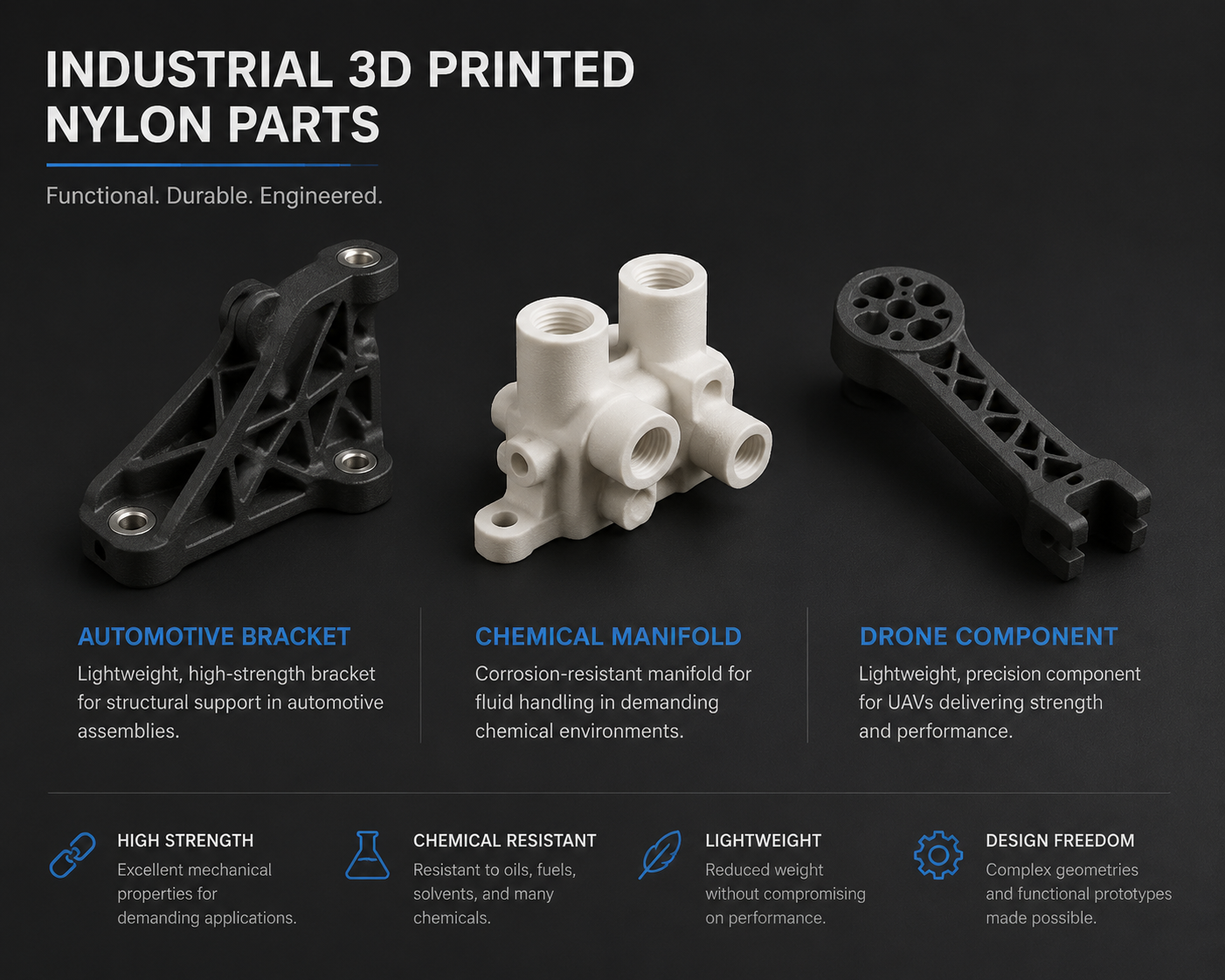
나일론은 강도, 내화학성, 피로 수명이 조화를 이루고 있어 가혹한 환경에서 작동하는 기능성 부품에 특히 적합합니다. 나일론이 특히 뛰어난 점은 다음과 같습니다:
기계 부품
나일론으로 3D 프린팅된 기어, 풀리 및 베어링은 내마모성 측면에서 PLA 및 PETG로 제작된 제품보다 몇 배나 뛰어난 성능을 보입니다. PA12의 타고난 윤활성 덕분에 나일론 대 나일론 기어 쌍은 나일론 대 금속 기어 쌍보다 더 부드럽게 작동합니다. 고회전 기어의 경우, PA6-CF20은 하중이 가해져도 톱니 형상을 유지할 수 있는 강성을 제공합니다.
자동차 엔진룸
PA6-GF30은 150°C의 온도에 지속적으로 노출되어도 내구성을 유지하므로, 엔진룸 브래킷, 케이블 가이드 및 센서 하우징에 사용하기에 적합합니다. 오일, 그리스 및 냉각수에 대한 내화학성이 뛰어나기 때문에, 나일론 부품은 ABS나 PLA와 달리 자동차 환경에서 성능이 저하되지 않습니다.
화학 공정 장비
나일론은 탄화수소, 케톤 및 대부분의 산업용 용매에 대한 내성을 지닙니다. PA12는 특히 연료 시스템 부품에 탁월한 성능을 발휘하며, 가솔린, 디젤 및 에탄올 혼합물과 화학적 호환성을 갖추고 있습니다. 화학 공장의 지그, 고정구 및 교체 부품의 경우, 3D 프린팅으로 제작된 나일론은 훨씬 저렴한 비용과 짧은 리드 타임으로 금속을 대체할 수 있습니다.
항공우주 및 드론 부품
CF-나일론의 비강성(강성을 밀도로 나눈 값)은 알루미늄에 근접하면서도 무게는 대략 절반 수준입니다. PA12-CF15 소재로 3D 프린팅한 드론 프레임, 카메라 마운트, 안테나 브래킷은 비행 시간에 중요한 영향을 미치는 무게를 줄여줍니다. 또한 이 소재는 탄소섬유 판보다 진동을 더 효과적으로 흡수하여 민감한 전자 부품을 보호합니다.
나일론 인쇄 시 흔히 발생하는 문제와 해결책
| 문제 | 원인 | 해결책 |
|---|---|---|
| 뒤틀림 / 모서리 들뜸 | 인클로저 온도 부족 또는 베드 접착 불량 | 인클로저를 45°C 이상으로 예열하고, G10 빌드 표면을 사용하며, 브림(8–10mm)을 추가하십시오. |
| 압출 과정에서 나는 펑 하는 소리 / 지글거리는 소리 | 습한 필라멘트 — 노즐 내에서 수분이 끓음 | 80°C에서 8시간 이상 필라멘트를 건조시킨 후, 드라이 박스에서 출력하십시오. |
| 층간 접착력 저하 / 박리 | 노즐 온도가 너무 낮거나 냉각 팬이 작동 중입니다 | 온도를 10°C 올리고, 부품 냉각 팬을 완전히 끕니다. |
| 실이 뭉쳐 나오거나 스며나오는 현상 | 나일론의 용융 시 낮은 점도 | 후퇴량을 4–6mm로 늘리고, 온도를 5°C 낮추며, 코스팅 기능을 활성화하십시오. |
| 노즐 막힘 (충진 등급) | 표준 노즐 내의 섬유 쌓임 | 0.5mm 이상의 경화강 노즐을 사용하십시오. 충전 나일론 소재를 사용할 때는 황동 노즐 사용을 피하십시오. |
| 기판에 대한 과도한 접착 (PEI 손상) | 나일론은 PEI와 화학적으로 결합한다 | 이형층으로 접착 스틱을 바르고, G10으로 전환하세요. |
나일론 부품의 후가공
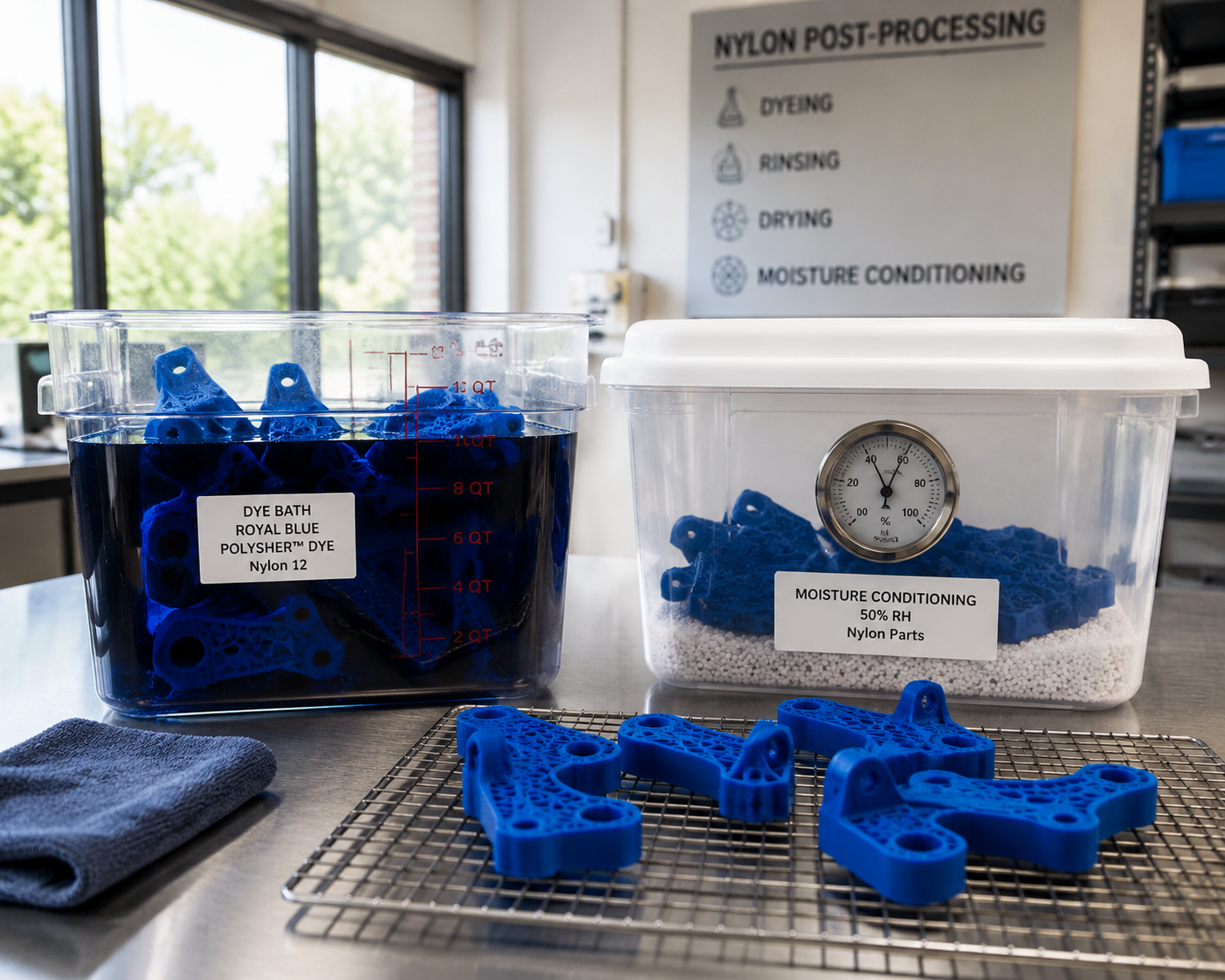
나일론은 다른 3D 프린팅 소재와 달리 후처리 과정이 다릅니다. 프린팅을 어렵게 만드는 바로 그 수분 흡수 특성이 후처리 단계에서는 장점으로 작용합니다. 즉, 수분 흡수를 적절히 조절하면 내충격성과 유연성이 향상됩니다. 많은 제조업체들은 목표 기계적 특성을 달성하기 위해 나일론 부품을 24~48시간 동안 물에 담가 의도적으로 전처리합니다.
샌딩 및 표면 다듬기: 나일론은 샌딩이 잘 되지만 호흡기를 자극할 수 있는 미세 먼지가 발생하므로 마스크를 착용하십시오. 400~800 그릿을 사용하여 습식 샌딩을 하면 최상의 표면 마감을 얻을 수 있습니다. ABS와 달리 나일론은 아세톤을 이용한 증기 연마가 불가능하며, 화학적 연마를 위해서는 포름산과 같은 강력한 용제가 필요합니다(위험하므로 취미 활동가에게는 권장하지 않습니다).
염색: 나일론은 직물 염료가 아주 잘 스며드는 몇 안 되는 3D 프린팅 소재 중 하나입니다. 합성 섬유용 ‘Rit DyeMore’ 염료는 80–90°C에서 사용할 수 있습니다. 내추럴/화이트 나일론으로 프린팅한 후 원하는 색상으로 염색하세요. 이는 색상이 일치하는 필라멘트를 구할 수 없는 양산 부품의 경우나, 단일 내추럴 스풀로 다색 조립체를 제작할 때 특히 유용합니다.
수분 케어: 강성보다 내충격성이 더 중요한 부품의 경우, 완성된 부품을 실온의 물에 24시간 동안 담근 다음, 주변 공기 중에서 48시간 동안 평형 상태를 유지하도록 합니다. 그 결과, 인장 강도는 20–30% 정도 감소하는 대신, 출력 직후 상태보다 2~3배 높은 내충격성을 지닌 부품을 얻을 수 있습니다.
산업용 고품질 나일론 필라멘트 조달
나일론의 경우, 다른 어떤 소재보다도 필라멘트 품질이 더욱 중요합니다. 직경이 일정하지 않으면(저가형 나일론에서 흔히 발생하는 문제) 압출 과정에서 편차가 발생하여 완성된 부품에 취약한 부분이 생길 수 있습니다. 양산 환경에서는 다음 사항을 확인해야 합니다:
- 직경 공차: ±0.03mm 이하 (저가형 나일론은 대개 ±0.05mm 이상이다)
- 타원도: 원형에서 0.02mm 미만의 편차
- 수분 함량: 공장에서 건조하고 건조제를 넣어 진공 밀봉했으며, 재밀봉이 가능한 포장
- 추적 가능성: 요청 시 로트 번호 및 품질 관리 데이터 시트를 제공해 드립니다.
생산 규모로 나일론 필라멘트를 조달하려는 B2B 구매자를 위해, nylonplastic.com은 필라멘트 압출 또는 산업용 SLS/MJF 프린터에 직접 사용하기에 적합한 PA6, PA12 및 충전제 함유 펠릿을 제공합니다. 당사의 엔지니어링 등급 나일론 컴파운드는 ISO 9001 품질 관리 체계에 따라 제조되며, 완벽한 로트 추적성, 기계적 특성 인증서, 그리고 배치 간 일관된 성능을 보장합니다. 기술 데이터시트 및 대량 구매 가격에 대한 문의는 당사의 소재 엔지니어링 팀으로 연락해 주십시오.
나일론 3D 프린팅: 귀하의 용도에 적합할까요?
나일론이 모든 프린팅에 적합한 소재는 아닙니다. 가격이 비싸고(고품질 필라멘트의 경우 $40–80/kg), 프린팅이 까다로우며, 많은 사용자가 갖추지 못한 장비 업그레이드가 필요합니다. 하지만 열, 하중, 화학 물질 또는 수천 번의 반복 사용에 견뎌야 하는 부품의 경우, 나일론은 뛰어난 성능으로 그 비용을 충분히 상쇄합니다.
다른 엔지니어링 필라멘트 대신 나일론을 선택해야 하는 경우:
- 나일론 대 PETG: 80°C 이상의 내열성, 더 뛰어난 내마모성, 또는 연료 및 용제에 대한 내화학성이 필요한 경우에는 나일론을 선택하십시오. PETG는 인쇄하기는 더 쉽지만, 내구성 면에서는 나일론에 미치지 못합니다.
- 나일론 대 ABS: 내피로성과 인성이 요구되는 기계적 용도에는 나일론을 선택하십시오. ABS는 강성은 더 높지만 취성이 더 크고 내화학성이 떨어집니다.
- 나일론 대 PEEK/PEI: PEEK와 PEI(울템)는 내열성과 내화학성 면에서 나일론보다 우수하지만, 가격은 10~20배 더 비싸고 핫엔드 온도가 350°C 이상이어야 합니다. 극한 온도에서의 성능이 필요하지 않은 경우, 나일론이 실용적인 선택입니다.
나일론 3D 프린팅 부품에 대한 구매자 질문
- 이 견적은 FDM 필라멘트, SLS 분말, MJF 소재, 아니면 완제품에 대한 것입니까?
- 어떤 치수, 구멍, 나사산, 인서트, 표면 및 조립 방향이 중요한가요?
- 해당 부품은 건조 상태, 전처리 상태, 염색 상태, 텀블링 처리 후 상태, 아니면 조립 후 상태에서 검사되나요?
- 해당 수량만으로도 인쇄, CNC 가공 또는 향후 사출 금형 제작을 진행할 만한 가치가 있습니까?
나일론 플라스틱 서비스 지원
나일론 플라스틱과 비교할 수 있다 나일론 3D 프린팅, CNC 가공, 그리고 동일한 도면 및 생산 계획에 따른 사출 성형. 견적 제출 전에 재료 건조, 배향, 공차, 삽입 부품, 마감, 검사 및 양산 전환에 대한 검토가 가능합니다.
관련 읽기
자주 묻는 질문
나일론 3D 프린팅에는 PA6와 PA12 중 어떤 것을 사용해야 할까요?
PA6는 높은 강도와 내열성을 제공하지만 습기에 민감합니다. PA12는 치수 안정성을 제어하기가 더 쉬운 경우가 많습니다. 단순히 소재 계열명보다 프린팅 공정과 구체적인 등급이 더 중요합니다.
나일론 프린팅 견적을 받기 위해서는 어떤 파일이 필요한가요?
STEP 또는 STL 파일, 도면, 수량, 중요 치수, 하중 방향, 표면 및 색상 요구 사항, 삽입물, 검사 요구 사항 및 용도를 보내 주십시오.
SLS 및 MJF 방식으로 제작된 나일론 부품은 등방성인가요?
일반적으로 FDM 부품보다 균일한 편이지만, 적층 위치, 공정 매개변수, 리프레시 비율, 형상 및 후처리 과정에 따라 방향에 따른 편차가 발생할 수 있습니다. 중요한 하중 조건에 대해서는 반드시 검증하십시오.
나일론 부품은 언제부터 3D 프린팅에서 사출 성형으로 전환해야 할까요?
지오메트리가 안정적이고, 연간 수요가 금형 제작을 뒷받침하며, 단위 비용이나 재현성이 금형 없이 반복하는 것보다 더 중요한 경우 성형 공정을 검토해야 한다.
나일론 3D 프린팅 리뷰 요청하기
공정 및 견적 검토를 위해 부품 도면, 수량, 사용 환경, 공차 및 표면 처리 요구 사항을 보내주십시오.

