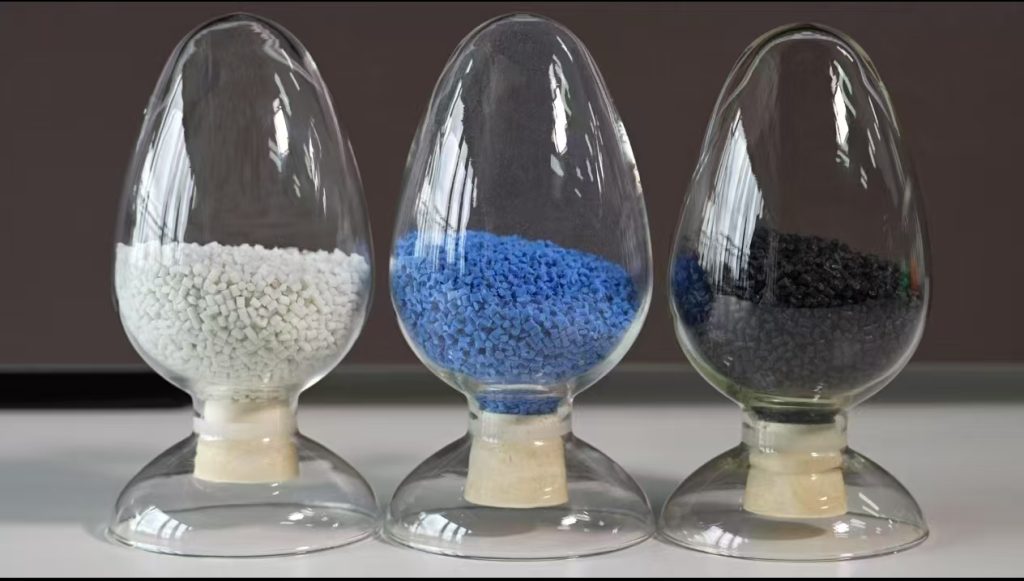
SLS vs MJF nylon is a practical buying decision, not just a process definition. Both routes can produce strong functional parts, but they differ in surface consistency, throughput, feature behavior and how they fit prototype or low-volume production planning.
This guide compares SLS and MJF nylon 3D printing for B2B buyers who need housings, brackets, ducts, jigs, clips or short-run production parts. If you are comparing quotes, the important question is not which acronym is newer, but which process matches the part geometry, tolerance expectation and reorder volume.

SLS vs MJF Nylon at a Glance
| 의사결정 영역 | SLS Nylon | MJF Nylon |
|---|---|---|
| Surface look | Usually rougher and more grain-visible | Often more uniform and darker |
| Detail behavior | Good for complex geometry with proven design freedom | Good edge definition on many functional parts |
| Typical use | Prototypes, functional assemblies, complex low-volume parts | End-use batches, repeatable functional components, short-run production |
| Cost driver | Build packing, depowdering, finish level | Build volume, throughput, finish and quantity |
| Buyer check | Ask about wall minimums, finish and tolerance plan | Ask about repeatability, color consistency and production lot size |
How the Two Processes Differ in Practice
SLS sinters nylon powder with a laser, while MJF uses fusing and detailing agents with thermal energy. For buyers, the operational impact shows up in surface feel, batch consistency and delivery economics more than in the process explanation itself.
SLS remains a strong choice for complex geometries and engineering prototypes. MJF is often attractive when buyers want cleaner-looking black nylon parts and a more production-oriented feel for repeated functional components.
Surface Finish, Color and Cosmetic Expectations
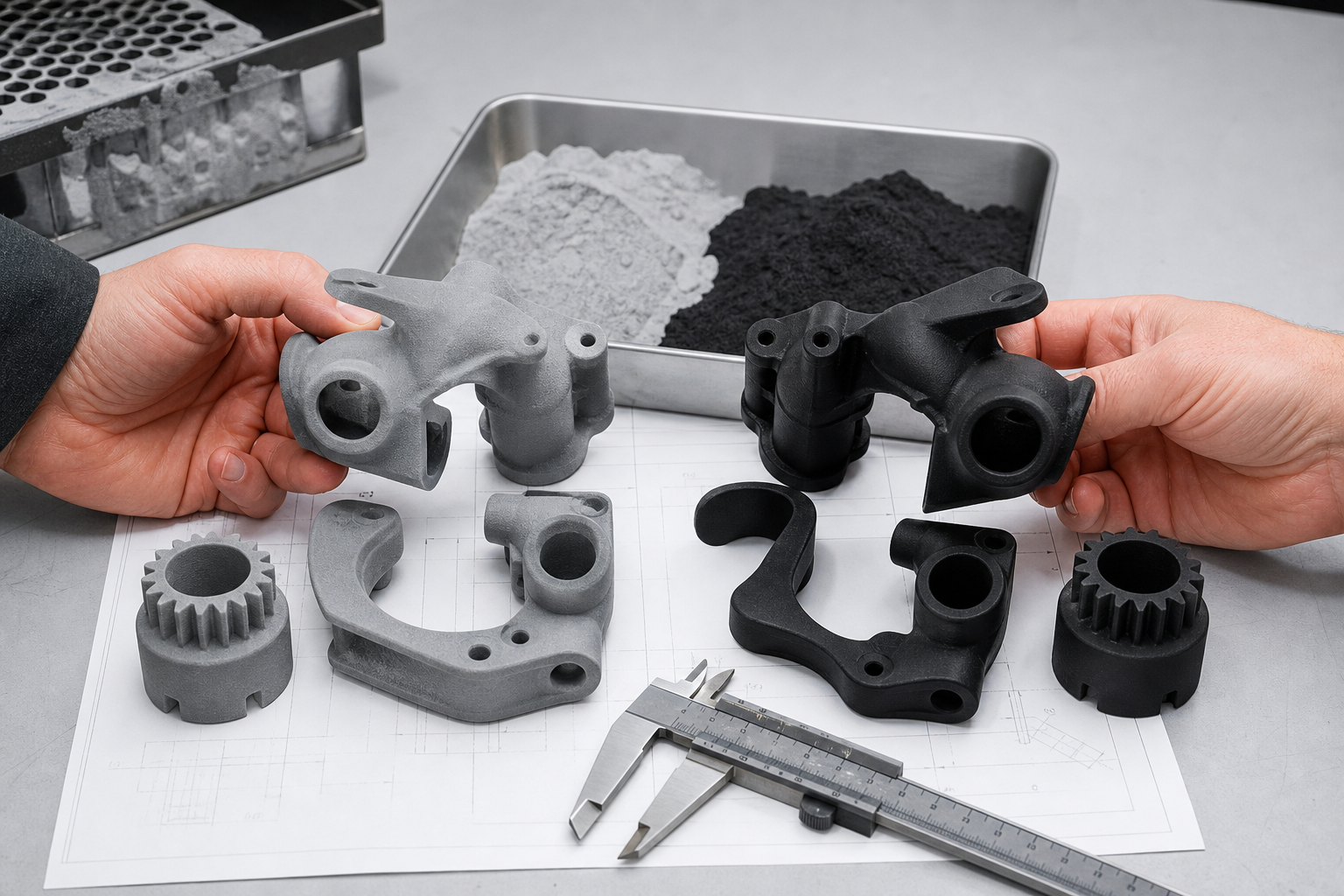
If the part is customer-facing, MJF often delivers a more uniform black appearance with less visible variation across a batch. SLS parts may show a rougher texture that is acceptable for technical parts, fixtures and internal assemblies.
Neither process should be selected on cosmetics alone. If sealing faces, threaded areas, clips or snap features matter, the supplier should review those features with the actual tolerance and post-processing requirement.
Tolerances and Design Rules
- Define the truly critical dimensions instead of expecting uniform tight tolerances everywhere.
- Mark mating features, hole sizes and fit conditions on the drawing.
- Review minimum wall thickness and unsupported spans with the supplier.
- Account for powder removal access in deep channels or enclosed volumes.
- State whether the part is a prototype, test fixture or end-use production component.
Functional Applications and Process Selection
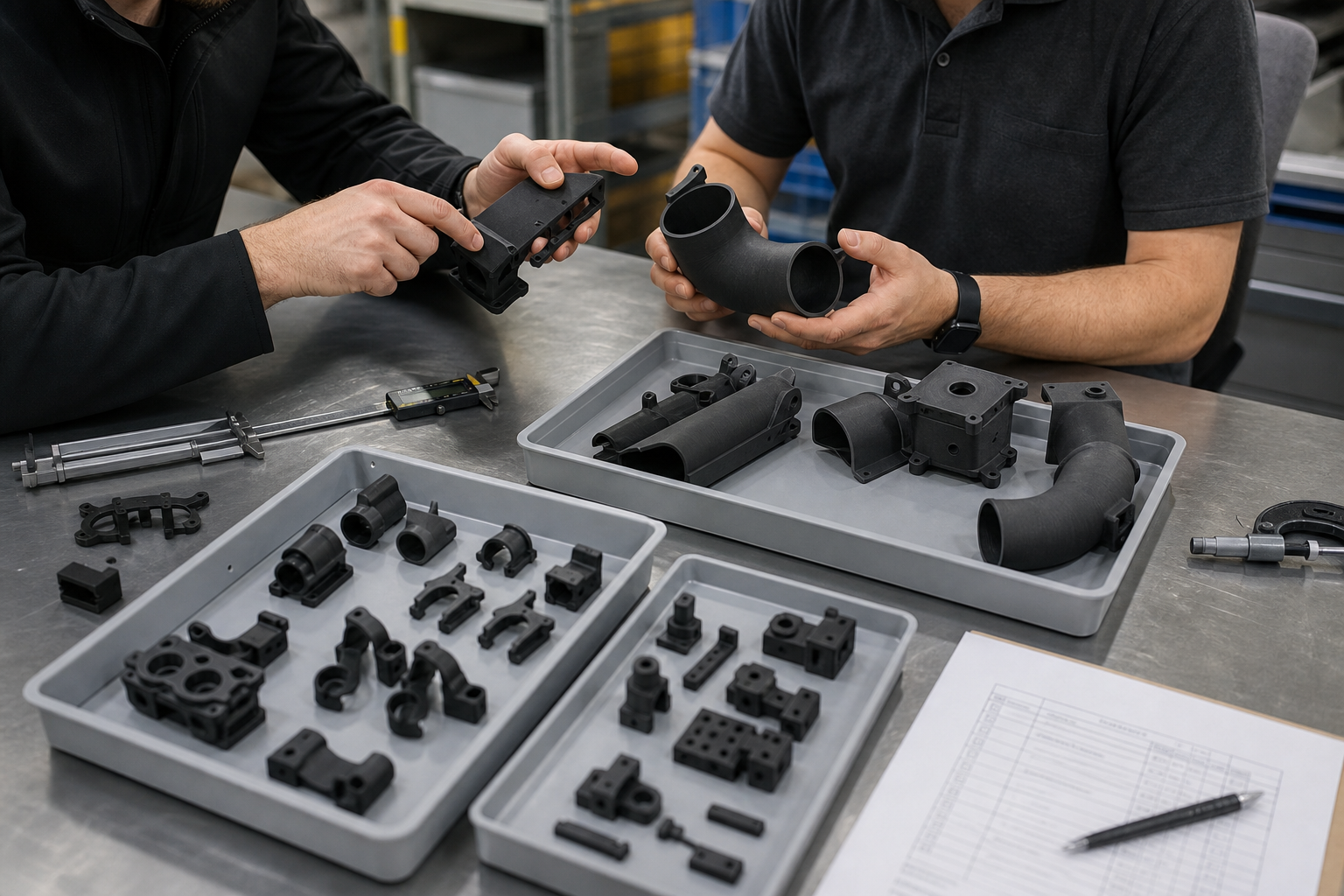
| 부품 유형 | Usually a Better Starting Point | 왜 |
|---|---|---|
| Complex prototype housing | SLS | Strong geometry freedom and proven prototype workflow |
| Low-volume end-use black nylon part | MJF | Good batch consistency and production-style appearance |
| Assembly jig or fixture | Either, depending on size and tolerance | Function matters more than cosmetics |
| Short-run duct or bracket series | MJF in many cases | Often efficient for repeat batches |
Common Quote Mistakes and How to Avoid Them
| 실수 | 위험 | 더 나은 접근 방식 |
|---|---|---|
| Comparing price without finish level | Quotes are not equivalent | Ask for the same finish and inspection scope |
| No tolerance notes | Functional mismatch after delivery | Mark key fits and interfaces on the drawing |
| Ignoring reorder volume | Wrong process selected for future demand | Tell the supplier prototype and annual quantity separately |
| Choosing by machine name only | Process does not match application | Describe use case, environment and assembly need |
왜 나일론 플라스틱을 선택해야 할까요?
Nylon Plastic supports nylon 3D printing projects with process comparison, drawing review and production planning around real part requirements. That makes it easier to decide whether SLS or MJF is the better path before the project gets locked into the wrong workflow.
Buyer Pain Points That Change an SLS or MJF Quote
- The RFQ names PA12 but does not define process, color, finish, or refresh-material requirements.
- All dimensions are treated as equally critical instead of identifying datums, fits, holes, and sealing surfaces.
- Quoted parts are compared without the same orientation, nesting, dyeing, tumbling, inspection, and packing scope.
- A prototype price is projected to repeat production without discussing build density, batch quantity, or reorder consistency.
나일론 플라스틱이 이 프로젝트를 어떻게 뒷받침하는가
Nylon Plastic has supported material selection and finished plastic-part manufacturing since 2005. The same project review can connect SLS or MJF selection, tolerance planning, finishing, inspection, and later production routes, so buyers do not have to evaluate each production decision in isolation.
- 견적서를 작성하기 전에 도면, 자재, 수량, 핵심 사양 및 사용 환경을 검토하십시오.
- 실용적인 방법이 두 가지 이상인 경우, 3D 프린팅, CNC 가공, 신속 금형 제작 및 양산 성형을 비교해 보십시오.
- 출하 전에 샘플, 치수 보고서, 자재 문서, 추적성 및 수락 기준을 정의해야 합니다.
관련 읽기
자주 묻는 질문
Is MJF always better than SLS for nylon parts?
No. MJF may offer uniform appearance and efficient repeat batches, while SLS remains strong for complex prototypes and flexible production. Geometry, finish, quantity, tolerance, and supplier capability decide the route.
Which process gives a smoother surface?
MJF often appears more uniform as-built, but powder, orientation, tumbling, dyeing, bead blasting, and geometry affect the final result in both processes.
Can SLS and MJF make end-use parts?
Yes, when the exact material, orientation, dimensional capability, finish, load case, and quality plan are validated for the application.
What should an SLS or MJF RFQ include?
Send STEP or STL files, drawing, quantity, critical dimensions, use environment, load, color, finish, inserts, inspection requirements, and reorder forecast.
Request an SLS vs MJF Review
Send the files, quantity, finish, tolerances, and use conditions to compare the two nylon powder-bed routes on the same scope.