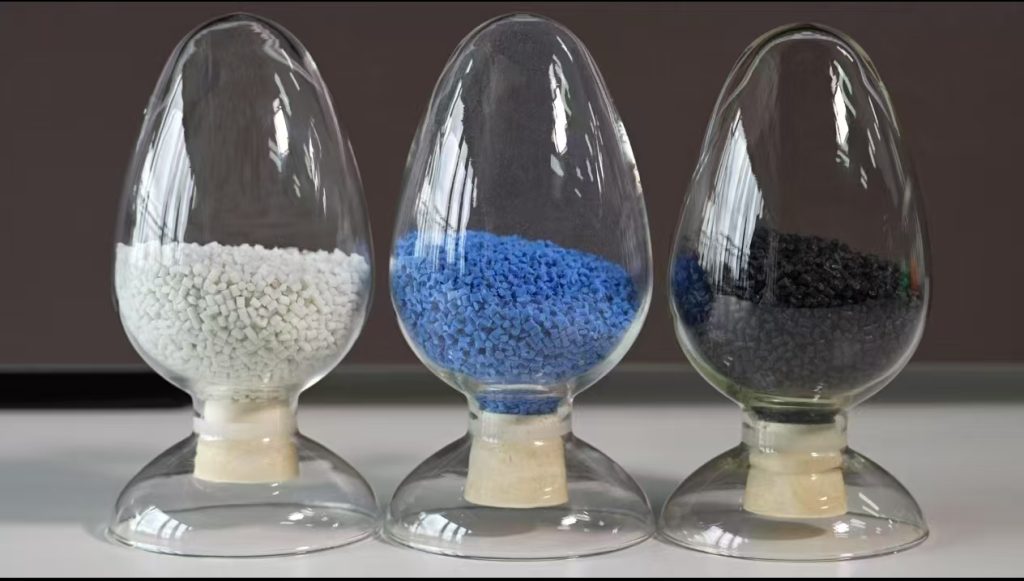
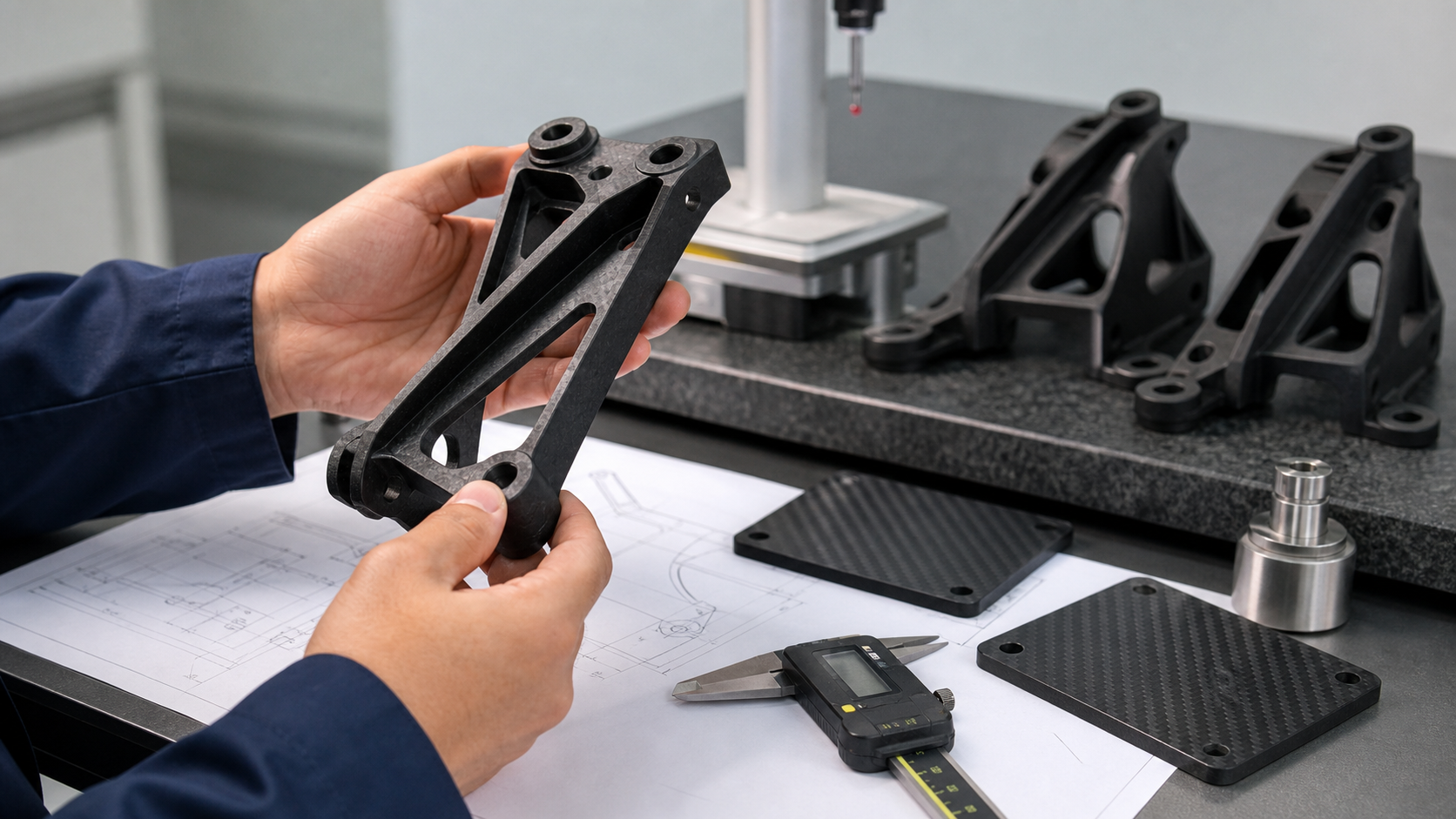
탄소섬유 나일론 부품 이 제품은 일반적으로 프로젝트에서 충전재가 없는 나일론보다 더 높은 강성이 필요하거나, 금속보다 가벼운 무게가 요구되거나, 기존 금형 제작 방식으로는 감당할 수 없는 빠른 반복 제작이 필요한 경우에 선택됩니다. 구매자들은 주로 브래킷, 고정구, 하우징, 로봇 팔 끝단 공구, 커버 및 경량 구조 부품에 이 제품을 사용합니다.
이 가이드에서는 탄소섬유 나일론 부품을 조달하는 방법, 3D 프린팅과 기계 가공 중 어떤 방식을 선택해야 하는지, 고려해야 할 설계상의 제약 사항, 그리고 견적 요청(RFQ) 전에 공급업체를 평가하는 방법을 설명합니다. 이 가이드의 목적은 탄소섬유 나일론을 만능 소재로 취급하는 것이 아니라, 실제 하중, 공차 및 생산량 요구 사항에 맞는 등급과 공정을 선정하는 데 있습니다.
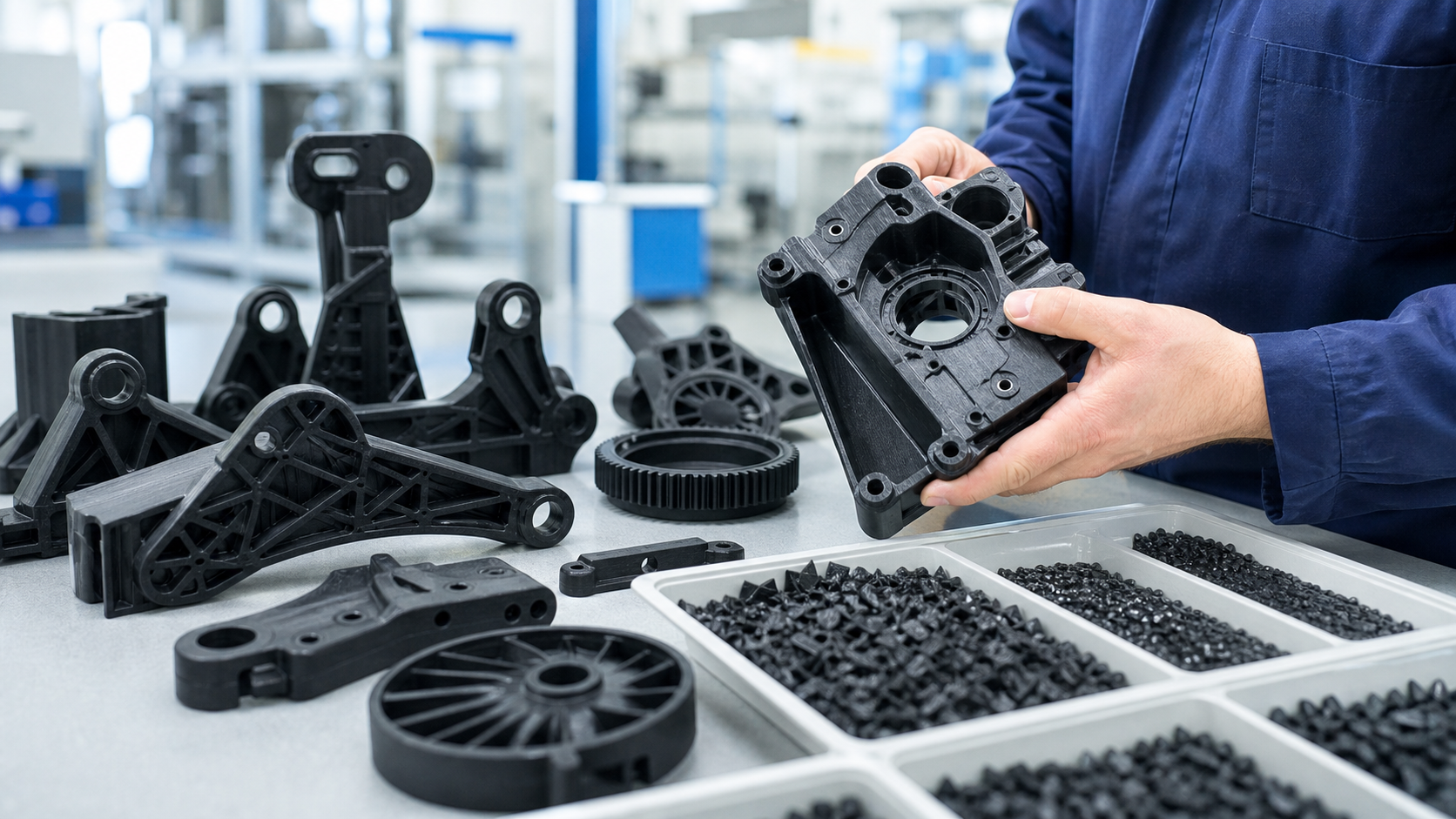
탄소섬유 나일론 부품 개요
| 의사결정 영역 | 일반 옵션 | 구매자 확인 |
|---|---|---|
| 기재 | PA6-CF, PA12-CF, 단섬유 보강 나일론 컴파운드 | 강성, 습기 민감도, 충격 요구 사항 및 사용 환경을 확인하십시오. |
| 제조 공정 | FDM, SLS, MJF, CNC 가공, 강화 수지 성형 | 공정을 형상, 부피 및 공차 목표치에 맞추기 |
| 최적합 부품 | 지그, 고정구, 경량 브라켓, 커버, 로봇 공구 | 하중이 정적 하중인지, 반복 하중인지, 아니면 충격 하중이 큰지 확인하십시오. |
| 주요 위험 요소 | 층 방향의 약점, 수분 이동, 가장자리의 취성 현상 | 섬유 배향, 벽체 설계 및 후처리 계획을 검토한다 |
| 견적 요청(RFQ) 입력 사항 | CAD 모델, 하중 조건, 공차 사항, 표면 처리 요구 사항, 수량 | 기하학적 정보뿐만 아니라 기능적 요구사항도 보내주세요 |
탄소 섬유 나일론이 적합한 선택일 때
일반 나일론은 유연성이 지나치게 높고, 알루미늄을 사용하면 불필요한 무게나 가공 비용이 추가될 때, 탄소섬유 강화 나일론을 사용하는 것이 합리적입니다. 이 소재는 외관보다 강성이 더 중요한 금형, 자동화 장비 및 소~중량 생산량의 기능성 부품 분야에서 우수한 성능을 발휘합니다.
부품 표면에 광택이 필요하거나, 날카로운 모서리 부분에서 높은 충격 인성이 요구되거나, 자외선 및 습기 관리 방안이 확립되지 않은 상태에서 장기간 실외에서 사용해야 하는 경우에는 이 소재가 적합하지 않습니다. 부품이 지속적인 고온, 화학 물질 노출 또는 심한 마모에 노출될 경우, 공급업체는 다른 엔지니어링 플라스틱이 더 안정적인지 검토해야 합니다.
Compare the reinforcement trade-offs with the glass-filled nylon guide before fixing the material family.
먼저 무엇을 구매할지 명확히 하세요
이 문구 탄소 섬유 나일론 여기에는 사출 성형용 복합 펠릿, 적층 제조용 필라멘트 또는 분말, 가공용 보강 소재, 또는 완제품 등이 포함될 수 있습니다. 이러한 품목들은 서로 대체 가능한 구매 품목이 아닙니다. 견적 요청서(RFQ)에는 PA 매트릭스와 예정된 제조 공정을 모두 명시해야 합니다.
| 구매 상품 | 일반 사양 | 공급업체가 필요로 하는 사항 |
|---|---|---|
| 변성 나일론 펠릿 | PA6-CF30, PA66-CF30 또는 PA12-CF30 컴파운드 | 가공 공정, 연간 생산량, 색상, 승인 사항, 품질 증명서(COA), 포장 |
| 3D 프린팅 원료 | 특정 프린터 및 공정에 적합한 필라멘트 또는 분말 | 프린터 경로, 방향, 건조, 표면 및 특성 목표값 |
| 완성된 탄소섬유 나일론 부품 | 도면을 기반으로 제작된 인쇄, 기계 가공 또는 성형 부품 | CAD, 중요 공차, 하중 조건, 환경, 수량 및 검사 계획 |
For a drawing-controlled finished part, review the custom plastic components scope alongside the material designation.
재료 선택 및 공정 경로
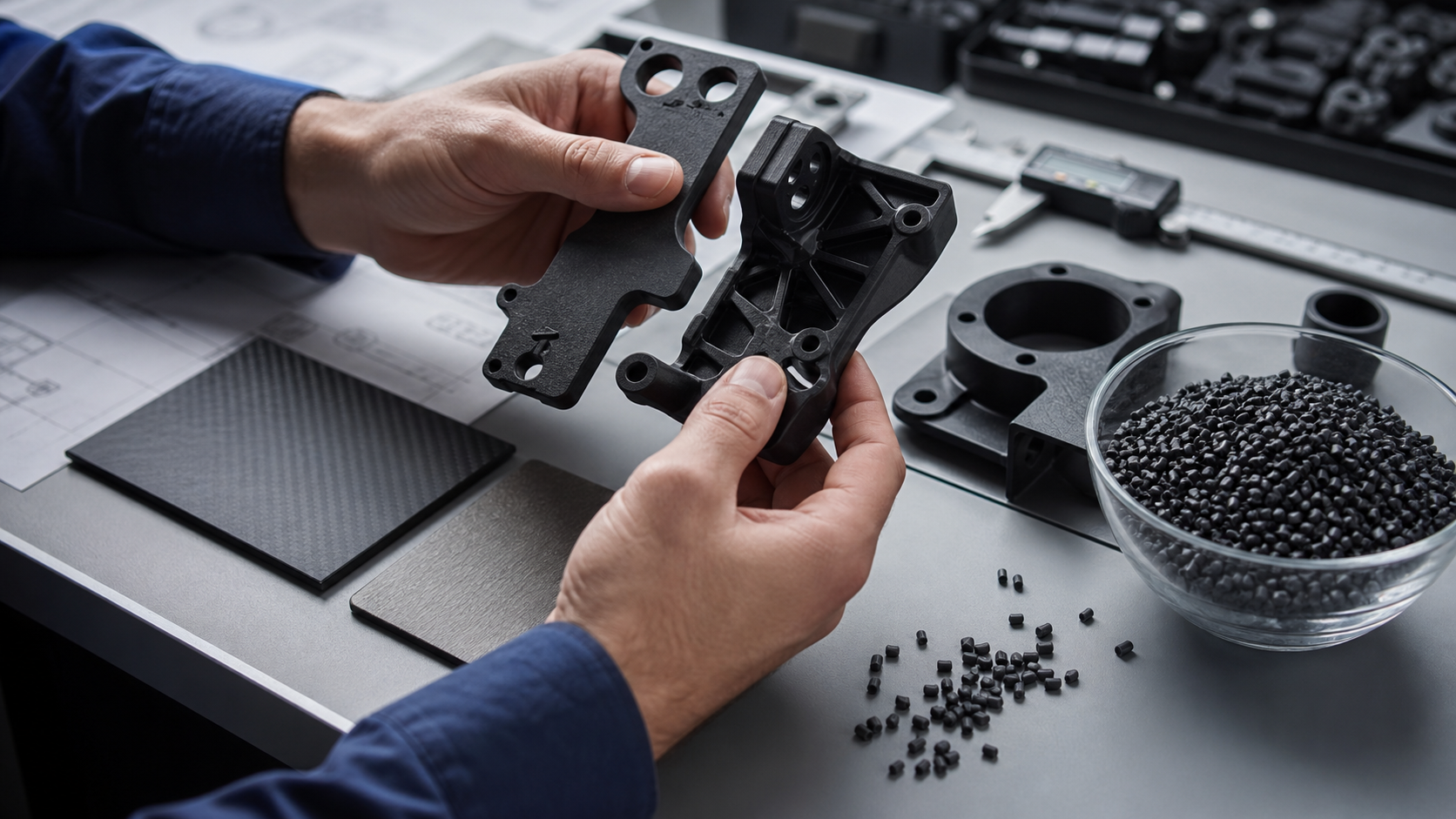
구매자들은 종종 강성, 습기 반응성 및 인쇄성을 기준으로 PA6-CF와 PA12-CF를 비교합니다. PA6-CF는 높은 강성을 제공하지만 습기에 더 민감합니다. PA12-CF는 더 안정적인 환경적 성능과 적층 제조 과정에서 더 우수한 공정 일관성을 제공하기 때문에 종종 선호됩니다.
- 3D 프린팅: 시제품, 고정구, 복잡한 경량 구조물 및 소량 생산에 가장 적합합니다.
- CNC 가공: 기성 형상이 있고, 중요한 부위의 마감 처리를 정밀하게 제어해야 할 때 유용합니다.
- 사출 성형: 수요가 안정적이고 금형 비용을 충당할 수 있을 때 더 유리합니다.
For many custom-part projects, the fastest path is to validate the part with additive manufacturing first, then decide whether a machined or molded version is justified by annual usage.
For the printed route, the PA6-CF 3D printing guide covers feedstock and build considerations; it does not qualify a molded compound as printer filament.
중요한 설계 규칙
- 응력 집중을 줄이기 위해 벽의 이음매를 완만하게 처리하십시오.
- 하중이 큰 부품에는 지지대가 없는 지나치게 얇은 리브를 사용하지 마십시오.
- 도면에 볼트 구역, 클램핑 영역 및 마모 접합부를 표시하십시오.
- 부품을 적층 제조할 경우, 실제 하중 방향을 알려주십시오.
- 상충 관계가 발생할 때 평탄성과 강성 중 어느 쪽이 더 중요한지 명시하십시오.
흔히 발생하는 문제와 실용적인 해결 방법
| 문제 | 가장 유력한 원인 | 실용적인 해결책 |
|---|---|---|
| 가장자리의 균열 | 날카로운 기하학적 형상 또는 부적절한 섬유 보강 등급 | 반경 추가, 국부 단면 확대, 충격 하중 검토 |
| 예상치 못한 편향 | 부하 경로가 공정 능력과 일치하지 않음 | 방향, 단면 두께 및 지지점을 검토하십시오. |
| 차원 드리프트 | 수분 흡수 또는 공정 후 변화 | 검사 조건 및 최종 환경 정의 |
| 지나치게 비싼 견적 | 기능 검토 전에 선정된 프로세스 | 공급업체에 첨가제, 가공 및 성형 공정을 비교해 달라고 요청하십시오 |
자주 묻는 질문
탄소섬유 나일론 부품은 일반 나일론 부품보다 강도가 더 높습니까?
일반적으로 강성이 더 높고 하중이 가해졌을 때 형태를 더 잘 유지하지만, 모든 면에서 무조건 더 우수하다고 할 수는 없습니다. 충격 거동과 이방성 특성은 여전히 검토가 필요합니다.
탄소섬유 나일론 부품을 양산에 사용할 수 있습니까?
네, 특히 고정구, 브라켓, 자동화 부품 및 소량 생산되는 기능성 부품의 경우 그렇습니다. 적절한 공정은 생산량, 공차 및 환경에 따라 달라집니다.
견적을 받으려면 어떤 파일을 보내야 하나요?
3D 모델, 주요 공차 정보가 포함된 도면, 수량, 하중 정보 및 인서트나 체결 부품과 같은 조립 관련 요구 사항을 보내 주십시오.
인쇄된 카본 파이버 나일론 부품과 가공된 카본 파이버 나일론 부품 중 어떤 것을 선택해야 할까요?
복잡한 형상의 경우나 신속한 반복 설계에는 일반적으로 성형 부품이 더 적합합니다. 반면, 소재의 기본 형상이 이미 정해져 있고 형상적 자유도보다 형상 제어의 중요성이 더 큰 경우에는 가공 부품이 더 적합할 수 있습니다.
탄소 섬유 나일론 부품 검토 요청
For finished carbon fiber nylon parts, send the drawing and load case. Nylon Plastic can compare a printed prototype, a machined component where suitable stock exists, and a molded production part against the same functional requirements.
견적서 작성 전에 포함해야 할 사항 및 합의 사항
2005년부터 Nylon Plastic은 엔지니어링 플라스틱 소재 지원과 완제품 제조를 결합해 왔습니다. 단 한 번의 검토만으로도 맞춤형 컴파운딩, 3D 프린팅, CNC 가공, 사출 성형 등을 동일한 도면, 생산량 및 검증 요건에 따라 비교할 수 있습니다.
State the current PA matrix and fiber content, exact grade or permitted alternative, environment, measurement condition, surface requirements, first order, annual demand, destination and timing.
| 보낼 내용 | 그것이 중요한 이유 |
|---|---|
| STEP 파일 및 버전 관리되는 도면 | 공정 검토 및 공차 계획을 지원합니다 |
| 부하 사례 또는 적용 사례 | 잘못된 등급이나 조립 방향을 기재하는 것을 방지합니다 |
| 수량 및 재주문 예상 시기 | 인쇄, 기계 가공 또는 성형 중 어떤 방식을 선택할지 결정하는 데 도움이 됩니다. |
| 중요 치수 | 기능적 특징에 중점을 둔 검사 |
| 조립 세부 사항 | 인서트, 체결 부품 및 결합 조건을 확인합니다. |
비교하기 PA6-CF30, PA66-CF30 그리고 PA12-CF30 as separate material routes. These compound designations do not establish qualification as printer filament or powder. Confirm the exact feedstock and process before comparing property data.
Agree the proposed grade and process, orientation, critical-feature inspection, inserts and finishing in the quotation. Qualify the intended production route separately: a printed prototype does not establish the properties of a molded PA-CF30 part.