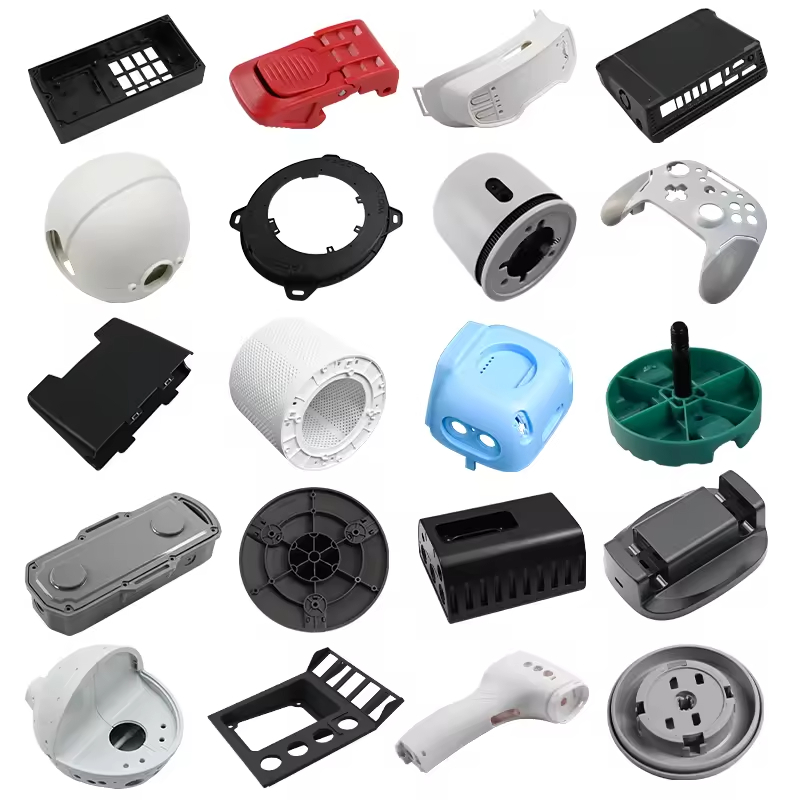
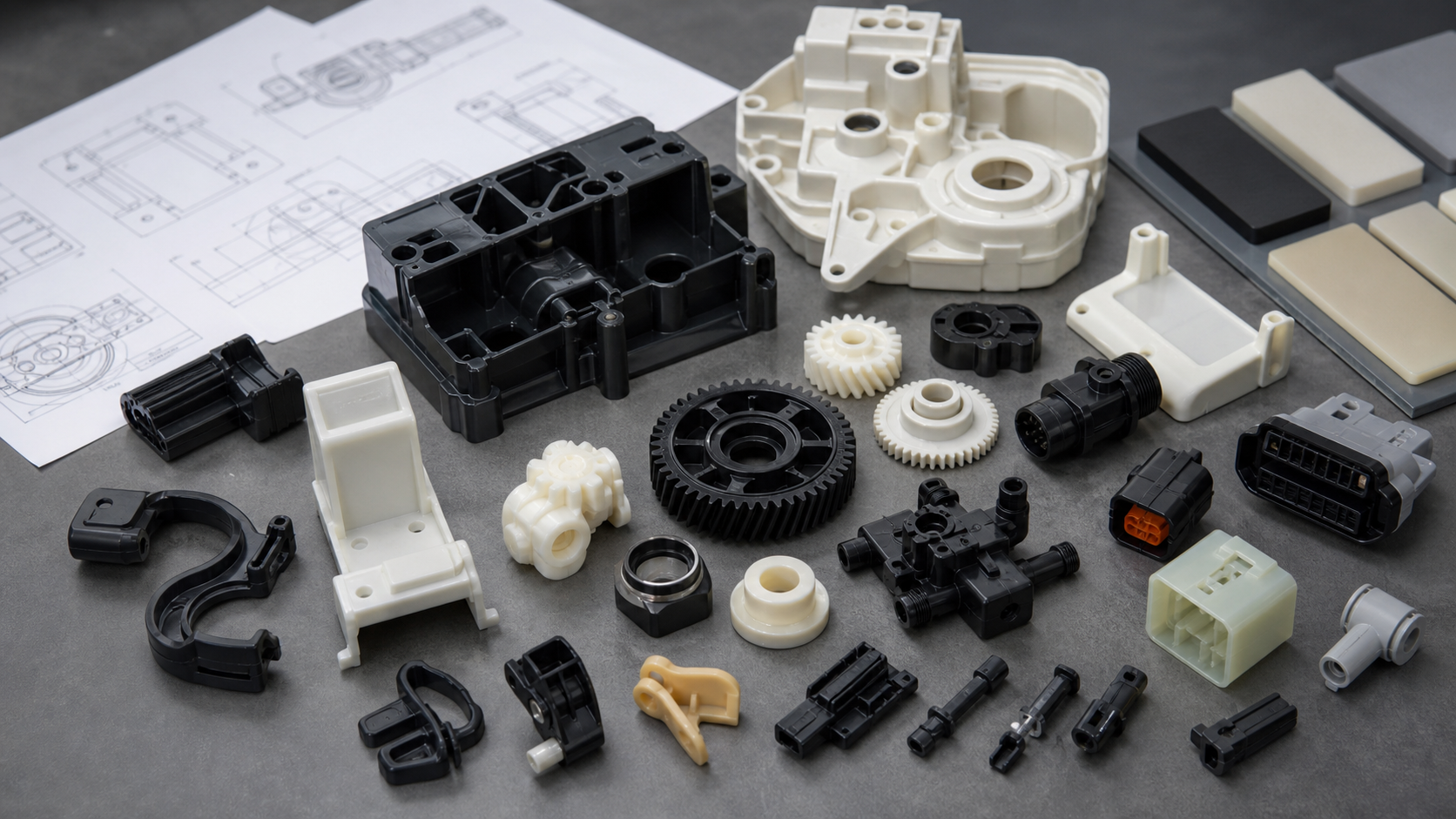
Custom plastic components should be designed around function first: load, temperature, chemical exposure, assembly method, tolerance and production volume determine the best plastic and manufacturing route.
Many buyers start with a material name, but the stronger path is to define the component’s job. A connector, gear, housing, clip, bushing and bracket may all be plastic parts, yet they need different resin families, wall sections, tooling choices and inspection methods.
Manufacturing Routes for Custom Plastic Components
The right route depends on design maturity, quantity, mechanical requirements and whether molded material behavior must be tested.
| 경로 | 최적의 용도 | 구매자 참고 사항 |
|---|---|---|
| 사출 성형 | Repeatable production components | Best for stable designs and scalable volume |
| CNC 플라스틱 가공 | Low-volume functional parts | Avoids tooling cost and supports tight features |
| 3D 프린팅 | Early prototypes and design iteration | Useful before committing to tooling |
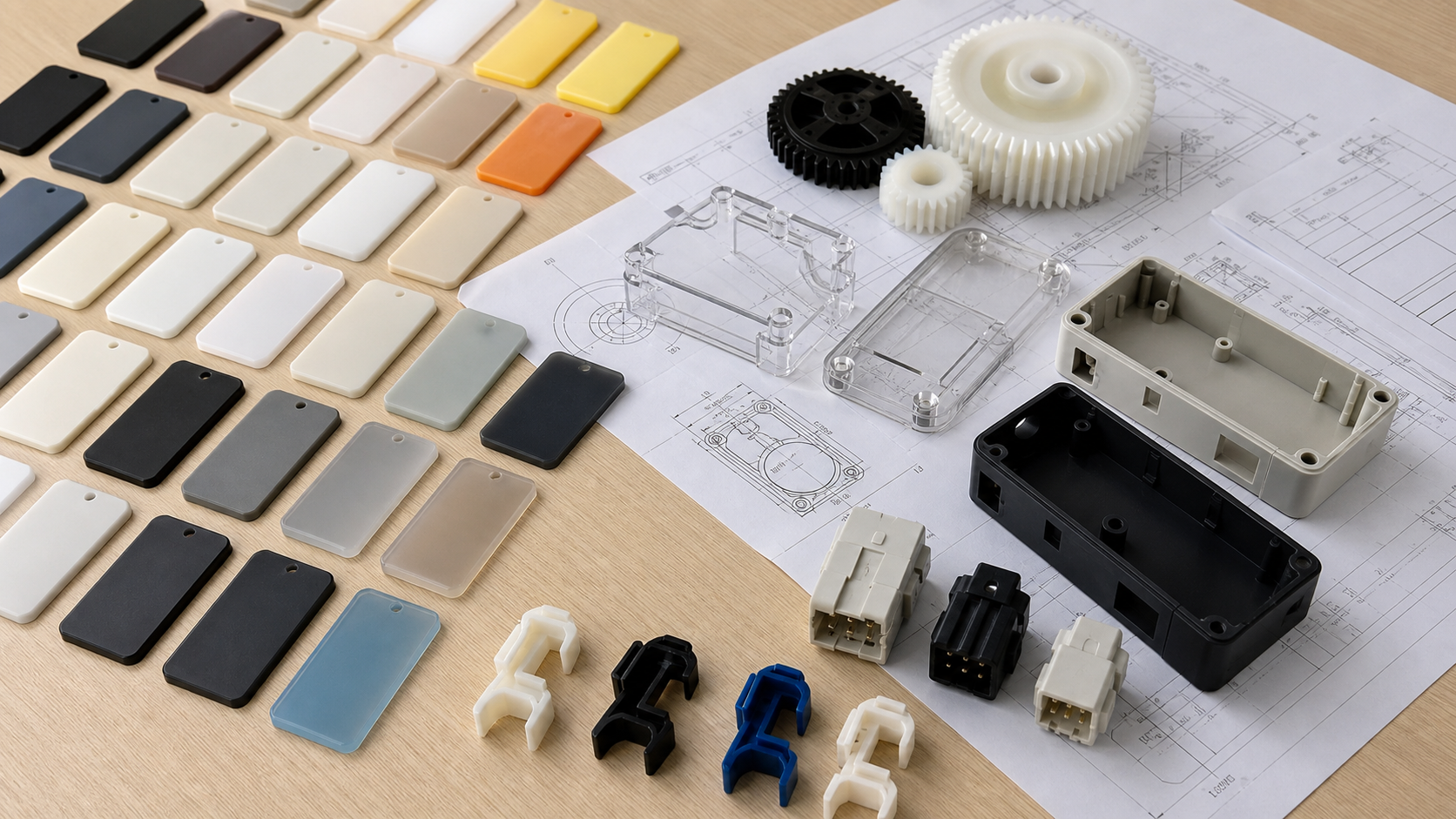
Common Materials for Functional Components
Engineering plastics should be selected by performance and manufacturability together.
| 재료 | 다음에 가장 적합합니다 | 선정 참고 사항 |
|---|---|---|
| PA6 / PA66 / GF nylon | Loaded brackets, gears and structural parts | Check moisture absorption and glass fiber orientation |
| PC / PC-ABS | Impact-resistant housings | Useful for tough covers and enclosures |
| PBT / POM | Electrical and sliding components | Good for precision or connector applications |
| PP / TPE | Lightweight, flexible or soft-touch parts | Review bonding, stiffness and chemical needs |
Component Design Checks
Good plastic component design balances strength, molding flow, assembly clearance and cost.
- Define application environment before selecting resin.
- Separate critical dimensions from general tolerances.
- Review assembly features such as clips, screws, inserts and hinges.
- Check whether the part should be machined first and molded later.
- Confirm surface finish and color requirements early.
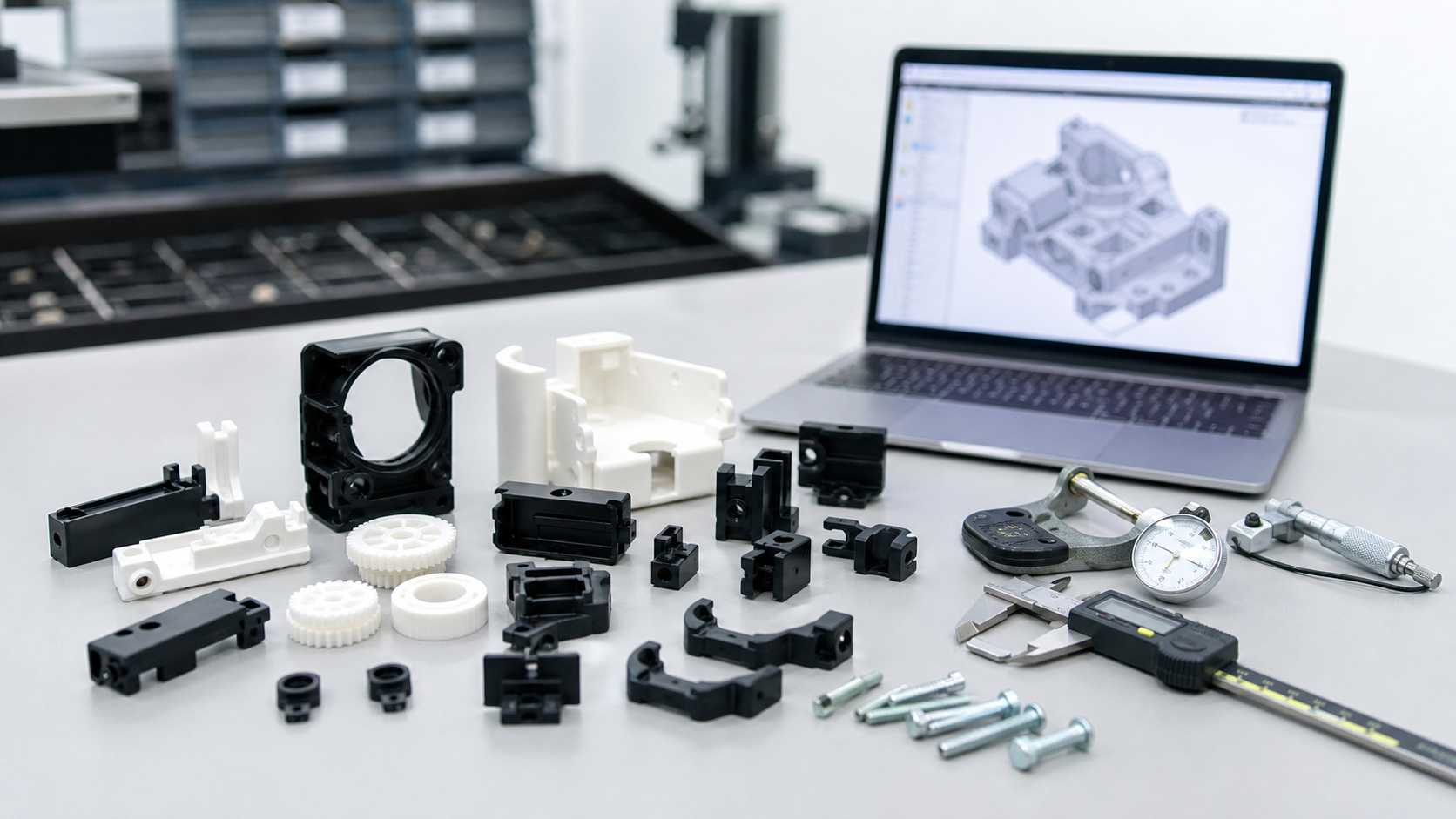
RFQ Checklist for Custom Components
A component RFQ should explain the part’s function, not only its dimensions.
실질적인 견적을 받으시려면 2D 도면 또는 3D CAD 모델, 목표 소재, 예상 수량, 공차 요구 사항, 표면 마감, 적용 환경, 연간 수요 및 관련 규정 준수 요건을 보내주십시오. Nylon Plastic은 프로젝트가 제조 단계로 넘어가기 전에 부품에 대한 소재 선정, DFM(제조 적합성 설계), 시제품 제작 방안, 금형 제작 위험, 리드 타임 및 생산 비용을 검토해 드립니다.
관련 엔지니어링 가이드
- 맞춤형 플라스틱 부품 제조업체 – main page for custom part sourcing
- Material selection hub – supports resin selection decisions
- CNC machining vs injection molding – helps choose process route
나일론 플라스틱이 이 프로젝트를 어떻게 뒷받침하는가
Nylon Plastic helps buyers compare materials and processes for custom plastic components used in automotive, electronics, industrial equipment, robotics and consumer products.
나일론 플라스틱에 문의하기 맞춤형 플라스틱 부품 도면을 검토하거나, 제조 공정을 비교하거나, 소재 및 금형에 대한 권장 사항을 요청하시려면.
자주 묻는 질문
How are custom plastic components manufactured?
Custom plastic components can be made by injection molding, CNC plastic machining, 3D printing or rapid tooling depending on design maturity, quantity, material and tolerance needs.
How do I choose a material for custom plastic components?
Start with the part’s load, heat, chemical exposure, assembly method, tolerance, surface finish and production volume, then compare suitable resin families.
Can a 3D printed prototype become an injection molded part?
Yes, but the design should be reviewed for molded wall thickness, draft, ribs, bosses, shrinkage and final production material behavior.
What makes a plastic component difficult to quote?
Missing CAD data, unclear material requirements, unrealistic tolerances, undefined cosmetic surfaces and unknown production volume can make quoting less reliable.