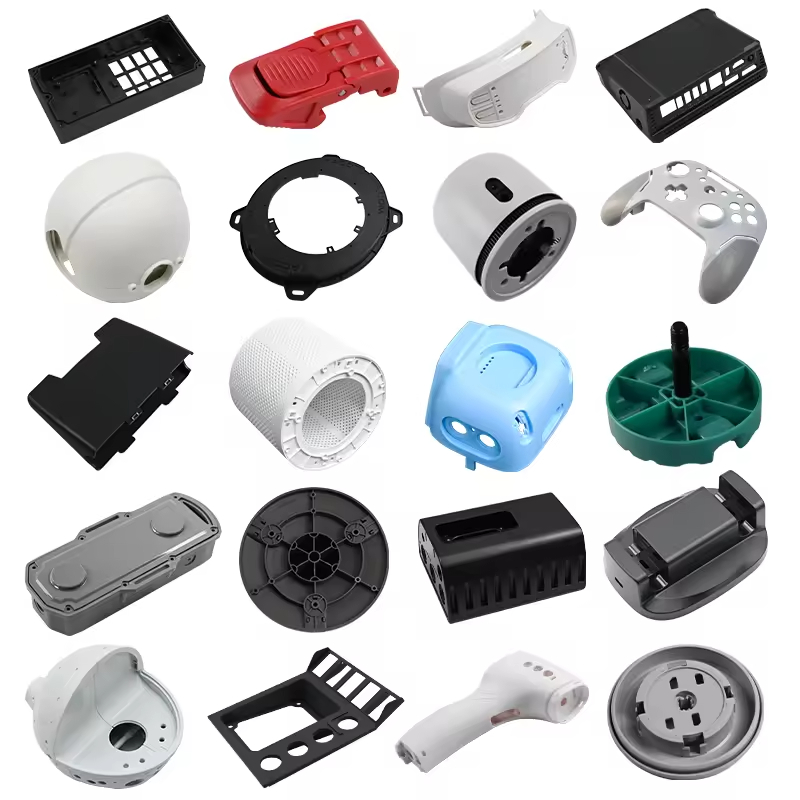
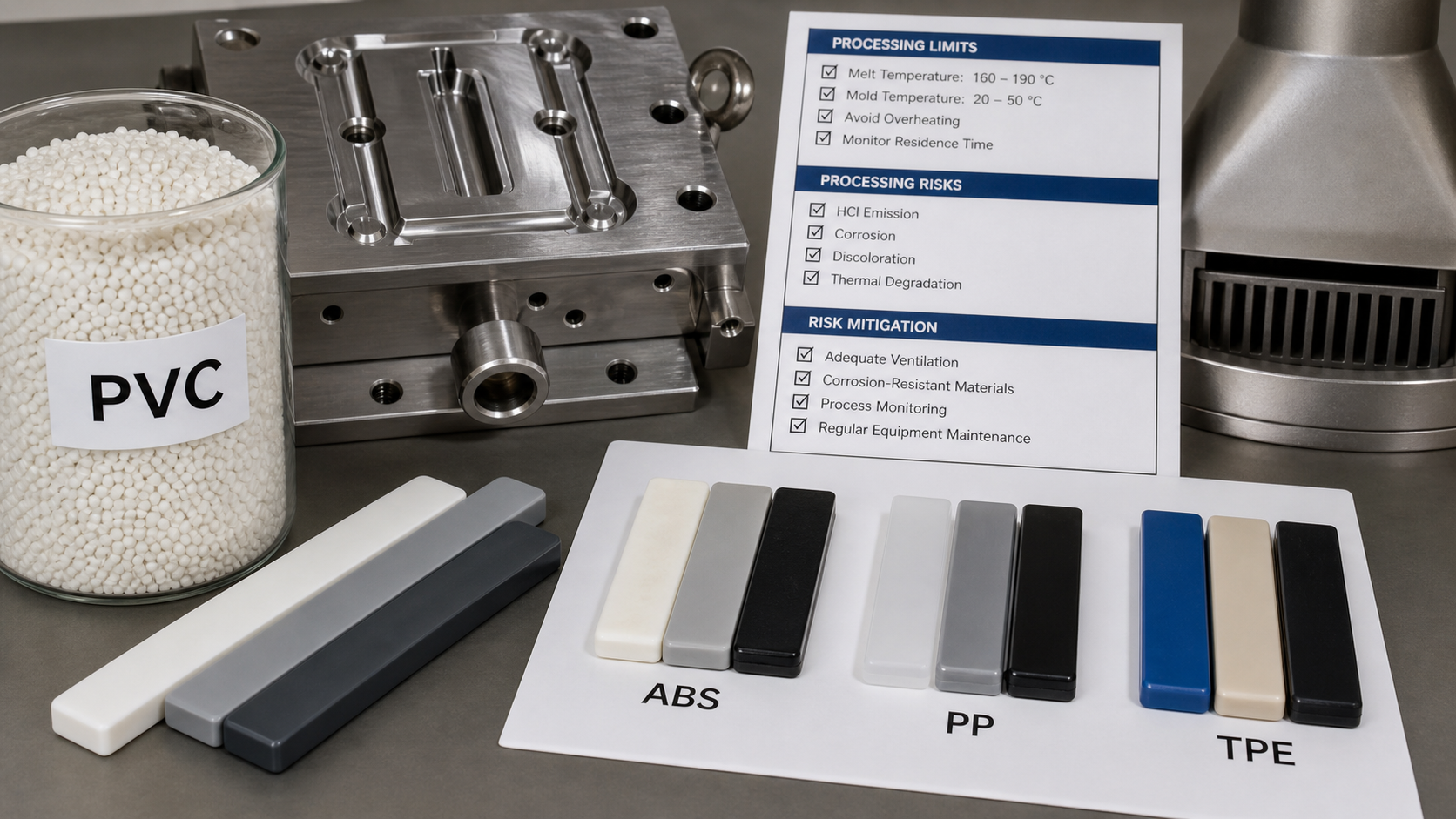
PVC injection molding can be used for certain rigid or flexible plastic parts, but it has a narrow processing window and can release corrosive gas if overheated. Designers should review temperature control, residence time, mold material, ventilation, compliance and whether ABS, PP, TPE, TPU or another plastic is a safer alternative.
PVC is useful in many industries, but it is not the easiest resin for a custom injection molding project. The decision should consider not only part performance but also equipment protection, regulatory requirements, appearance and long-term supply.
When PVC Injection Molding May Be Suitable
PVC is selected for chemical resistance, flame behavior, cost or flexibility in some applications. The grade and additive system determine whether it can be molded reliably.
| 사용 사례 | Why PVC may be considered | Review before tooling |
|---|---|---|
| Rigid component | Chemical resistance and stiffness | Processing window and brittleness. |
| Flexible cover or sleeve | Flexible PVC grade availability | Plasticizer, compliance and odor. |
| Electrical-related part | Flame behavior in some formulations | Exact certification and formulation. |
| Chemical contact part | Resistance to some fluids | Temperature, stress and chemical mixture. |
| Cost-sensitive part | Material economics | Processing risk and alternative materials. |
PVC Processing Risk Checklist
- Avoid overheating and long residence time.
- Use corrosion-resistant tooling and machine components where required.
- Confirm adequate ventilation and process monitoring.
- Separate PVC from incompatible materials during purging and handling.
- Review RoHS, REACH and application-specific compliance early.
PVC Alternatives to Consider
A buyer may search for PVC, but the right production resin may be a different thermoplastic once the real requirement is defined.
| 대안 | Use when | 상충관계 |
|---|---|---|
| ABS | Rigid housings and cosmetic parts | Less chemical resistance than some PVC grades. |
| PP | Chemical resistance and low density matter | Higher shrinkage and lower stiffness. |
| TPE / TPU | Flexible grip, seal or sleeve is needed | Bonding and compression set need review. |
| PC-ABS | Impact and housing quality matter | Higher cost than commodity plastics. |
| PBT | Electrical and dimensional stability matter | Different toughness and processing behavior. |
Internal Links for Safer Material Selection
PVC selection should be reviewed together with compliance, chemical exposure, flame rating and supplier process capability.
자주 묻는 질문
Can PVC be injection molded?
Yes. PVC can be injection molded, but it needs careful temperature control, residence time control, ventilation and corrosion-aware equipment planning.
Why is PVC difficult to injection mold?
PVC has a narrow processing window and can degrade if overheated, releasing corrosive gas that can damage equipment and affect part quality.
What plastics can replace PVC?
Depending on the requirement, ABS, PP, TPE, TPU, PC-ABS or PBT may replace PVC for certain molded parts.
Should PVC be used for every flexible molded part?
No. TPE or TPU may be better for some flexible parts, especially when odor, compliance, bonding or long-term supply are important.