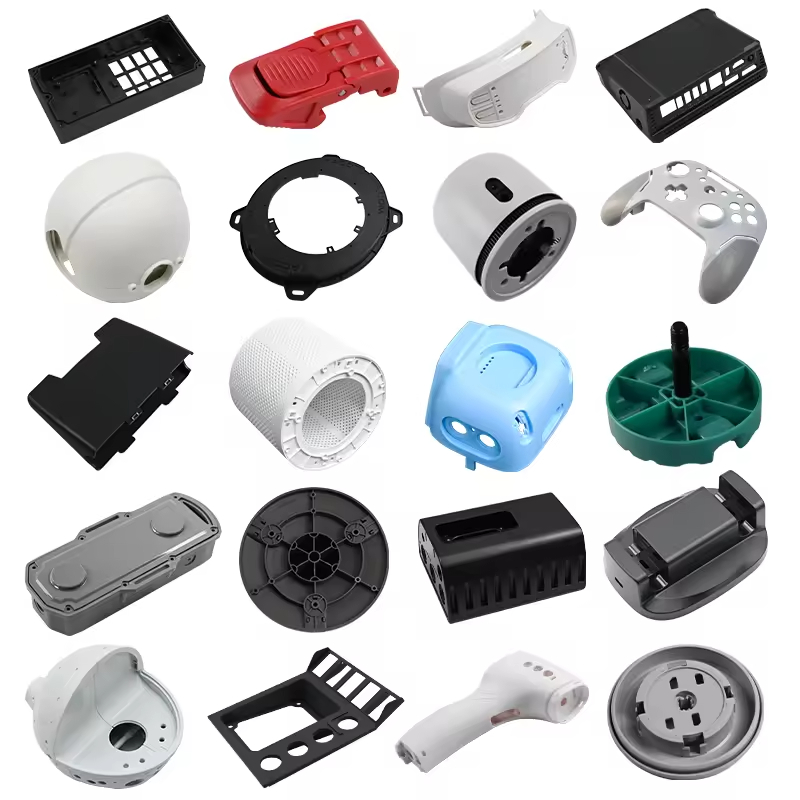
Plastic injection molding materials should be selected by application requirements such as load, heat, impact, chemical exposure, dimensional stability, surface finish, flexibility, flame rating, UV exposure and production cost. Common choices include ABS, PC, nylon, PP, PE, POM, PBT, TPE and PMMA.
Many molded part issues start with an unclear material choice. A resin that is easy to mold may not survive heat, load or chemical exposure, while a high-performance resin may increase cost or require design changes. A practical selection guide should connect part function with manufacturability.
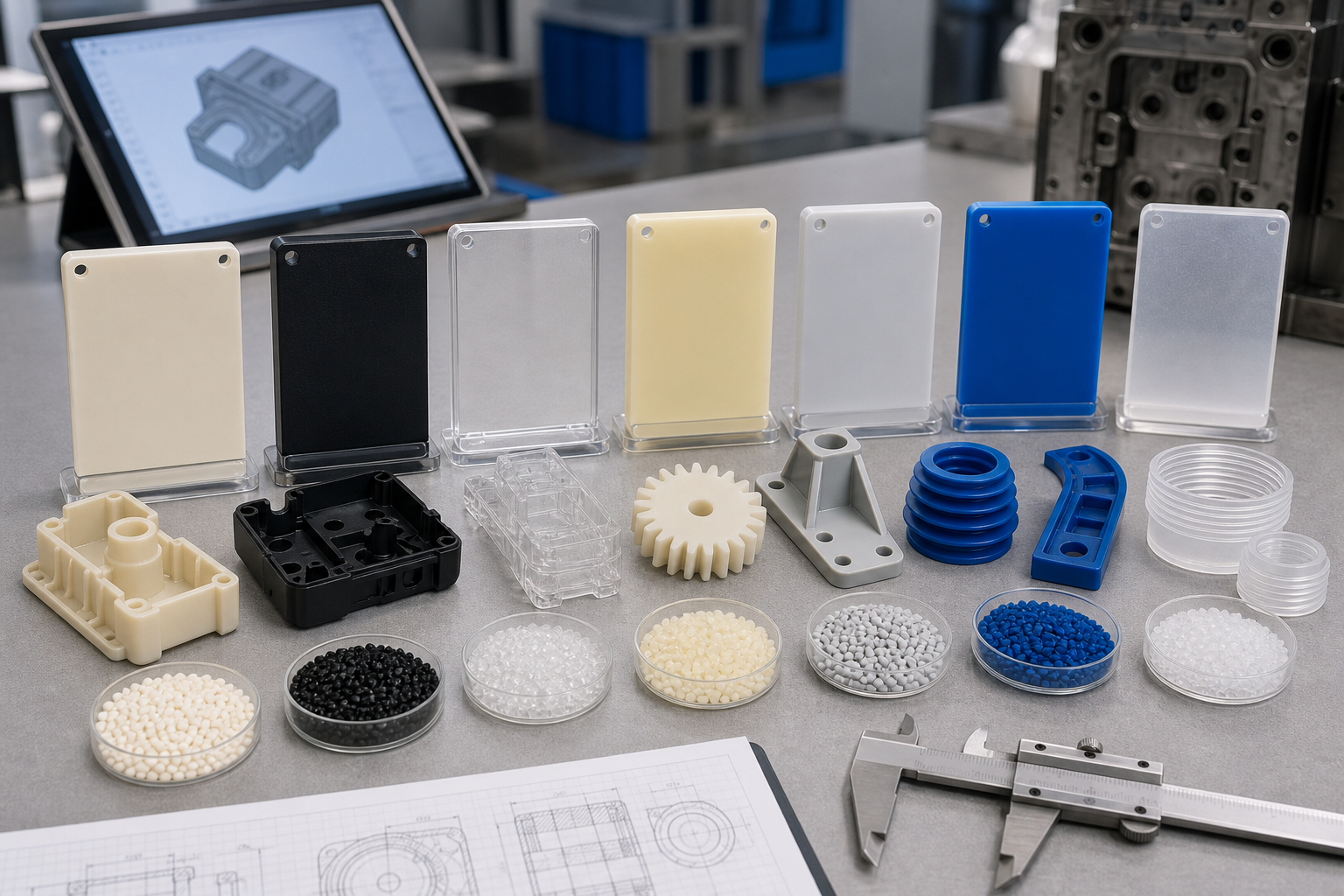
Common Injection Molding Materials
| 원인 / 재료 | 일반적인 표지 또는 용도 | 구매자 또는 엔지니어링 조치 |
|---|---|---|
| ABS | Housings, covers, consumer and industrial parts | Good processability and surface finish |
| PC | Impact-resistant and transparent components | Needs drying and stress-aware design |
| PA6 / PA66 나일론 | Gears, brackets, wear parts and structural components | Check moisture absorption and glass fiber options |
| PP | Living hinges, clips, containers and lightweight parts | Good chemical resistance and fatigue behavior |
| POM / 아세탈 | Precision gears, bushings and sliding parts | Good dimensional stability and wear resistance |
How to Choose a Plastic for Injection Molding
- Define the part’s load, temperature, chemical exposure and assembly method.
- Separate cosmetic requirements from functional requirements.
- Confirm whether the part needs stiffness, toughness, flexibility or wear resistance.
- Review shrinkage, moisture absorption and tolerance needs before tooling.
- Ask whether a prototype material can transition into production molding.
Material Selection by Application
| 소재 / 케이스 | 주요 우려 사항 | 선정 참고 사항 |
|---|---|---|
| Automotive under-hood parts | PA66 GF, PBT, PPS | Heat, chemical and dimensional stability matter |
| Electrical housings | ABS, PC-ABS, FR PC, PBT | Impact and flame rating may be required |
| Transparent covers | PC, PMMA | Balance impact strength and clarity |
| Flexible grips or seals | TPE, TPU | Hardness, bonding and compression set matter |
| Wear and sliding parts | POM, nylon, PTFE-filled grades | Friction, moisture and tolerance must be checked |
Buyer RFQ Details for Material Selection
유용한 검토를 위해 3D 모델 또는 2D 도면, 수지 등급 또는 목표 소재, 결함이 이미 발생한 경우 부품 사진, 가능한 경우 기계 및 금형 정보, 예상 연간 생산량, 외관 요구 사항, 중요 치수, 적용 환경 및 관련 검사 기준을 보내 주시기 바랍니다. Nylon Plastic은 금형 제작이나 생산 공정이 변경되기 전에 설계, 소재 및 성형 공정을 검토해 드릴 수 있습니다.
Where Modified Nylon Fits in the Material Decision
| 소재 방향 | When It Is a Practical Starting Point | Checks Before Release |
|---|---|---|
| Unfilled PA | Toughness, fatigue, wear, surface quality, or a balanced cost target leads the decision | Moisture state, dimensional change, heat, load and chemical exposure |
| PA-GF20 | Moderate stiffness, creep control, and shrinkage reduction are needed without maximum reinforcement | Fiber orientation, weld-line strength, surface, tool wear and conditioned dimensions |
| PA-CF30 | Specific stiffness, lower thermal expansion, weight reduction, or a qualified electrical target matters | Conductivity, anisotropy, impact, tooling wear, flow direction and exact grade data |
| PP, HDPE or LDPE | The part requirement calls for an unmodified polyolefin route | Shrinkage, stiffness, chemical exposure, hinge behavior, color and application fit |
Unfilled PA, PA-GF20, and PA-CF30 are the primary modified-nylon directions to compare when a project needs a nylon-based molding solution. PP, HDPE, and LDPE remain general raw-material options and should not be treated as interchangeable with reinforced nylon.
나일론 플라스틱이 이 프로젝트를 어떻게 뒷받침하는가
Nylon Plastic supports material selection and finished plastic-part manufacturing through its plastic injection molding service. For injection molding material selection, the useful review connects the drawing, material, tooling or machining route, inspection state, and production plan before a quote is approved.
- Translate load, temperature, humidity, chemicals, tolerance, appearance, annual volume, and approvals into a grade requirement.
- Review custom modified nylon compounds when a standard PA grade misses stiffness, impact, wear, heat, color, or compliance needs.
- Connect the selected resin to drying, shrinkage, gate and vent design, sampling, COA, moisture, and lot-traceability controls.
관련 읽기
자주 묻는 질문
자세히 비교하기 PA66 GF30의 물성 및 등급 선정 당사의 전용 유리섬유 강화 나일론 가이드에서 GF15, GF30 및 GF60의 유리섬유 강화 등급에 걸쳐.
What are the most common plastic injection molding materials?
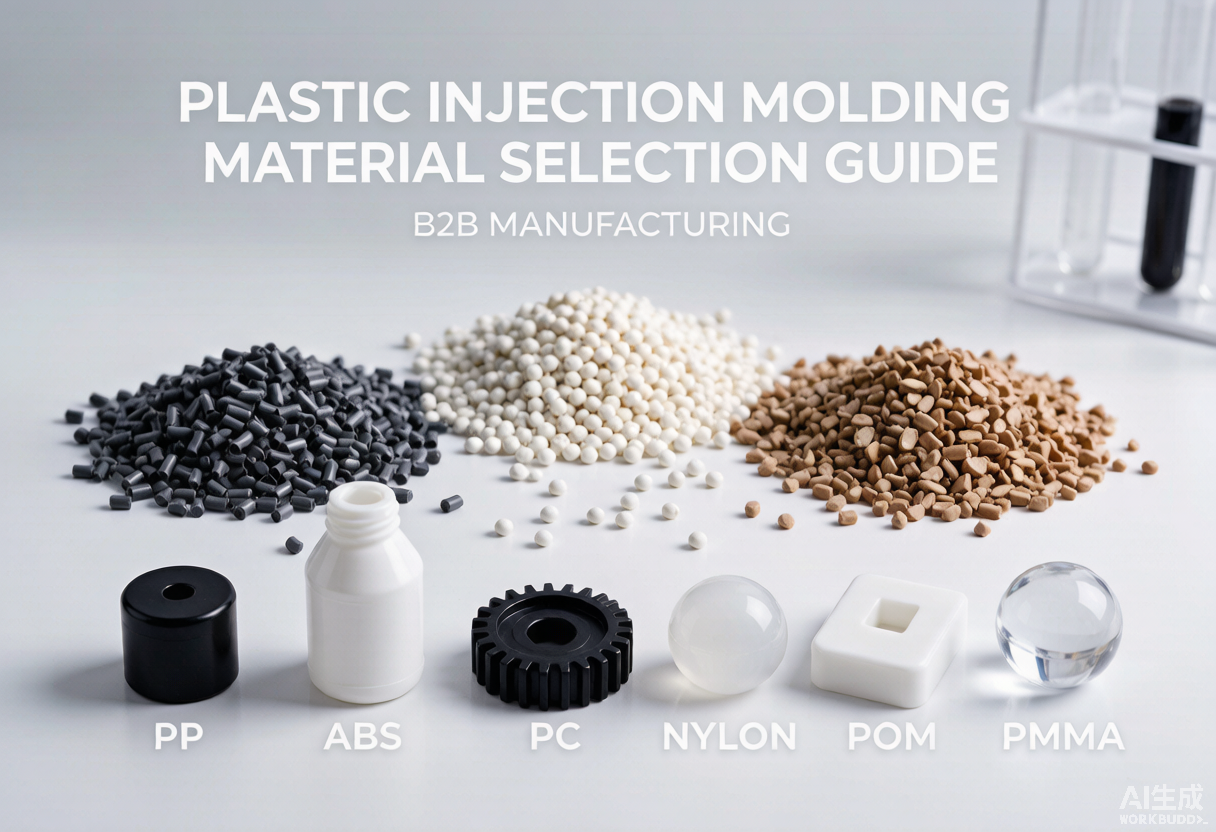
Common choices include nylon, ABS, PC, PP, PE, POM, PBT, TPE, and PMMA. The correct material depends on the part requirement, processing route, and qualified grade.
When should I choose unfilled PA for injection molding?
Start with unfilled PA when toughness, fatigue, wear, surface quality, and a balanced cost target matter more than maximum stiffness or minimum shrinkage.
When is PA-GF20 or PA-CF30 appropriate?
PA-GF20 is a practical moderate-reinforcement direction. PA-CF30 is considered for specific stiffness, lower thermal expansion, weight, or qualified electrical requirements. Both require grade-specific validation.
Can prototype material become the production material?
Sometimes, but compare mechanical behavior, moisture, shrinkage, tolerance, appearance, compliance, processing, and cost in the final production route before approval.
Request an Injection Molding Material Review
Send the drawing, service environment, quantity, current resin, critical features, and approval requirements for a material and process comparison.