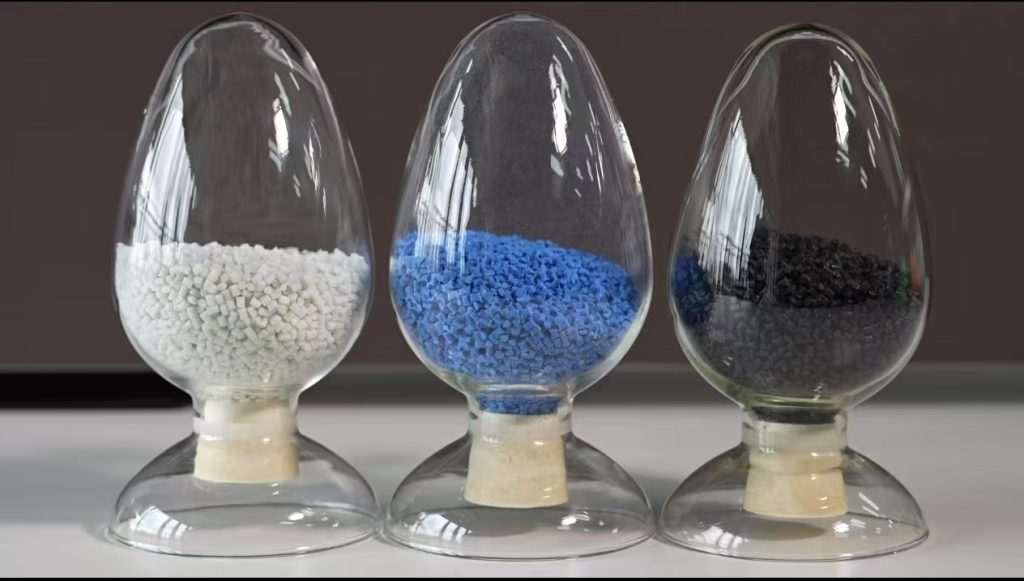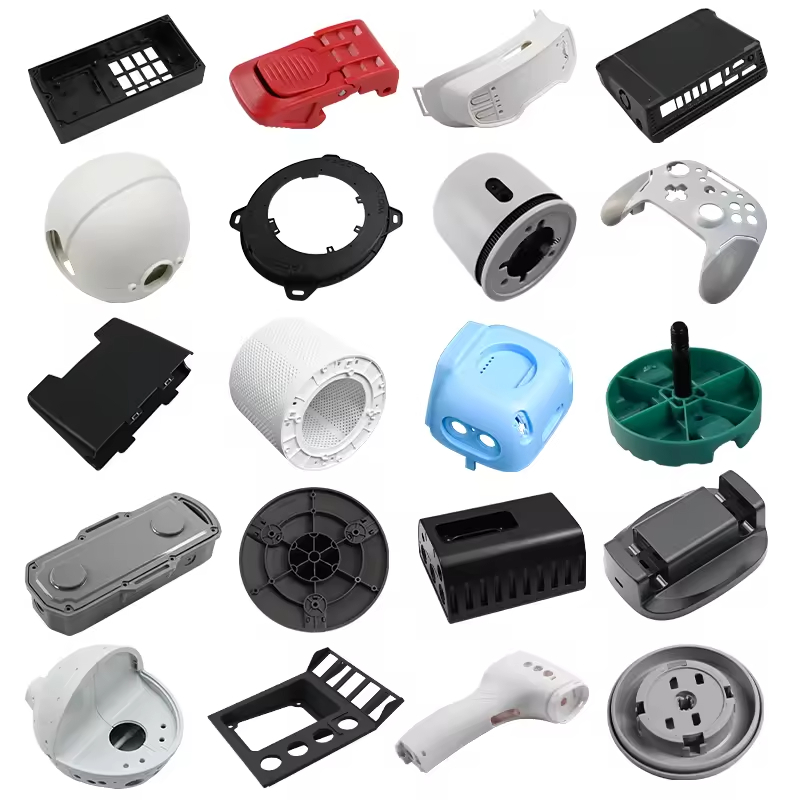
PA66 GF33 대 GF40 대 GF60 is a practical grade-selection question, not a simple strength ranking. As glass content increases, stiffness and dimensional stability improve, but brittleness, tooling wear and process sensitivity also rise.
For nylon 66 parts, the right grade depends on load path, wall design, heat exposure and how much assembly flexibility the part needs. Nylon Plastic can review the drawing and recommend the grade before sampling starts.
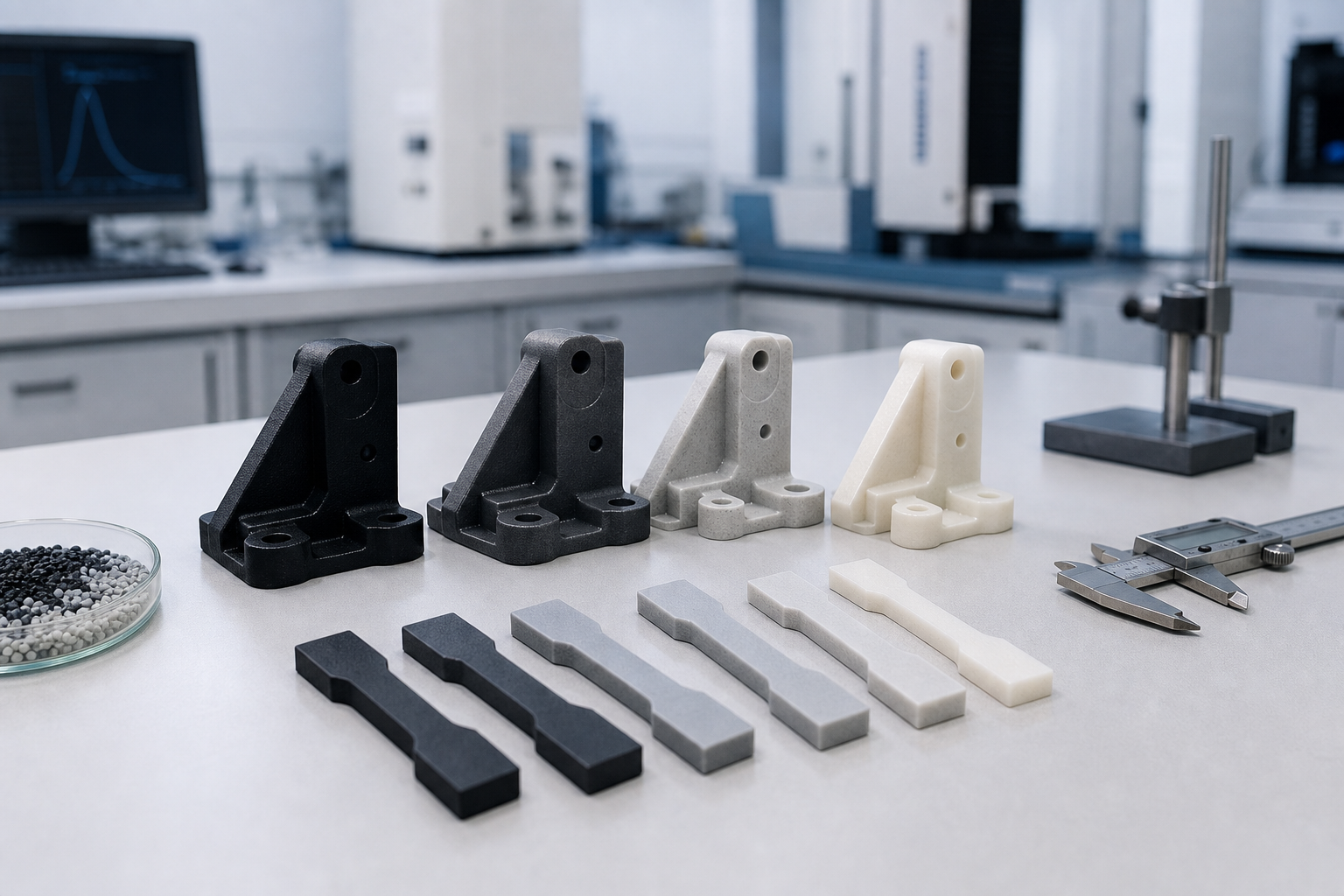
한눈에 보기
| 등급 | Main Benefit | 주요 상충 관계 | Best Use |
|---|---|---|---|
| PA66 GF33 | Balanced stiffness and processability | Less rigid than GF40 or GF60 | Functional housings, brackets and covers |
| PA66 GF40 | Higher stiffness and better load support | More warp and fiber-orientation risk | Structural parts and rigid supports |
| PA66 GF60 | Very high stiffness | More brittle and harder to mold | Metal-replacement parts with strong load control |
How to Choose the Right PA66 GF Grade
PA66 GF33 is usually the safest middle ground when you want higher stiffness without pushing the process too hard. PA66 GF40 makes sense when the part needs more rigidity and the geometry can tolerate more directional shrinkage. PA66 GF60 should be reserved for cases where stiffness is the primary goal and the design has already been adapted for a reinforced nylon.
The higher the glass content, the more important gate location, wall balance and section transitions become. A stiff grade can still fail if the geometry is too thin, too sharp or too dependent on snap-fit flexibility.

Design Rules That Change With Glass Content
- Wall balance: avoid sudden thickness jumps that amplify warp.
- Fiber direction: place gates so strength follows the real load path.
- Snap features: higher glass content usually reduces forgiving flex.
- 공구 마모: higher reinforcement means more abrasion around gates and cavities.
- Inspection state: define whether measurements are dry, conditioned or in-use.
흔히 저지르는 선발 실수
| 실수 | 위험 | Better Choice |
|---|---|---|
| Choosing GF60 by default | Brittleness and sampling issues | Start with GF33 or GF40 unless stiffness is critical |
| Ignoring gate position | Warpage and uneven strength | Review flow direction before tooling |
| Copying metal geometry | Poor plastic performance | Redesign ribs, bosses and transitions for nylon |
| Skipping humidity planning | Fit drift after conditioning | Define the final use state up front |
Where Each Grade Works Best
GF33 is often the easiest starting point for structural parts. GF40 is better when a part needs more stiffness without jumping to the highest loading level. GF60 is strongest on paper, but it only wins when the design and process can support it in real production.
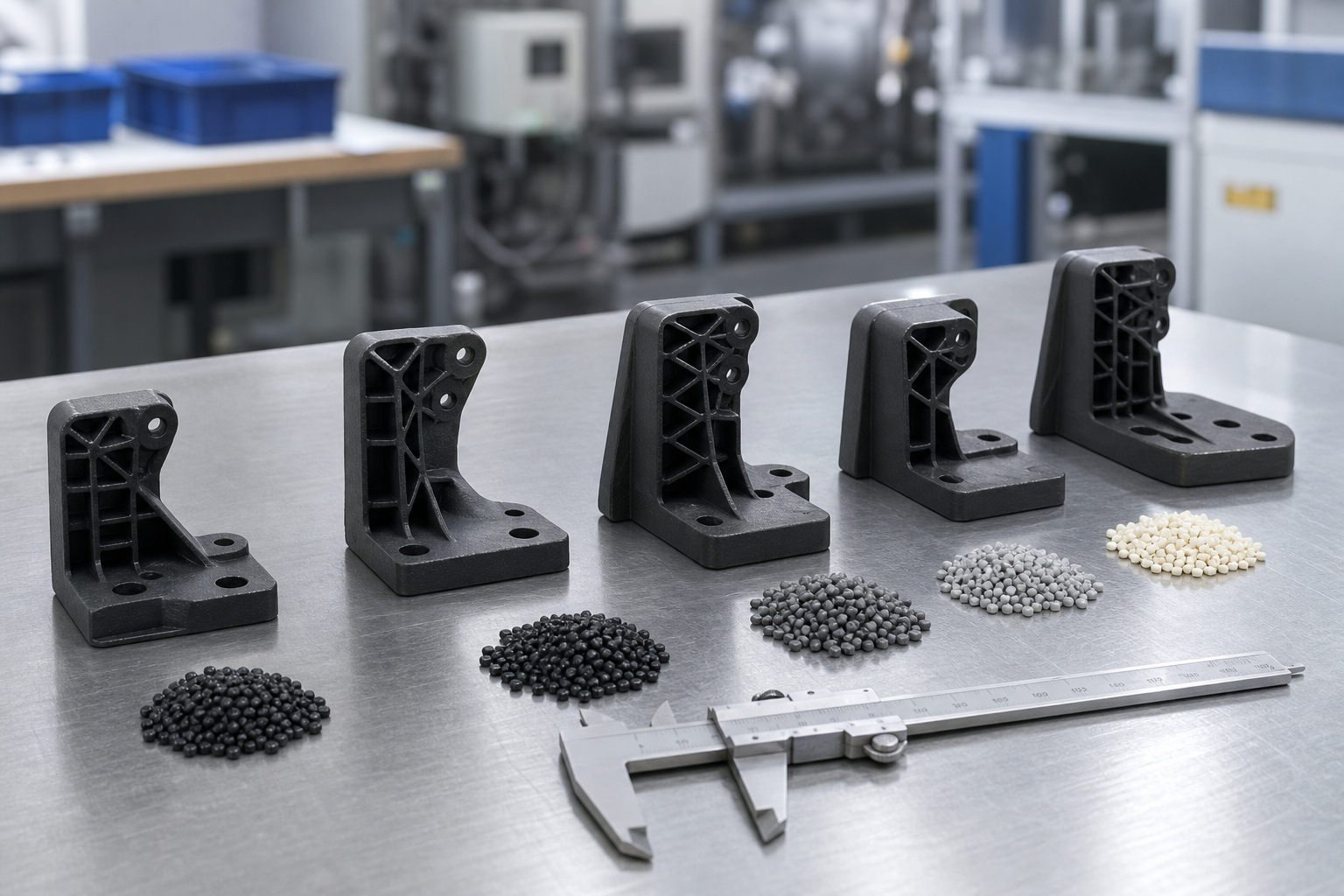
왜 나일론 플라스틱을 선택해야 할까요?
Nylon Plastic helps buyers choose a realistic nylon 66 grade instead of over-specifying the resin. That cuts sampling loops and reduces the chance of discovering that the highest glass ratio was the wrong choice.
PA66 GF Grade Questions Before a Higher-Fiber Resin Is Approved
- GF60 is selected because its stiffness is higher, even though the part may need impact tolerance, weld-line strength, surface quality, or easier molding.
- The buyer compares dry-as-molded data with conditioned requirements and overlooks moisture, fiber direction, temperature, and test method.
- A higher glass content is expected to remove warpage without reviewing gate location, wall transitions, ribs, cooling, and anisotropic shrinkage.
- The RFQ does not state whether PA-GF20, PA-GF30, PA-CF30, or a custom compound is acceptable when the exact grade is unavailable.
나일론 플라스틱이 이 프로젝트를 어떻게 뒷받침하는가
Nylon Plastic supports modified nylon selection from unfilled PA through PA-GF20 and PA-CF30, with custom compounding when a standard grade does not fit the load, heat, wear, color, or compliance need. The exact grade and conditioned test state should control the decision.
- 견적서를 작성하기 전에 도면, 자재, 수량, 핵심 사양 및 사용 환경을 검토하십시오.
- 샘플, 치수 보고서, 자재 문서, 추적성 및 수락 기준을 동일한 개정판에 연결합니다.
- 용도에 따라 다른 공정이 필요한 경우에는 맞춤형 복합 가공, 사출 성형, CNC 가공 또는 3D 프린팅을 활용하십시오.
관련 읽기
자주 묻는 질문
필요 PA6 GF30 데이터시트 수치 인장, 굽힘, HDT, 수축률 및 사출 성형 매개변수 등을 포함하나요? PA6 GF30의 전체 물성 및 가공 가이드를 확인해 보세요.
Is PA66 GF60 always better than GF33?
No. GF60 can raise stiffness and reduce some shrinkage directions, but it can also increase anisotropy, tool wear, surface texture, brittleness, and weld-line sensitivity. Choose against the actual failure mode.
When is PA66 GF40 a useful middle option?
It may balance stiffness, dimensional control, moldability, impact, surface requirements, and cost when GF33 is insufficient and GF60 adds unnecessary process or appearance risk.
Does higher glass content eliminate warpage?
No. Warpage still depends on fiber orientation, gate and flow, cooling, wall transitions, ribs, packing, geometry, and conditioning. Review the complete part and process rather than the filler percentage alone.
What should be sent for a PA66 GF grade recommendation?
Send the drawing, annual volume, load, temperature, moisture and chemical exposure, critical dimensions, appearance zones, current grade, approval needs, and whether PA-GF20 or PA-CF30 is an acceptable alternative.
Request a PA66 GF Grade Review
Send the drawing, service conditions, annual volume, current grade, and critical dimensions for a PA66 GF33, GF40, GF60, or modified-nylon comparison.