
This pla vs pla understanding different grades guide explains practical material, design, manufacturing, and sourcing considerations for Nylon Plastic readers.
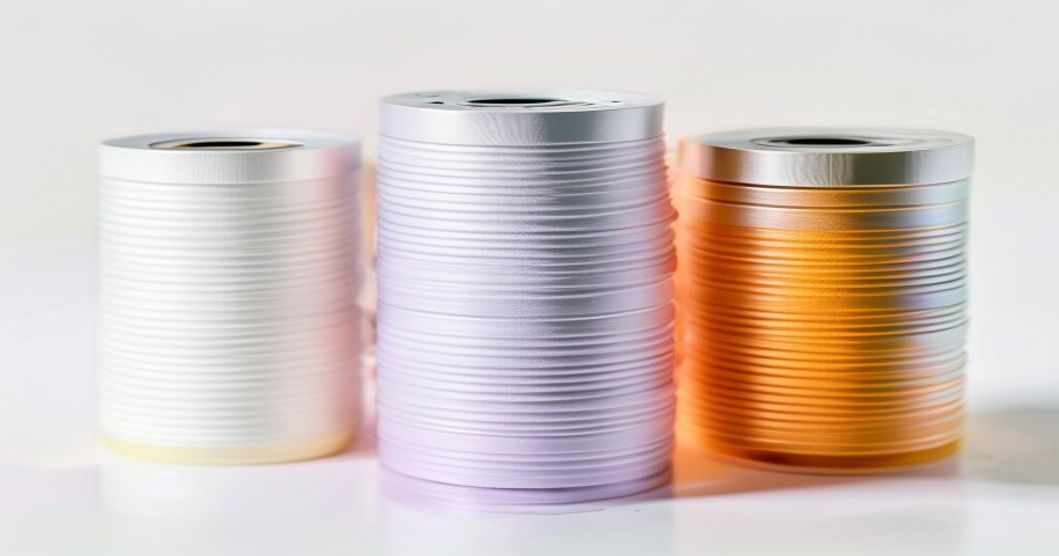
Polylactic Acid (PLA) dominates the 3D printing filament market, accounting for over 60% of all filament sales worldwide. Yet anyone comparing pla vs pla across different brands quickly discovers that the same material name can yield dramatically different print results. This article breaks down the different PLA filament grades, explains why they behave so differently on the same printer, and helps you choose the right grade for your application.
What Is PLA Filament
PLA is a biodegradable thermoplastic derived from renewable resources such as corn starch, sugarcane, or tapioca roots. It prints at relatively low temperatures (190-220°C), produces minimal warping, and does not require a heated enclosure. These characteristics make it the default choice for beginners and the go-to material for visual prototypes, architectural models, and educational prints.
However, standard PLA has well-documented limitations: it is brittle, has a low glass transition temperature (approximately 55-60°C), and loses mechanical integrity quickly under sustained load or elevated temperatures.
PLA vs PLA: Why the Same Material Performs Differently
When we say “pla vs pla,” we are really comparing different manufacturing grades and quality levels of the same base polymer. The key variables that separate one PLA from another include:
- Molecular weight distribution — Higher molecular weight PLA chains produce stronger, more ductile parts but require higher extrusion temperatures
- Crystallinity control — Semi-crystalline PLA grades offer better heat resistance than fully amorphous variants
- Additive packages — Plasticizers, impact modifiers, and nucleating agents can significantly alter mechanical properties
- Diameter tolerance — Consumer-grade filament varies ±0.05 mm; industrial grades hold ±0.02 mm
- Drying and packaging — Properly dried and vacuum-sealed filament prints more consistently
PLA Filament Grades Compared
| 속성 | Consumer PLA | Premium PLA | Industrial PLA |
|---|---|---|---|
| 인장 강도 | 40~50 MPa | 50-60 MPa | 60-70 MPa |
| 휴식 시 연신율 | 2-4% | 4-6% | 6-10% |
| Diameter Tolerance | ±0.05 mm | ±0.03 mm | ±0.02 mm |
| Glass Transition Temp | 55-58°C | 58-62°C | 60-65°C |
| Typical Price/kg | $15-22 | $22-35 | $35-60 |
How PLA Grade Affects Your Prints
The grade of PLA you choose directly impacts three critical aspects of your printed parts:
치수 정확도
Industrial-grade PLA with tight diameter tolerance (±0.02 mm) produces parts with consistent wall thickness and predictable tolerances. Consumer-grade PLA with ±0.05 mm variation can cause under-extrusion in thin sections and over-extrusion in dense infill areas.
기계적 성능
A printed part made from industrial PLA can withstand 40-75% more tensile load than the same geometry printed in consumer PLA, due to better molecular chain alignment during extrusion and higher crystallinity achieved through controlled cooling.
표면 품질
Premium and industrial PLA grades typically contain fewer impurities and more consistent pigment dispersion, resulting in smoother surface finishes with fewer visible layer lines and less stringing during travel moves.

Choosing the Right PLA Grade for Your Application
Select your PLA grade based on what the printed part needs to do, not just the price per kilogram:
- Visual prototypes and display models — Consumer PLA is sufficient; prioritize color selection and surface finish
- Functional prototypes needing accuracy — Premium PLA with ±0.03 mm tolerance ensures dimensional reliability
- End-use parts under mechanical load — Industrial PLA or consider upgrading to PLA+ for better impact resistance
- Batch production — Industrial PLA reduces part-to-part variation and scrap rate, often offsetting the higher material cost
3D 프린팅 및 엔지니어링 플라스틱 용도로 나일론 플라스틱을 선택해야 하는 이유
엔지니어링 플라스틱 분야에서 10년 이상의 경험을 쌓아온 Nylon Plastic은 전 세계 B2B 고객사들에게 고성능 소재를 공급하고 있습니다. 당사의 제품 라인업에는 나일론(PA6, PA66, PA12), POM, PEEK 및 PLA, PLA+, PETG를 포함한 3D 프린팅 필라멘트가 포함됩니다. 모든 제품은 출하 전 직경 공차(±0.03mm), 수분 함량 및 기계적 특성에 대한 검사를 거칩니다.
- ISO 9001 인증을 받은 제조 시설
- 경쟁력 있는 B2B 가격으로 대량 공급
- 재료 선정 및 인쇄 매개변수에 대한 기술 지원
- 여러 물류 센터에서 제공하는 빠른 전 세계 배송
- OEM 프로젝트를 위한 맞춤형 소재 배합 가능
자주 묻는 질문
When is PLA vs PLA: Understanding the Different PLA Filament Grades a good option?
PLA vs PLA: Understanding the Different PLA Filament Grades is a good option when fast iteration, complex geometry, low tooling cost, or low-volume production is more important than molded-part unit cost.
What should be checked before choosing PLA vs PLA: Understanding the Different PLA Filament Grades?
부품 크기, 재료 특성, 표면 마감, 치수 공차, 열 노출, 하중 방향, 후처리가 필요한지 여부를 확인합니다.
How does PLA vs PLA: Understanding the Different PLA Filament Grades compare with CNC machining?
3D 프린팅은 복잡한 형상을 빠르게 제작할 수 있는 반면, CNC 가공은 정밀한 표면, 엄격한 공차 및 생산 등급 재료에 더 적합한 경우가 많습니다.
What affects the cost of PLA vs PLA: Understanding the Different PLA Filament Grades?
비용은 재료, 빌드 볼륨, 프린트 시간, 레이어 높이, 서포트 제거, 마감, 검사 및 빌드 내 부품 수에 따라 달라집니다.

