UL94는 플라스틱 소재의 가연성을 분류하는 글로벌 기준입니다. 언더라이터스 래버러토리스(Underwriters Laboratories)에서 개발한 이 표준은 플라스틱 시편이 화염에 어떻게 반응하는지 — 즉, 자연 소멸되는지, 불타는 입자가 떨어지는지, 아니면 완전히 타버리는지 —를 판단합니다. 전기 인클로저, 자동차 부품 및 가전제품용 소재를 선정하는 엔지니어들에게 UL94 등급을 이해하는 것은 선택 사항이 아니라 필수적인 규정 준수 요건입니다.
UL94 시험 방법
UL94 표준은 세 가지 주요 시험 방향을 규정하고 있습니다. 각 방향은 실제 적용 환경에서 발생할 수 있는 다양한 화재 노출 시나리오를 시뮬레이션합니다.
수평 화상 (HB)
수평 연소 시험은 가장 기준이 완화된 시험입니다. 시편을 수평으로 고정한 후, 자유 단면에 30초 동안 화염을 가합니다. HB 등급을 획득하려면, 재료의 연소 속도가 지정된 기준치(일반적으로 두께 3mm 미만 시편의 경우 75 mm/min) 미만이어야 하거나, 100 mm 기준선에 도달하기 전에 연소가 중단되어야 합니다.
HB 등급 소재는 화재 위험이 낮고 규제 요건이 최소한인 용도에 사용할 수 있습니다. 내부에 전류를 전달하지 않는 부품이 포함된 소비자용 제품에는 종종 HB 등급 소재가 사용됩니다.
수직 연소 (V-0, V-1, V-2)
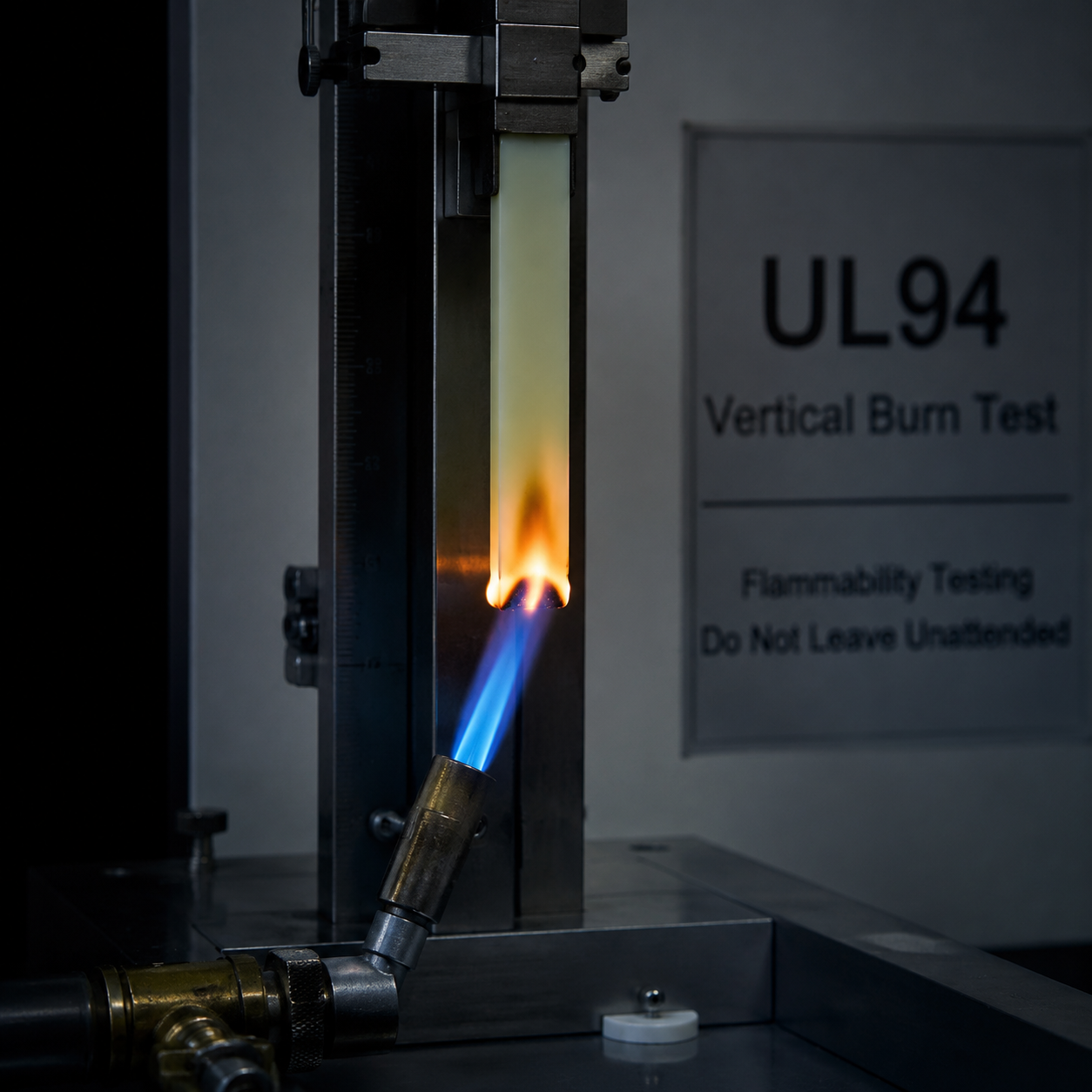
수직 연소 시험은 훨씬 더 까다롭습니다. 시편을 수직으로 세운 상태에서, 시편의 하단 가장자리에 20mm 높이의 화염을 두 번 가하며, 매번 10초씩 유지합니다. 등급은 잔화 시간, 잔광 시간, 그리고 화염을 뿜는 입자가 발생하는지 여부에 따라 결정됩니다.
- V-0: 1회 도포당 잔화 시간 ≤ 10초, 5개의 시편 전체에 걸친 총 잔화 시간 ≤ 50초, 불꽃을 동반한 물방울 떨어짐 없음
- V-1: 1회 도포당 잔화 시간 ≤ 30초, 5개의 시편 전체에 걸친 총 잔화 시간 ≤ 250초, 불꽃을 동반한 물방울 떨어짐 없음
- V-2: V-1과 동일한 잔화 기준을 적용하되, 불꽃이 떨어지는 것은 허용된다
5V 테스트 (5VA, 5VB)
5V 시험은 UL94 표준에서 가장 가혹한 시험 조건을 나타냅니다. 작은 버너 화염 대신, 125mm 크기의 화염을 바형 및 판형 시편 모두에 각각 5초씩 5회 가합니다. 이는 더 강렬하고 지속적인 화재 노출 상황을 모사합니다.
- 5VA: 잔화 시간 ≤ 60초, 플라크 시편에 관통 화상(구멍) 없음
- 5VB: 잔화 시간 ≤ 60초, 플라크 시편에서 관통(구멍 형성)이 허용됨
UL94 등급 정의 표
| 평점 | 시험 안내 | 화염 적용 | 잔화 한계 (신청 건당) | 불타는 물방울 | 번스루 |
|---|---|---|---|---|---|
| HB | 가로 | 30초 (단일) | 해당 없음 (소진율 제한) | 허용됨 | 해당 사항 없음 |
| V-2 | 수직 | 2 × 10초 | 30초 이하 | 허용됨 | 해당 사항 없음 |
| V-1 | 수직 | 2 × 10초 | 30초 이하 | 허용되지 않음 | 해당 사항 없음 |
| V-0 | 수직 | 2 × 10초 | ≤ 10초 | 허용되지 않음 | 해당 사항 없음 |
| 5VB | 수직 막대 + 명판 | 5 x 5초 (125mm 화염) | ≤ 60초 | 허용되지 않음 | 허용됨 |
| 5VA | 수직 막대 + 명판 | 5 x 5초 (125mm 화염) | ≤ 60초 | 허용되지 않음 | 허용되지 않음 |
난연 첨가제의 종류
UL94 등급을 획득하려면 폴리머 매트릭스에 난연제(FR) 첨가제를 혼합해야 합니다. 난연제의 화학적 성질을 어떻게 선택하느냐에 따라 성능, 비용 및 환경 규정 준수 여부에 큰 영향을 미칩니다.
할로겐화 난연 첨가제
브롬화 및 염소화 화합물은 연소 연쇄 반응을 차단하는 데 매우 효과적입니다. 이 화합물들은 주로 기체 상에서 자유 라디칼을 제거하는 방식으로 작용합니다. 할로겐화 시스템은 비교적 낮은 첨가량(10-20%)으로도 UL94 V-0 등급을 달성할 수 있으며 비용 효율적입니다. 그러나 연소 과정에서 부식성 및 독성 가스를 방출하기 때문에 RoHS 및 WEEE 지침에 따른 규제 제한이 점차 강화되고 있습니다.
무할로겐 난연 첨가제 (인계)
유기인산염, 포스포네이트, 적린 등을 포함한 인계 난연제는 주로 응축상에서 숯층 형성을 촉진함으로써 기능을 발휘합니다. 이 숯층은 장벽 역할을 하여 그 아래에 있는 고분자를 열과 산소로부터 차단합니다. 이러한 시스템은 무할로겐 제형에서 주된 선택지로, 특히 환경 규정을 반드시 준수해야 하는 전자 제품 분야에서 널리 사용됩니다.
질소계 난연 첨가제
멜라민 및 그 유도체(멜라민 시아누레이트, 멜라민 폴리인산염)는 분해 시 불활성 질소 가스를 방출하여 가연성 가스를 희석시키고 화염 영역을 냉각시킵니다. 이들은 폴리아미드 및 폴리우레탄에서 V-0 등급을 달성하기 위해 인계 난연제와 시너지 효과를 내며 자주 사용됩니다.
무기 난연 첨가제
알루미늄 삼수화물(ATH)과 수산화마그네슘(MDH)은 흡열적으로 분해되어 열을 흡수하고 수증기를 방출합니다. 이 물질들이 효과를 발휘하려면 높은 첨가량(대개 40~65%)이 필요하며, 이는 기계적 특성에 심각한 영향을 미칠 수 있습니다. 이러한 충전재는 전선 및 케이블 절연재와 저연무 무할로겐 제품 분야에서 널리 사용됩니다.

물리적 특성의 상충 관계
난연제를 첨가하면 필연적으로 기계적 성능이 저하됩니다. 그 영향의 정도는 난연제의 화학적 성질, 첨가량 및 기초 고분자에 따라 달라집니다.
- 인장 강도 저하: 10-25% (FR 유형 및 적재량에 따라 다름)
- 충격 강도 저하: 15-30%, 특히 무기 충전제가 포함된 경우
- 파단 시 연신율: FR 개질 등급의 경우 30~50% 정도 감소할 수 있음
- 밀도 증가: FR 첨가제는 일반적으로 재료의 밀도를 5~15% 정도 증가시킵니다.
- 처리 기간: 일부 FR 첨가제는 가공 온도 범위를 좁혀 성형 과정에서 열분해의 위험을 높입니다.
무할로겐 인계 시스템은 일반적으로 동등한 UL94 등급에서 무기계 대체재보다 기계적 특성을 더 잘 유지합니다. 유리 섬유 보강재(일반적으로 15-30%)는 손실된 강도와 강성을 회복하기 위해 난연 첨가제와 함께 사용되는 경우가 많습니다.
일반적인 난연성 플라스틱 등급
| 재료 등급 | UL94 등급 | 인장 강도(MPa) | HDT (1.82 MPa) (°C) | 주요 기능 |
|---|---|---|---|---|
| PA66 난연성 V-0 (GF25) | V-0, 0.8 mm | 140-160 | 235-245 | 뛰어난 열 안정성, 우수한 유동성 |
| PC/ABS FR V-0 | V-0, 1.5 mm | 55-65 | 95-110 | 효과가 뛰어나고 가성비가 좋다 |
| PBT FR V-0 (GF30) | V-0, 0.8 mm | 120-140 | 200-215 | 빠른 결정화, 치수 안정성 |
| PPO FR V-0 | V-0, 1.5 mm | 55-70 | 120-140 | 저밀도, 뛰어난 유전 특성 |
| PEI(울템) | V-0 (고유) | 100-110 | 195-210 | 본질적인 난연성, 첨가제 불필요 |
주요 애플리케이션

전기 인클로저
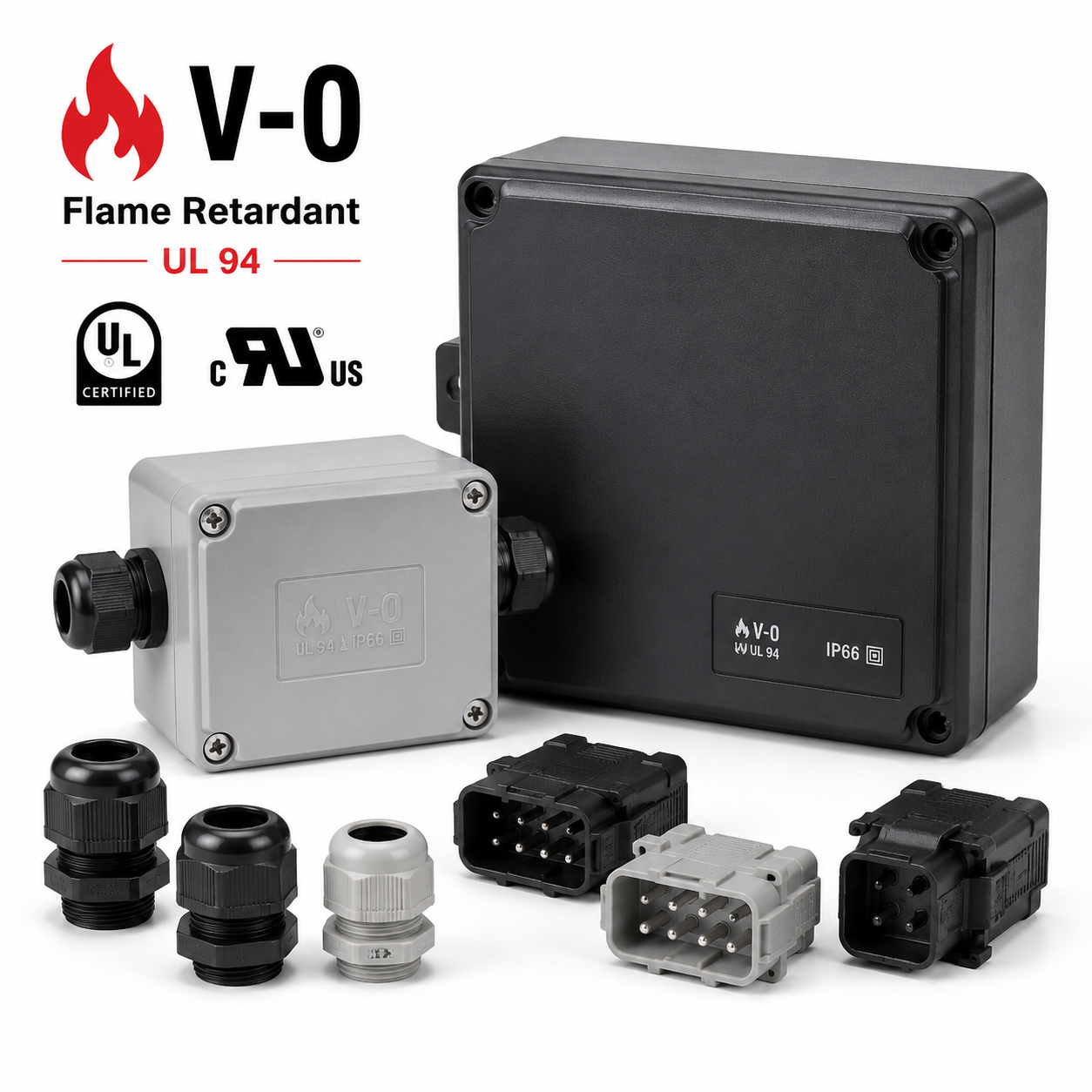
규정에 따라 회로 차단기, 스위치기어 하우징 및 정션 박스에는 V-0 등급의 소재를 사용해야 합니다. 이러한 인클로저는 내부에서 발생하는 아크나 단락으로 인한 화재를 차단하여 주변 구조물로 화재가 확산되는 것을 방지해야 합니다. 이러한 용도에는 일반적으로 PC/ABS FR V-0 및 PA66 FR V-0가 지정됩니다.
커넥터 및 단자대
산업용 장비 및 자동차 시스템에 사용되는 고전압 커넥터에는 얇은 벽 두께의 V-0 등급 성능이 요구됩니다. PBT FR V-0 GF30은 뛰어난 유동성으로 인해 널리 사용되며, V-0 규격을 준수하면서도 0.4mm까지 얇은 벽 두께의 성형이 가능합니다.
전기차 배터리 부품
전기차(EV)의 배터리 모듈 하우징, 셀 홀더, 버스바 지지대 및 고전압 커넥터에는 탁월한 난연성이 요구됩니다. 가장 엄격한 안전 기준을 충족하기 위해 핵심 배터리 인클로저 부품에 5VA 등급 소재가 점점 더 많이 지정되고 있습니다. 이 부문에서는 PA66 FR 및 PBT FR 등급이 주류를 이루고 있습니다.
소비자 가전
노트북과 스마트폰의 충전기 하우징, 전원 어댑터 외장, 내부 절연 장벽에는 V-0 또는 V-1 등급이 요구됩니다. 브랜드의 지속가능성 약속과 소비자를 대상으로 한 환경 메시지 전달로 인해, 이 분야에서는 할로겐이 포함되지 않은 난연성 소재가 선호됩니다.
RoHS 및 WEEE가 난연제 선정에 미치는 영향

유해물질 사용 제한(RoHS) 지침은 EU 내에서 판매되는 전기·전자 장비에 특정 브롬계 난연제, 특히 폴리브롬화 비페닐(PBB) 및 폴리브롬화 디페닐 에테르(PBDE)의 사용을 금지하고 있습니다. 전기·전자 장비 폐기물(WEEE) 지침은 수명 종료 후 재활용을 용이하게 하기 위해 할로겐이 포함되지 않은 소재의 사용을 더욱 장려하고 있습니다.
그 결과, 업계는 인계 및 질소계 무할로겐 난연 시스템으로 크게 전환되었습니다. 이러한 대체재들은 일반적으로 킬로그램당 단가는 더 비싸지만, 동등한 UL94 등급을 달성하기 위해 필요한 첨가량이 적기 때문에 비용 차이를 부분적으로 상쇄합니다. 또한, 무할로겐 등급은 마케팅상의 강점으로 자리 잡았으며, 현재 많은 OEM 업체들이 자재 사양에 “HF”(무할로겐) 표기를 명시적으로 요구하고 있습니다.
UL94 Rating Selection Checks
| 질문 | What to confirm |
|---|---|
| 평점 | V-0, V-1, V-2, 5VA or 5VB at the specified thickness |
| Specimen | Material grade, color, thickness, conditioning and test method |
| Part design | Wall transitions, vents, connectors, ignition source and enclosure geometry |
| 문서 | Current certificate or test report tied to the purchased resin lot |
UL94 flame retardant plastics must be checked at the exact grade and thickness used in the part. A classification is not a blanket guarantee for every finished assembly; review electrical, thermal and regulatory requirements together.
자주 묻는 질문
UL94 V-0와 5VA의 차이점은 무엇인가요?
주요 차이점은 화염의 강도와 관통 요구 사항입니다. V-0 등급은 막대형 시편에만 20mm 화염을 각각 10초씩 두 번 가합니다. 5VA 등급은 막대형 및 판형 시편 모두에 125mm 화염을 각각 5초씩 다섯 번 가합니다. 더 중요한 점은, 5VA의 경우 시험 중 판형 시편에 구멍(관통)이 발생해서는 안 되는 반면, V-0에는 판형 시험이 아예 없다는 것입니다. V-0를 통과한 재료라도 더 강렬한 5V 화염 조건 하에서 관통을 견디지 못하면 5VA에서는 불합격될 수 있습니다. 5VA는 V-0보다 UL94 심각도 등급 기준으로 약 1~2단계 더 높습니다.
환경 규정 준수에 있어 할로겐 함유 난연제와 할로겐 프리 난연제 중 어느 쪽이 더 나을까요?
할로겐이 포함되지 않은 난연제(인계, 질소계 및 무기계)는 환경 규정을 준수하기 위한 최선의 선택입니다. 주요 이유는 다음과 같습니다: (a) PBB 및 PBDE와 같은 브롬계 난연제에 대한 RoHS 제한 규정 준수, (b) 연소 시 발생하는 부식성 할로겐화 수소 가스 배출 방지, (c) WEEE 지침 요건에 따른 재활용성 향상, (d) OEM의 지속가능성 요구 사항 및 친환경 라벨 인증 기준 충족. 할로겐계 시스템은 낮은 사용량에서도 저렴한 비용과 높은 효율을 제공하지만, 규제 동향은 특히 소비자용 전자제품 및 자동차 내장재의 경우 무할로겐 대체재로 확고하게 기울고 있습니다.
난연제를 첨가하면 PA66의 기계적 특성이 얼마나 저하되나요?
PA66 FR V-0(25% 유리섬유 보강)의 기계적 특성은 비난연성 PA66 GF25에 비해 일반적으로 다음과 같이 저하됩니다: 인장 강도는 약 10-15% (160~180 MPa에서 140~160 MPa로), 충격 강도는 15~25% 감소하며, 파단 신율은 30~50% 감소합니다. 무할로겐 인 기반 난연 시스템은 일반적으로 동등한 UL94 등급에서 브롬계 시스템보다 기계적 특성을 더 잘 유지합니다. 유리 섬유 보강재는 강성과 강도를 회복하는 데 중요한 역할을 합니다. 보강되지 않은 난연 PA66은 보강되지 않은 PA66에 비해 인장 강도가 25% 이상 떨어질 수 있습니다. 중요한 구조용 응용 분야의 경우, 난연 처리에 따른 물성 저하를 보상하기 위해 25~35%의 유리 섬유 함유량이 표준 관행으로 적용됩니다.
난연제를 첨가하면 사출 성형 공정성에 영향을 미치나요?
네, 난연 첨가제는 성형성에 상당한 영향을 미칠 수 있습니다. 가공 시 고려해야 할 주요 사항으로는 다음이 있습니다. (a) 가공 가능 범위가 좁아짐 — 많은 난연 첨가제는 권장 용융 온도보다 불과 10~20°C 높은 온도에서도 분해되기 시작하므로, 더 정밀한 온도 제어가 필요합니다; (b) 용융 점도 증가 — 일부 난연 첨가제(특히 MDH 및 ATH와 같은 무기질 유형)는 용융 점도를 높여 유동 길이를 감소시키고, 얇은 벽면 부위에서 사출 불량(short shot)을 유발할 가능성이 있습니다; (c) 금형 부식 — 할로겐계 난연제는 가공 온도에서 산성 부산물을 방출할 수 있으므로, 내식성 금형강을 사용하고 정기적인 금형 유지보수가 필요합니다; (d) 스크류 및 배럴 마모 — 무기 난연 충전제는 마모성이 강하여 스크류, 배럴 및 체크 링의 마모를 가속화합니다. 적절한 금형 설계(더 넓은 게이트, 최적화된 러너 시스템)와 가공 매개변수(적당한 스크류 속도, 배압 제어)를 통해 이러한 문제 대부분을 완화할 수 있습니다.