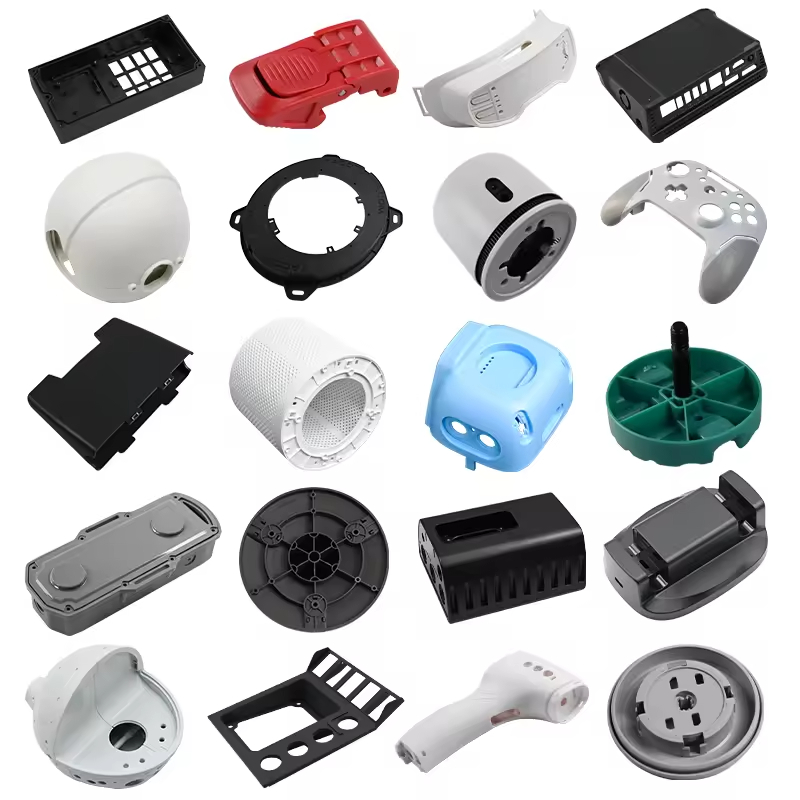
A custom plastic parts manufacturer should match your drawing, material, quantity and acceptance requirements to the manufacturing process. Injection molding, CNC machining and 3D printing solve different tasks. The right starting point is what the part must prove or deliver, followed by a quotation with a clear scope.
Nylon Plastic supports engineering plastic material selection, custom compounding, prototypes, CNC machining, mold design and making, and injection-molded production. You can request a review for one stage or discuss a connected route from prototype to production.
Which Manufacturing Route Fits Your Project?
- Design or fit still changing: review a 3D-printed or CNC prototype before committing to production tooling.
- Machinable geometry and a smaller quantity: compare CNC machining, the available stock material and the critical dimensions.
- Stable geometry and repeat production: review injection molding, tool investment, resin selection and sample approval.
- Molded-material behavior needs testing first: discuss a pilot or rapid-tooling route with an agreed sample and tool scope.
What Can Be Made as a Custom Plastic Part?
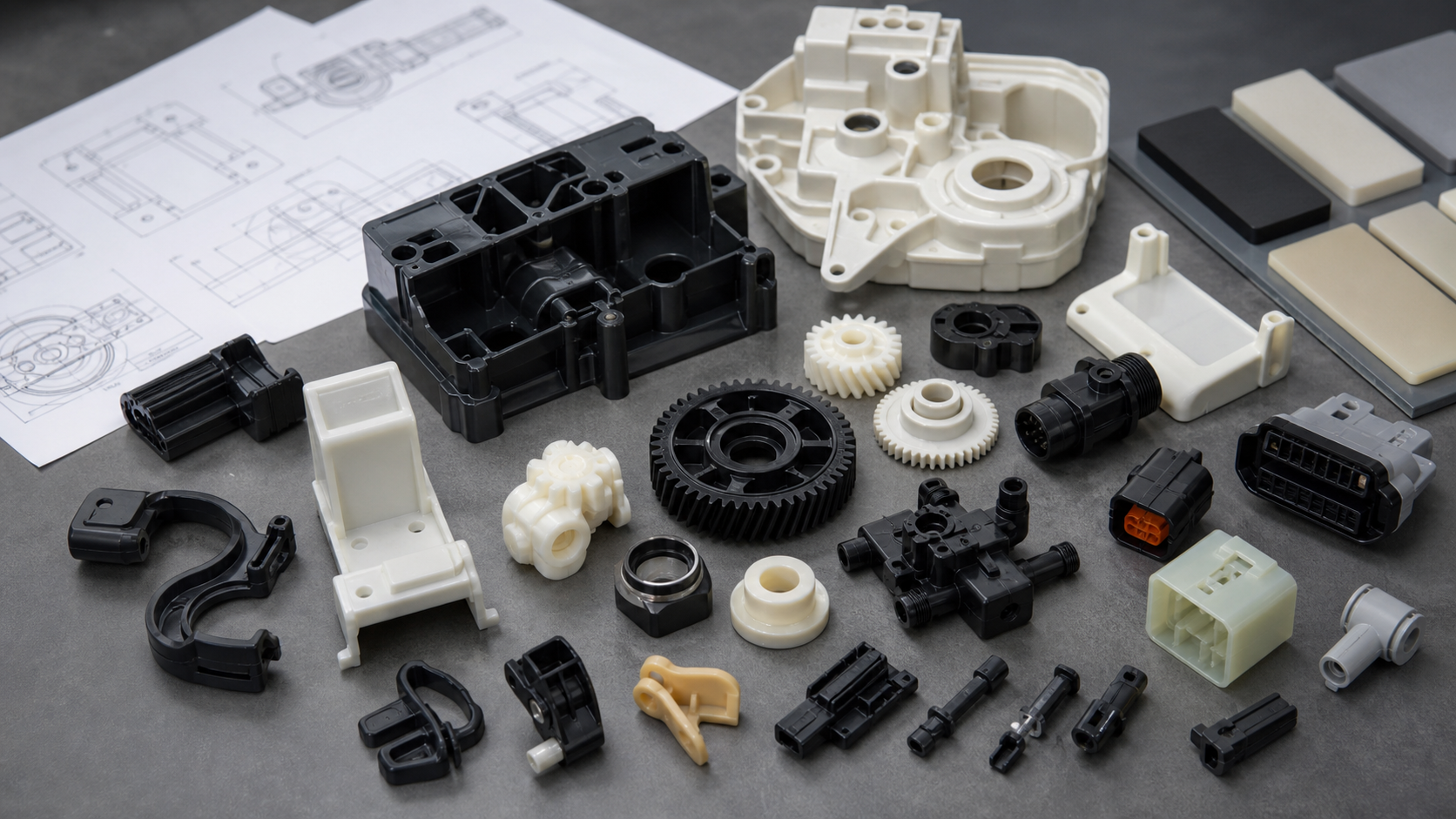
A custom component is made to a drawing, CAD model, reference sample or agreed functional requirement. Examples include housings, covers, brackets, clips, gears, bushings, spacers, connectors and assembly features. The specification can control geometry, material grade, reinforcement, color, texture, inserts, finish, inspection and packaging.
The use conditions matter as much as the outline of the part. A bracket under continuous load, a connector exposed to heat and moisture, and an enclosure with an appearance requirement need different material and acceptance checks.
Injection Molding vs CNC Machining vs 3D Printing
Compare the same drawing, quantity, material requirements and inspection scope. There is no fixed quantity at which one process becomes best for every part; tool complexity, design changes and finishing can change the decision.
| 경로 | 다음과 같은 경우에 유용합니다. | Main benefit | Confirm before ordering |
|---|---|---|---|
| 사출 성형 | Geometry is stable and repeated molded parts justify a tool | Repeat production with the selected molding compound and molded features | Tool scope, DFM, resin grade, sample stages, critical dimensions and expected volume |
| CNC 플라스틱 가공 | The part is machinable and quantity or design changes favor avoiding a mold | Parts machined from the selected available stock material | Tool access, internal radii, clamping, stock-grade availability, finish and inspection condition |
| 3D 프린팅 | The immediate goal is a fit check, shape iteration or a suitable functional prototype | Complex prototypes without a dedicated production mold | Printing method, material, orientation, support removal, surface and what the prototype can validate |
| Pilot or rapid tooling | Molded behavior needs review before a larger production commitment | A defined molded sample or bridge-production stage | Tool material, life expectations, cavities, geometry limits, sample approval and transfer plan |
When Injection Molding Fits
Molding suits repeat components with a stable design, specified resin and quantities that support the tooling investment. Ribs, bosses, snap-fits, inserts and molded textures need a design-for-manufacturing review before the tool is released. Agree how samples will be checked and how design changes will be handled.
For molding-specific detail, use the custom molded plastic parts guide 그리고 우리의 injection molding service page.
When CNC Plastic Machining Fits
CNC machining can suit functional prototypes, smaller production requirements and parts with accessible machined features. It avoids a dedicated mold, but tool access, deep pockets, thin walls, multiple setups and finishing still affect feasibility and price.
Confirm the exact stock grade. A machined sample can help evaluate fit and function, but its fiber orientation or processing history may differ from the later molded component. See 맞춤 가공 플라스틱 부품 for that route.
When 3D Printing Fits
Use printing when the design is changing or a physical model will answer a specific question. Define whether that question is appearance, assembly clearance, handling or a functional load test. The chosen method and material must support that test.
A successful printed prototype does not by itself approve a molded part. Recheck features that change with the process, including wall design, draft, orientation, finish and material behavior. Our plastic prototype manufacturing guide compares these stages.
Choose the Material from the Part’s Working Conditions
Send the existing grade if the material is fixed. If it is open, describe load, temperature, humidity, fluids, impact, friction, UV exposure and the required life. Add color, appearance and documentation requirements so a useful grade can be proposed.
| Material family | Typical selection task | Question to resolve |
|---|---|---|
| PA6 / PA66 and reinforced nylon | Structural brackets, housings, gears and supports | Moisture, reinforcement, heat and load; exact grade and process |
| POM / 아세탈 | Gears, bushings, spacers and sliding components | Friction, fit, mating surface and chemical exposure |
| PC | Covers and housings requiring an impact or transparency review | Fluid exposure, finish, assembly stress and optical requirement |
| ABS / PC-ABS | Equipment enclosures and appearance components | Impact, heat, finish, chemicals and outdoor exposure |
| PP | Covers, containers and chemical-contact components | Stiffness, shrinkage, assembly and joining requirements |
| TPU / TPE | Flexible components, grips and overmolded features | Hardness, compression behavior and substrate compatibility |
For a reinforced nylon project, use the PA66 GF30 datasheet and selection guide or the PA6 GF30 datasheet guide. A family name or glass percentage is not a substitute for the selected grade’s TDS.
What Should Be Reviewed Before Production?
A DFM review connects the drawing to how each feature will be made, measured and assembled. Define critical features first so tolerances and finish requirements are applied where they serve the part’s function.
- For molding: wall transitions, draft, ribs, bosses, gates, parting line, weld lines, ejection, inserts, shrinkage and warpage.
- For machining: tool access, internal radii, stock form, clamping, thin walls, burr control and dimensional measurement conditions.
- For printing: build orientation, supports, wall features, finishing and the difference between the prototype and production process.
- For assembly: datums, mating parts, fastening, tolerance stack, visible surfaces and the acceptance test.
For specific molding features, see the rib and boss design guide 그리고 gate design guide.
What to Send for a Custom Plastic Parts Quote
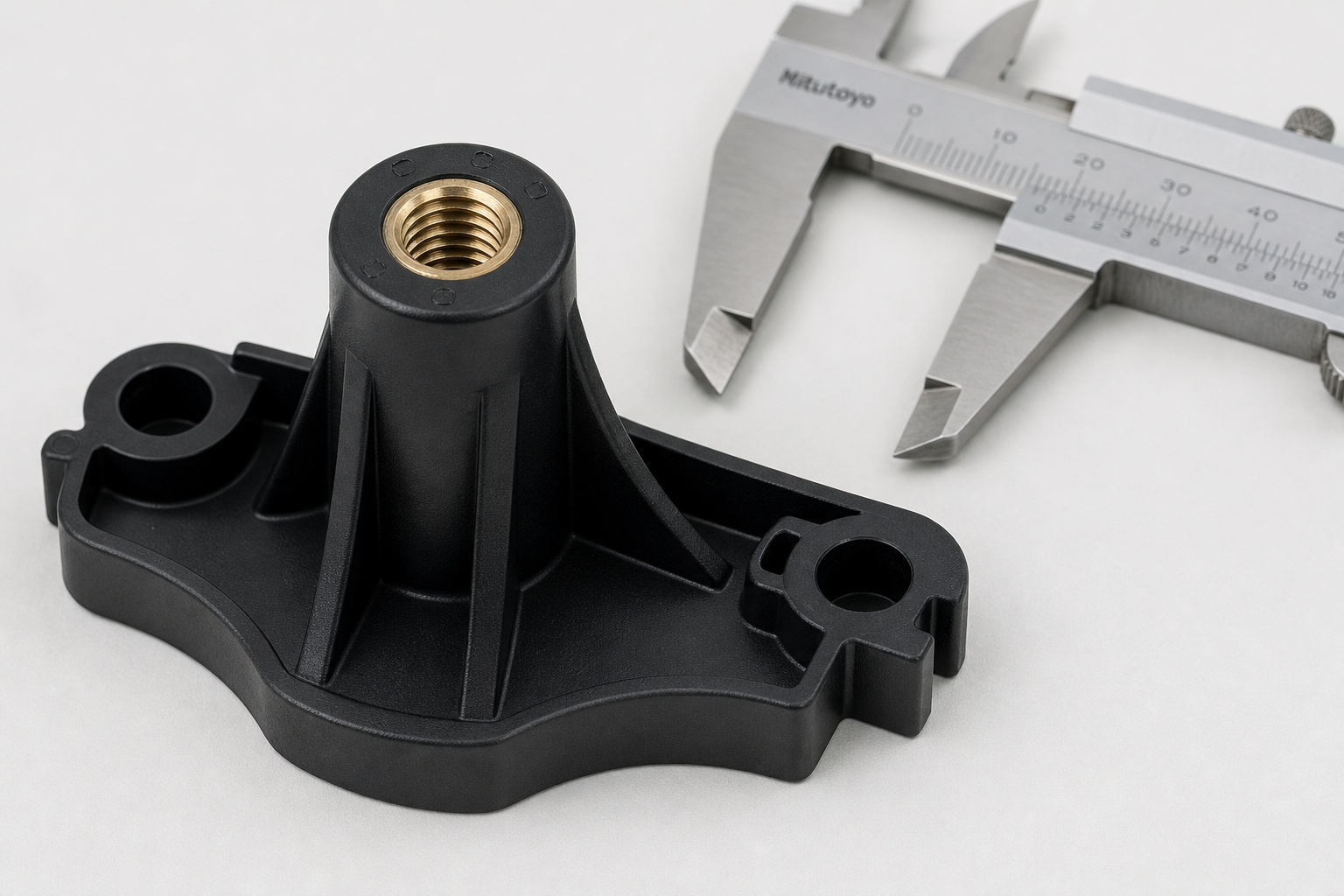
A complete request makes quotations easier to compare and avoids treating an assumption as a requirement. You do not need to invent a material or process if those are undecided; state the function and what remains open.
| Provide | Include | Purpose |
|---|---|---|
| Part files | CAD and drawing if available; revision, units and reference sample information | Establish the geometry and a common revision |
| Critical requirements | Datums, tolerances, threads, inserts, mating parts and inspection points | Identify what must be controlled and measured |
| Material and environment | Exact grade or open selection; load, temperature, moisture, fluids and required documents | Review an appropriate material and approval route |
| Quantities by stage | Prototype quantity, pilot order and forecast production requirement | Compare tooling and part production on the same basis |
| Finish and scope | Color, texture, visible faces, secondary operations, assembly and packaging | Identify included operations and appearance acceptance |
| Delivery requirement | Destination and target timing; phased delivery if needed | Define the commercial and delivery scope |
What Should the Quotation Make Clear?
Identify the material, manufacturing route, drawing revision, quantity and finish. Separate tooling or setup, part production, samples, inspection, secondary operations, packaging and delivery where applicable. For a mold, review ownership, maintenance and change terms before placing the order.
Price, minimum order, sample terms and lead time depend on the quoted project. They should be confirmed in the offer rather than inferred from a generic article. Use our 사출 성형 비용 안내서 for molding cost considerations.
From Drawing Review to Approved Production
- Define the requirement. Agree the drawing revision, material requirement, use conditions and critical acceptance criteria.
- Review the route and quote. Resolve manufacturing questions and identify tooling, samples, finishing and inspection in the scope.
- Evaluate representative samples. Check dimensions, appearance, assembly and the planned functional tests. Record any changes.
- Release the agreed version. Confirm the approved material, drawing, process scope, inspection and delivery requirements for production.
Keep the sample and production records tied to the same revision. If a prototype changes from printing or machining to molding, review the features and material assumptions affected by that change rather than treating prototype acceptance as automatic production approval.
How a Custom Plastic Parts Manufacturer Reviews Your Project
Nylon Plastic has supported custom plastic parts since 2005 through custom compounding, injection molding, CNC machining and 3D printing. We connect engineering material selection with part manufacturing. The review can address material selection or modification, prototype needs, mold design and making, and production requirements, carrying the part’s specification between stages.
Ask for the scope your project needs. A material-only request can start from a grade or application; a finished-part quotation needs geometry, quantity and acceptance requirements. Confirm selected-grade documents, sample reports and traceability requirements with the quotation.
자주 묻는 질문
Can I request a quote before choosing a material?
Yes. Provide the use conditions, load, temperature, moisture or chemical exposure, quantity and critical dimensions. State that the material is open so alternatives can be reviewed on a common basis.
Which process is best for a small quantity of custom plastic parts?
CNC machining or printing may avoid a dedicated mold, while pilot molding may fit a stable design that must be tested in a molding compound. Geometry, material, acceptance criteria and later production plans determine the comparison.
Can I use a prototype to approve a production material?
A prototype can answer defined questions, but differences in process, material form and orientation may remain. Use representative samples and the agreed acceptance tests to approve production.
What if I have only a sample or sketch?
Send it with the known function, dimensions and quantity. The review can identify missing requirements and the drawing or measurement work needed before a firm manufacturing scope is agreed.
How do I compare quotations from plastic parts manufacturers?
Compare the same revision, grade, quantity, tooling scope, finish, sample and inspection requirements, delivery terms and exclusions. A lower part price is not directly comparable if required operations or tooling are omitted.
Related Manufacturing Guides
- Evaluating a plastic parts supplier
- 맞춤 성형 플라스틱 부품
- 맞춤 가공 플라스틱 부품
- Plastic 3D printing services
- Rapid prototyping for engineering plastics
Request a Custom Plastic Parts Review
Our team can review the manufacturing route and identify the information needed for a comparable quotation, sample plan and production scope.
Content updated October 5, 2026. Project-specific material, tooling, inspection and delivery terms are confirmed in the quotation.